Introduction
Uganda is one of Africa’s most fascinating coffee-producing destinations, offering travellers an opportunity to discover coffee beyond the cup. A Uganda coffee tour takes visitors into the country’s coffee-growing communities, where they can explore working plantations, meet local farmers, learn traditional coffee-processing techniques, participate in coffee roasting and enjoy freshly brewed Ugandan coffee.
From the Arabica coffee gardens on the slopes of Mount Elgon to the Robusta-growing communities surrounding Lake Victoria, Uganda offers diverse coffee experiences shaped by its landscapes, climate, agricultural traditions and local cultures.
Unlike conventional sightseeing excursions, coffee tours in Uganda provide an opportunity to understand the journey from seed to cup. Visitors can participate in harvesting ripe coffee cherries, observe drying and processing techniques, discover the differences between Arabica and Robusta coffee, and experience the livelihoods of communities that depend on coffee farming.
Whether you are visiting Uganda for a safari, cultural holiday, adventure trip or agricultural tourism experience, a coffee farm visit offers an enriching addition to your itinerary.
At Bunuli Safaris, we believe that exploring Uganda should extend beyond its national parks. A coffee experience allows travellers to connect with local communities, discover Uganda’s agricultural heritage and appreciate one of the country’s most important export products.
What Is a Uganda Coffee Tour?
A Uganda coffee tour is a guided agricultural and cultural experience that introduces visitors to the country’s coffee industry, from cultivation and harvesting to processing, roasting and tasting.
Depending on the destination and arrangement, a typical coffee farm experience may include:
- Guided walks through coffee plantations.
- Introduction to Arabica and Robusta coffee varieties.
- Learning how coffee seedlings are planted and maintained.
- Participating in coffee cherry harvesting during the harvest season.
- Observing traditional coffee processing and drying.
- Learning how coffee beans are sorted and prepared.
- Demonstrations of traditional coffee roasting.
- Grinding and brewing freshly roasted coffee.
- Coffee tasting sessions.
- Interacting with local coffee farmers and their families.
Some experiences are conducted on smallholder farms, while others take place on larger estates or through organised community tourism initiatives.
The experience provides insight into Uganda’s agricultural economy while supporting local farmers and rural communities.
Why Choose Uganda for a Coffee Tour?
Uganda is an exceptional destination for coffee tourism because it produces two commercially important coffee species: Arabica and Robusta.
The country’s varied geographical conditions, including volcanic soils, mountainous landscapes, fertile agricultural areas and tropical climate, create suitable environments for different coffee-growing regions.
Here are some reasons to consider Uganda for a coffee experience.
1. Discover Two Distinct Coffee Varieties
Uganda offers opportunities to explore both Arabica and Robusta coffee.
Arabica is primarily cultivated in high-altitude areas, including Mount Elgon and the Rwenzori Mountains. It is generally associated with more delicate flavour profiles, often featuring fruity, floral and acidic characteristics.
Robusta is predominantly grown in lower-altitude areas, particularly around Central Uganda and parts of Western Uganda. It is known for its stronger body, bold flavour and higher natural caffeine content.
Exploring both varieties allows visitors to understand the differences in cultivation, processing and flavour.
2. Experience Authentic Coffee Farming Communities
Much of Uganda’s coffee production comes from smallholder farmers who cultivate coffee on relatively small family-owned plots.
A farm visit offers an opportunity to meet these farmers, understand their agricultural practices and learn how coffee contributes to household incomes.
Visitors can also discover how coffee is grown alongside other crops, including bananas, vanilla and shade trees.
3. Participate in Traditional Coffee Processing
Coffee production involves several stages before the beans become the beverage enjoyed around the world.
During a coffee tour, visitors can observe or participate in activities such as harvesting, pulping, drying, sorting, roasting and grinding.
4. Combine Coffee Experiences with Uganda Safaris
One of the greatest advantages of coffee tourism in Uganda is the opportunity to combine agricultural experiences with other attractions.
A Mount Elgon coffee tour can be combined with Sipi Falls, while coffee experiences in Western Uganda can complement visits to Queen Elizabeth National Park and the Rwenzori Mountains.
This makes coffee tourism particularly attractive to travellers looking for experiences beyond conventional wildlife safaris.
Best Places for Coffee Tours in Uganda
Uganda has several coffee-growing regions, each offering different landscapes, coffee varieties and cultural experiences.
The following destinations are particularly interesting for travellers planning a coffee farm visit.
1. Mount Elgon Coffee Tour – Explore Uganda’s Arabica Coffee Country
Mount Elgon is one of Uganda’s most recognised Arabica coffee-growing destinations.
Located in Eastern Uganda along the border with Kenya, Mount Elgon is an extinct volcanic mountain characterised by fertile soils, forested slopes, waterfalls and agricultural communities.


The surrounding districts, particularly Kapchorwa, Mbale and Sironko, are associated with Bugisu Arabica coffee.
Coffee is cultivated on the mountain’s fertile slopes, where cooler temperatures and favourable growing conditions support Arabica production.
A Mount Elgon coffee experience may include:
- Walking through Arabica coffee gardens.
- Learning about coffee cultivation at different elevations.
- Meeting local coffee farmers.
- Participating in coffee harvesting during the season.
- Observing coffee washing and drying.
- Learning traditional roasting techniques.
- Tasting freshly prepared Bugisu coffee.
The experience also provides opportunities to understand the cultural significance of coffee farming among communities living around Mount Elgon.
For travellers seeking an authentic agricultural experience, this region is one of the strongest choices.
2. Sipi Falls Coffee Tour – Coffee Farming and Waterfall Adventures
Sipi Falls is among the most attractive destinations for combining coffee tourism with adventure experiences in Uganda.
Located in Kapchorwa District on the northeastern slopes of Mount Elgon, Sipi is famous for its spectacular waterfalls, scenic landscapes, agricultural communities and Arabica coffee farms.


A Sipi coffee tour provides an opportunity to visit local coffee gardens and discover how coffee is cultivated by smallholder farmers.
Visitors can learn about the coffee-growing cycle, from planting seedlings to harvesting ripe cherries and preparing beans for consumption or sale.
One of the highlights is participating in traditional coffee preparation.
Depending on the experience offered, visitors may:
- Walk through a coffee garden.
- Learn about coffee plants and their growing conditions.
- Harvest ripe coffee cherries when available.
- Observe the removal of the outer pulp.
- Learn how coffee beans are dried.
- Roast coffee using traditional methods.
- Grind the roasted beans.
- Prepare and enjoy a fresh cup of coffee.
The experience is particularly rewarding because it offers direct interaction with farming communities.
Other activities to combine with a Sipi coffee tour
Sipi is not exclusively a coffee destination. Travellers can combine their visit with:
- Hiking to the three Sipi waterfalls.
- Guided nature walks.
- Rock climbing.
- Abseiling.
- Cultural encounters with local communities.
- Scenic photography.
- Mountain biking.
For travellers planning an Eastern Uganda adventure, combining a coffee experience with Sipi Falls creates a memorable itinerary.
3. Central Uganda Coffee Tour – Discover the Robusta Coffee Heritage
Central Uganda is particularly important to the country’s Robusta coffee production.
The region surrounding Kampala, Mukono, Luwero, Masaka and other districts contains extensive coffee-growing communities.
Robusta coffee is deeply connected to Uganda’s agricultural heritage.
Unlike Arabica, which is associated with mountainous environments, Robusta grows naturally and commercially in several lower-altitude areas.
Visitors exploring Central Uganda can discover how coffee is cultivated in family gardens, sometimes intercropped with bananas and other agricultural products.
A Robusta coffee experience can include:
- Exploring traditional coffee gardens.
- Learning about Robusta coffee varieties.
- Understanding coffee harvesting.
- Observing traditional sun-drying techniques.
- Discovering how coffee is prepared for processing.
- Meeting local farming families.
One particularly interesting aspect of Robusta coffee is its connection to Uganda’s indigenous coffee heritage.
For travellers staying in Kampala or Entebbe, Central Uganda can provide convenient opportunities for a coffee excursion without travelling to the country’s mountainous regions.
4. Rwenzori Mountains Coffee Tour – Discover Western Uganda’s Arabica
The Rwenzori Mountains offer another interesting destination for exploring Uganda’s Arabica coffee production.
Located in Western Uganda along the border with the Democratic Republic of Congo, the Rwenzori range is famous for its dramatic mountain scenery, biodiversity and challenging trekking opportunities.


The foothills and surrounding highland communities support coffee farming, particularly Arabica cultivation in suitable areas.
A coffee experience around the Rwenzori region introduces visitors to agricultural communities whose livelihoods are connected to coffee production.
Travellers can explore coffee-growing landscapes, learn about harvesting and processing, and discover the relationship between farming, altitude and coffee quality.
The experience can be incorporated into a wider Western Uganda itinerary featuring:
- Queen Elizabeth National Park.
- Kibale Forest National Park.
- Rwenzori Mountains National Park.
- Fort Portal.
- Semuliki National Park.
- Local cultural experiences.
This is an excellent option for travellers interested in combining coffee tourism with nature and wildlife experiences.
5. West Nile Coffee-Growing Region
West Nile, in northwestern Uganda, is another interesting region for understanding the country’s coffee industry.
Arabica coffee is cultivated in selected highland areas, including parts of Zombo and surrounding districts.
The region offers an opportunity to discover coffee farming away from Uganda’s more frequently visited tourism circuits.
A visit can provide insight into smallholder agriculture, coffee harvesting, processing and the economic importance of coffee to rural households.
West Nile can also be incorporated into broader cultural and nature-based itineraries.
Understanding Uganda’s Arabica and Robusta Coffee
One of the most interesting parts of a Uganda coffee tour is learning about the differences between the country’s two principal coffee species.
| Feature | Arabica Coffee | Robusta Coffee |
|---|---|---|
| Botanical name | Coffea arabica | Coffea canephora |
| Growing environment | Highland areas | Lowland and mid-altitude areas |
| Main regions | Mount Elgon, Rwenzori, West Nile | Central, Western and other lowland regions |
| Growing conditions | Generally cooler temperatures | Generally warmer temperatures |
| Caffeine content | Lower | Higher |
| Flavour profile | Often fruity, floral and acidic | Generally stronger and fuller-bodied |
| Common processing | Washed and natural | Predominantly natural |
| Famous Ugandan origin | Bugisu Arabica | Ugandan Robusta |
Both varieties contribute significantly to Uganda’s coffee identity.
While Arabica often attracts specialty coffee enthusiasts, Robusta is particularly important to understanding Uganda’s historical and agricultural relationship with coffee.
A well-organised coffee tour should introduce visitors to both varieties whenever possible.
From Seed to Cup: What Happens During a Uganda Coffee Tour?
Understanding the coffee production process makes a farm visit more meaningful.
Coffee does not begin as roasted beans. It starts as a seedling and passes through several agricultural and processing stages before becoming the beverage enjoyed worldwide.
Here is what travellers can learn during a coffee farm experience.
1. Coffee Seedling Preparation
Coffee production begins with seedlings raised in nurseries.
Farmers select suitable planting materials and nurture young coffee plants before transferring them to prepared gardens.
Visitors can learn about seedling development, planting techniques and the conditions required for healthy coffee growth.
2. Coffee Planting and Cultivation
Coffee plants require suitable soils, rainfall, temperature and agricultural management.
Farmers maintain their gardens through activities such as pruning, weeding, mulching and managing pests and diseases.
In many Ugandan communities, coffee is cultivated alongside other crops.
3. Coffee Flowering and Cherry Development
Coffee plants produce small white flowers, which eventually develop into green coffee cherries.
As the cherries mature, they change colour, generally becoming red when ripe.
The development period depends on the variety and growing conditions.
4. Coffee Cherry Harvesting
Harvesting involves picking mature coffee cherries.
During a coffee tour, visitors may participate in harvesting when the crop is available.
Selective harvesting is important because ripe cherries generally produce better-quality coffee than immature or overripe cherries.
5. Coffee Processing
After harvesting, coffee cherries undergo processing to remove the outer fruit and prepare the beans.
Different methods are used depending on the coffee variety and local practices.
These include:
- Natural processing: Coffee cherries are dried with the fruit still surrounding the beans.
- Washed processing: The outer fruit is removed, and the beans are processed through washing and fermentation before drying.
- Pulped natural processing: The skin is removed while some mucilage remains during drying.
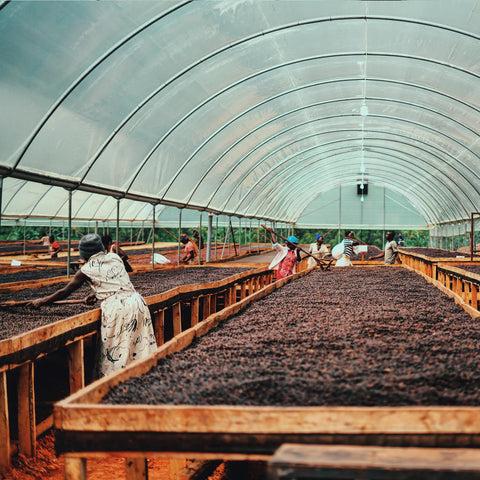
6. Coffee Drying
Coffee beans must be dried to an appropriate moisture level before storage and further processing.
Depending on the method, drying may take place on raised beds, patios or other suitable surfaces.
7. Hulling and Sorting
Once dried, coffee undergoes further preparation to remove parchment or husks, depending on the processing method.
The beans are then sorted according to quality and size.
8. Coffee Roasting
Roasting transforms green coffee beans into the aromatic brown beans used for brewing.
Visitors may participate in traditional roasting demonstrations or observe modern roasting equipment.
9. Grinding and Brewing
After roasting, coffee beans are ground to the appropriate consistency.
The ground coffee is then brewed using different preparation methods.
10. Coffee Tasting
The experience concludes with an opportunity to enjoy freshly prepared Ugandan coffee.
Visitors can explore differences in aroma, acidity, body and flavour while appreciating the work involved in producing each cup.
Best Time to Visit Uganda for a Coffee Tour
Uganda is a year-round coffee destination because different coffee-growing regions have different harvesting seasons.
However, travellers interested in participating in coffee picking should plan their visits around the harvest periods of their preferred destination.
| Coffee Region | Main Coffee Type | Indicative Harvest Period |
|---|---|---|
| Mount Elgon | Arabica | August–February, depending on location and crop |
| Rwenzori | Arabica | Varies by area, with harvests across different periods |
| Central Uganda | Robusta | October–February |
| Masaka and surrounding areas | Robusta | May–August |
| West Nile | Arabica | Varies by location and season |
These are indicative periods rather than guaranteed harvesting dates. Weather patterns, altitude and local agricultural conditions influence coffee availability.
Is it possible to visit a coffee farm outside the harvesting season?
Yes. Coffee tours are possible throughout the year.
Even when harvesting is not taking place, visitors can explore coffee gardens, learn about cultivation, observe available processing activities and enjoy coffee tasting sessions.
However, travellers specifically interested in picking coffee cherries should confirm seasonal availability before booking.
What to Expect During a Uganda Coffee Farm Experience
A coffee tour is generally a relaxed and educational experience.
Most excursions involve walking through agricultural landscapes, interacting with farmers and participating in practical demonstrations.
Depending on the location, the experience may last approximately two to four hours, although longer excursions can be arranged.
Visitors should expect:
- Guided coffee garden walks.
- Interaction with local farmers.
- Demonstrations of traditional agricultural practices.
- Coffee harvesting when available.
- Processing and roasting demonstrations.
- Coffee tasting.
- Opportunities to purchase locally produced coffee.
Some experiences may also include traditional meals, village visits and cultural activities.
How Much Does a Uganda Coffee Tour Cost?
The cost of a Uganda coffee tour depends on the destination, duration, transportation arrangements, group size and activities included.
A short coffee farm experience near an established tourism destination will generally cost less than a private excursion involving long-distance transportation and accommodation.
The following are indicative planning estimates, not verified operator quotations.
| Experience | Indicative Budget per Person |
|---|---|
| Basic local coffee farm experience | $15–$30 |
| Guided coffee tour with demonstrations and tasting | $25–$50 |
| Private coffee excursion with transportation | $80–$180 |
| Full-day coffee and cultural experience | $100–$220 |
| Multi-day coffee and adventure itinerary | Depends on accommodation and activities |
Actual prices should be confirmed with the tour operator.
When requesting a quotation, establish whether the package includes:
- Professional tour guide.
- Farm entrance or community fees.
- Coffee demonstrations.
- Coffee tasting.
- Transportation.
- Meals and refreshments.
- Accommodation, where applicable.
- Additional activities.
Are Uganda coffee tours worth the money?
Yes, particularly for travellers interested in cultural tourism, agriculture, specialty coffee and authentic community experiences.
Beyond tasting coffee, visitors gain an understanding of the people, agricultural traditions and processes behind one of Uganda’s most important products.
Combining a Uganda Coffee Tour with Other Tourism Experiences
One of the best ways to experience Uganda is to combine coffee tourism with other destinations and activities.
Rather than planning an isolated farm visit, travellers can incorporate coffee experiences into a wider Uganda holiday.
Here are some suggested combinations.
Coffee Tour and Sipi Falls Adventure
Explore Arabica coffee farms around Mount Elgon before enjoying the spectacular Sipi waterfalls.
This combination is ideal for adventure travellers, couples and visitors interested in rural tourism.
Coffee Tour and Mount Elgon National Park
Combine coffee farming experiences with nature walks, mountain scenery and exploration of Mount Elgon National Park.
Coffee Tour and Kampala City Tour
Travellers arriving in Entebbe or staying in Kampala can explore Central Uganda’s coffee-growing communities before discovering Kampala’s cultural attractions.
Coffee Tour and Queen Elizabeth National Park
For visitors exploring Western Uganda, a coffee experience around the Rwenzori foothills can complement game drives and boat cruises in Queen Elizabeth National Park.
Coffee Tour and Kibale Forest National Park
Combine a coffee farm visit with chimpanzee tracking and nature experiences in Kibale Forest.
Coffee Tour and Uganda Gorilla Trekking
For travellers seeking a more comprehensive East African experience, coffee tourism can complement a gorilla trekking holiday in Bwindi Impenetrable National Park.
This combination provides a balance of agriculture, culture, forest experiences and conservation tourism.
What to Pack for a Uganda Coffee Tour
Although coffee tours are generally less physically demanding than mountain trekking, appropriate preparation makes the experience more enjoyable.
Consider packing:
- Comfortable walking shoes.
- Lightweight clothing.
- A hat or cap.
- Sunscreen.
- Insect repellent.
- A reusable water bottle.
- A camera or smartphone.
- A light rain jacket.
- Some cash for purchasing locally produced coffee and crafts.
If visiting during the rainy season, waterproof footwear is particularly useful because some coffee gardens are located on sloping agricultural land.
Responsible and Sustainable Coffee Tourism in Uganda
Coffee tourism can contribute positively to rural development when experiences are organised responsibly.
Smallholder coffee farmers play an important role in Uganda’s agricultural economy. Farm visits create opportunities for additional income through guiding, demonstrations, coffee sales and cultural experiences.
Responsible coffee tourism should prioritise:
Supporting Local Farmers
Choose experiences that work directly with coffee-growing communities and ensure farmers benefit financially from tourism activities.
Purchasing Locally Produced Coffee
Buying coffee directly from local producers can help support rural businesses and encourage value addition.
Respecting Community Traditions
Visitors should respect local customs, seek permission before photographing people and follow the guidance of their hosts.
Promoting Sustainable Agriculture
Learn about shade-grown coffee, soil conservation, responsible water use and agricultural practices that support biodiversity.
Reducing Environmental Impact
Avoid littering, respect farm boundaries and use responsible transportation arrangements wherever possible.
These practices help ensure that coffee tourism benefits both visitors and the communities hosting them.
Why Book Your Uganda Coffee Tour with Bunuli Safaris?
At Bunuli Safaris, we believe that the best Uganda holidays are those that connect travellers with the country’s landscapes, people, cultures and traditions.
Our approach to organising Uganda experiences focuses on creating meaningful journeys that go beyond conventional sightseeing.
Whether you are interested in exploring Arabica coffee farms around Mount Elgon, discovering traditional Robusta cultivation in Central Uganda or combining a coffee experience with a wider safari, we can help organise an itinerary suited to your interests.
We can incorporate coffee tourism into:
- Private Uganda holidays.
- Cultural and community tourism experiences.
- Agricultural tourism excursions.
- Uganda adventure holidays.
- Family holidays.
- Corporate and educational trips.
- Multi-destination East African safaris.
Our team can help coordinate transportation, accommodation, local guides and complementary activities to create a seamless travel experience.
Discover Uganda beyond the ordinary. Explore its coffee heritage, meet the people behind every cup and experience the country’s agricultural traditions firsthand.
Contact Bunuli Safaris to start planning your Uganda coffee experience.
Plan Your Uganda Coffee Tour Today
Website: Bunuli Safaris
Email: info@bunulisafari.com
Frequently Asked Questions About Uganda Coffee Tours
1. Can tourists visit coffee farms in Uganda?
Yes. Tourists can visit coffee farms in several parts of Uganda, including Mount Elgon, Sipi, Central Uganda and the Rwenzori foothills. These experiences introduce visitors to coffee cultivation, harvesting, processing and traditional preparation.
2. Where is the best place for a coffee tour in Uganda?
Mount Elgon and Sipi Falls are among the best destinations for Arabica coffee experiences. Central Uganda is particularly interesting for visitors wanting to explore Robusta coffee farming.
3. How long does a Uganda coffee tour take?
A typical coffee farm experience takes approximately two to four hours. However, full-day excursions and multi-day coffee tourism itineraries are also possible.
4. Can I participate in coffee harvesting in Uganda?
Yes. Some coffee tours allow visitors to participate in picking ripe coffee cherries. However, this depends on the harvesting season and the availability of participating farms.
5. What is the difference between Ugandan Arabica and Robusta coffee?
Arabica is mainly grown in Uganda’s highland regions and is often associated with fruity, floral and acidic flavour characteristics. Robusta grows predominantly in lower-altitude areas and generally has a stronger body and higher caffeine content.
6. When is the best time for a Mount Elgon coffee tour?
Mount Elgon coffee harvesting periods vary by location and crop. August to February covers important Arabica harvesting periods in the region, although visitors should confirm local conditions before travelling.
7. Can I combine a coffee tour with Sipi Falls?
Absolutely. Sipi Falls is one of the best places to combine coffee tourism with adventure activities. Visitors can explore coffee gardens, learn traditional processing methods and hike to the waterfalls.
8. Are Uganda coffee tours suitable for families?
Yes. Coffee tours are suitable for families, provided the farm and activities are appropriate for the ages and mobility of the participants. Children can learn about agriculture, coffee production and rural community life.
9. Can I buy Ugandan coffee during a farm tour?
Yes. Some coffee farms and community initiatives sell locally produced coffee beans and ground coffee. Availability depends on the farm and the products offered.
10. Is Uganda famous for Robusta or Arabica coffee?
Uganda is particularly recognised for its Robusta production, although it also produces high-quality Arabica coffee. Both varieties contribute to the country’s international coffee reputation.
11. Can I visit a coffee farm from Kampala?
Yes. Central Uganda has several coffee-growing communities accessible from Kampala. The distance and duration depend on the specific farm selected.
12. What other activities can I combine with coffee tourism in Uganda?
Coffee tourism can be combined with waterfall hikes, cultural encounters, mountain trekking, chimpanzee tracking, gorilla trekking and traditional community experiences.
13. Are coffee tours available throughout the year?
Yes. Coffee farm visits and tasting experiences can be arranged throughout the year. However, harvesting and certain processing activities are seasonal.
14. Are Uganda coffee tours suitable for international visitors?
Yes. Coffee tours are particularly interesting for international visitors, specialty coffee enthusiasts, agricultural tourism travellers, researchers and people interested in understanding Uganda’s culture and economy.
15. How do I book a Uganda coffee tour?
You can contact Bunuli Safaris with your preferred travel dates, number of travellers, desired destination and activities. The team can help arrange a coffee experience or incorporate it into a wider Uganda safari itinerary.