Kibale National Park Uganda
Kibale National Park is Uganda’s premier destination for chimpanzee trekking and one of Africa’s most rewarding primate-watching forests. Located in western Uganda near Fort Portal, the park protects a remarkable tropical forest ecosystem inhabited by chimpanzees, monkeys, forest elephants, birds and hundreds of plant species.
The biggest reason travelers visit is simple: chimpanzee tracking in Kibale offers one of Uganda’s strongest opportunities to encounter habituated wild chimpanzees in their natural forest habitat.
But Kibale is much more than chimpanzees.
A well-planned Kibale safari can combine chimpanzee trekking, chimpanzee habituation, forest walks, birdwatching, Bigodi Wetland experiences, primate viewing, crater-lake scenery and cultural tourism.
The park is therefore an ideal addition to a western Uganda itinerary linking Fort Portal, Queen Elizabeth National Park, Bwindi Impenetrable National Park and other destinations.
Uganda Wildlife Authority identifies Kibale as a major chimpanzee destination and confirms that both chimpanzee tracking and habituation experiences take place throughout the year.


Kibale National Park at a Glance
| Feature | Details |
|---|---|
| Country | Uganda |
| Region | Western Uganda |
| Main attraction | Chimpanzee trekking |
| Main tourism hub | Kanyanchu |
| Nearest major town | Fort Portal |
| Famous for | Chimpanzees and primates |
| Other activities | Habituation, birding, forest walks, Bigodi Wetland |
| Recommended stay | 2–3 days |
| Best for | Chimpanzee lovers, primate enthusiasts, birders and photographers |
| Can combine with | Queen Elizabeth, Semuliki, Bwindi and Fort Portal |
Kibale is particularly valuable because it gives travelers a completely different experience from Uganda’s savannah parks.
At Murchison Falls, the landscape is dominated by open grasslands and the Nile.
At Queen Elizabeth, you can combine savannah wildlife with the Kazinga Channel.
At Kibale, the forest becomes the destination itself.
Where Is Kibale National Park?
Kibale National Park is located in western Uganda, close to Fort Portal and the foothills of the Rwenzori region.
The park forms part of a larger forested landscape and is strategically positioned for travelers exploring western Uganda.
From Kampala, the journey by road generally takes approximately 6–8 hours, depending on the route, traffic, road conditions and final lodge location. Tourism Uganda places Kibale at roughly 320 km from Kampala.
From Fort Portal, the journey to the Kanyanchu area is considerably shorter.
This location makes Kibale especially convenient to combine with:
- Fort Portal
- Queen Elizabeth National Park
- Semuliki National Park
- Rwenzori Mountains
- Bwindi Impenetrable National Park
- Lake Bunyonyi
For travelers flying into western Uganda, air connections can also reduce the amount of road travel, although the final transfer to the forest remains necessary.
Why Is Kibale National Park Famous?
Kibale National Park is most famous for chimpanzee trekking and its exceptional concentration of primates.
The forest supports numerous primate species, making it one of Uganda’s most important destinations for people interested in wildlife beyond the traditional Big Five.
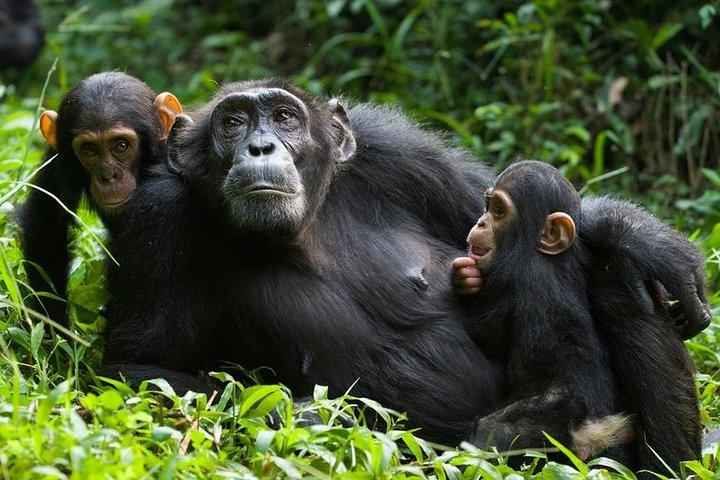
The star attraction is the chimpanzee.
These intelligent great apes share a significant proportion of their DNA with humans, and observing them in the forest can be one of the most memorable wildlife encounters in Uganda.
Kibale’s attraction comes from the combination of:
Chimpanzees + rainforest + monkeys + birds + forest ecology + guided walking.
That combination makes it fundamentally different from a conventional vehicle-based safari.
Chimpanzee Trekking in Kibale National Park
What is chimpanzee trekking?
Chimpanzee trekking is a guided forest experience in which visitors walk through Kibale in search of habituated chimpanzee communities.
The experience begins with a briefing before visitors enter the forest with guides and trackers.
Once the chimpanzees are located, visitors observe them from a regulated distance and for a specified viewing period.
UWA‘s current chimpanzee management guidelines state that standard chimpanzee tracking begins at 8:00 a.m. for morning tracking and 2:00 p.m. for afternoon tracking, while the normal viewing period after finding the chimpanzees is a maximum of one hour.
The trek itself can last significantly longer because finding the chimpanzees requires walking through the forest.
UWA’s Kibale information indicates that chimpanzee tracking is conducted throughout the year.
What might you see during a chimpanzee trek?
Chimpanzees are the primary target, but the forest experience may also reveal:
- Red-tailed monkeys
- Black-and-white colobus monkeys
- Blue monkeys
- Olive baboons
- L’Hoest’s monkeys
- Forest birds
- Butterflies
- Forest plants
- Other wildlife
The forest itself becomes part of the safari.


Kibale Chimpanzee Habituation Experience
For travelers who want more time with chimpanzees, Kibale offers a chimpanzee habituation experience.
Unlike standard tracking, habituation provides considerably more time for observation.
UWA’s guidelines state that chimpanzee habituation experiences begin from 6:30 a.m. and allow a maximum of four hours of viewing once the chimpanzees are encountered.
This makes the experience particularly attractive to:
- Wildlife photographers
- Researchers
- Primate enthusiasts
- Serious birders
- Travelers wanting a slower forest experience
- Visitors interested in chimpanzee behavior
Chimpanzee trekking vs habituation
| Experience | Standard Trekking | Habituation Experience |
|---|---|---|
| Main purpose | Encounter habituated chimps | Spend extended time observing chimps |
| Viewing time | Up to 1 hour | Up to 4 hours |
| Start | Morning/afternoon | Early morning |
| Best for | Most travelers | Photographers & primate enthusiasts |
| Cost | Lower | Higher |
| Experience | Shorter, focused encounter | Longer, more immersive experience |
If seeing chimpanzees is the main purpose of your Uganda trip, the habituation experience is worth considering.
How Much Does Chimpanzee Trekking in Kibale Cost?
Chimpanzee permit prices can change, so travelers should confirm the current Uganda Wildlife Authority tariff when booking.
This is particularly important because UWA has periodically revised conservation tariffs and chimpanzee activity rates.
A safari quotation should distinguish between:
- Chimpanzee permit
- Park entrance
- Accommodation
- Transport
- Guide
- Meals
- Airport transfers
- Additional activities
Do not compare safari prices based solely on the advertised chimpanzee permit.
A cheaper-looking package can become more expensive if it excludes accommodation, transportation or other essential components.
For an accurate current price, request a customized Kibale safari quotation from Bunuli Safaris based on your travel dates, group size and accommodation preference.
Best Time to Visit Kibale National Park
Kibale can be visited throughout the year, but January–February and June–August are generally among the easier periods for chimpanzee trekking because forest trails tend to be less wet.
Tourism Uganda identifies June–August and December–February as favorable periods, while other specialist sources similarly highlight January, February, June and July as relatively dry months.
However, there is an important nuance:
There is no bad season for chimpanzee trekking in Kibale.
Rainforest conditions change quickly, and chimpanzees move according to food availability rather than tourist seasons.
December–February
Good conditions for forest walking, generally lower rainfall and favorable photography conditions.
June–August
A popular period with relatively drier trails and good trekking conditions.
September–November
Generally wetter, but the forest is lush and birding can be rewarding.
March–May
Rainier conditions can make trails muddy, but fewer visitors and greener scenery may appeal to travelers seeking a quieter experience.
UWA specifically notes that chimpanzee tracking and habituation take place throughout the year.
Things to Do in Kibale National Park
1. Chimpanzee Trekking
This is the park’s signature experience.
If you have only one day available for activities, prioritize chimpanzee tracking.
2. Chimpanzee Habituation Experience
Choose this if you want significantly more time observing chimpanzees and understanding their behavior.
3. Bigodi Wetland Walk
Bigodi Wetland Sanctuary is one of the best complementary experiences to add to a Kibale chimpanzee safari.
The community-based wetland experience combines:
- Birdwatching
- Primate viewing
- Wetland ecology
- Local community interaction
- Photography
- Nature walking
Birding is particularly rewarding, with wetland and forest species inhabiting the area. The sanctuary is also known for opportunities to encounter several primate species.


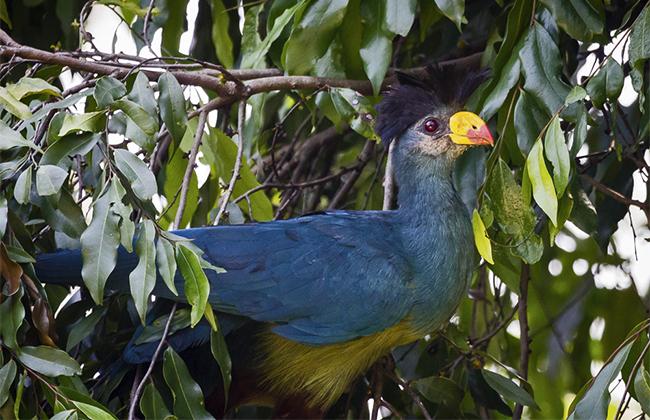
4. Birdwatching in Kibale
Kibale is an excellent destination for travelers who want to combine chimpanzee trekking with Uganda birding.
The forest environment supports numerous forest bird species, while nearby wetlands add another habitat type.
Birdwatchers should travel with:
- Binoculars
- Field guide
- Camera
- Comfortable walking shoes
- Rain protection
The experience is especially rewarding when combined with Bigodi Wetland Sanctuary.
5. Forest Nature Walks
Not every traveler wants a chimpanzee-focused itinerary.
Guided forest walks provide an opportunity to appreciate:
- Giant trees
- Forest plants
- Insects
- Butterflies
- Birds
- Primates
- Forest ecology
This is also an excellent alternative activity for travelers who are not participating in chimpanzee trekking.
6. Night Forest Walks
A night walk provides a completely different perspective of Kibale.
After sunset, the forest changes dramatically.
Nocturnal creatures become active while daytime species settle down.
Depending on conditions and local regulations, travelers may encounter nocturnal wildlife such as:
- Bush babies
- Night birds
- Bats
- Chameleons
- Insects
- Other nocturnal forest species
Night walks should always be conducted with authorized guides.
Primates of Kibale National Park
Kibale’s reputation as a primate destination extends well beyond chimpanzees.
The forest supports a remarkable variety of primates, including species such as:
- Chimpanzees
- Red-tailed monkeys
- Black-and-white colobus monkeys
- Blue monkeys
- Olive baboons
- L’Hoest’s monkeys
- Bushbabies
This makes Kibale particularly attractive for travelers searching for a Uganda primate safari rather than a traditional savannah safari.
One of the most rewarding aspects of the forest is that you can hear or see several primate species during a single walk.
Kibale National Park Wildlife
Although chimpanzees are the headline attraction, Kibale supports other wildlife.
Depending on where you travel within the ecosystem, wildlife can include:
- Forest elephants
- Buffaloes
- Bushbucks
- Warthogs
- Duikers
- Bushpigs
- Monkeys
- Chimpanzees
- Other forest mammals
However, travelers should set expectations correctly.
Kibale is not primarily a Big Five game-drive destination.
If your priority is lions, elephants and large savannah mammals, destinations such as Murchison Falls or Queen Elizabeth are more appropriate.
If your priority is chimpanzees and primates, Kibale is the stronger choice.
How Many Days Do You Need in Kibale National Park?
1 Day
A one-day visit can work if you’re already staying nearby and only want to participate in chimpanzee tracking.
However, it can feel rushed.
2 Days
Two days is an excellent minimum for most travelers.
Example:
Day 1: Kampala/Fort Portal → Kibale → Bigodi Wetland or forest activity
Day 2: Chimpanzee trekking → onward transfer
3 Days
Three days are ideal if you want to slow down and include additional experiences.
Example:
Day 1: Arrive in Kibale + Bigodi Wetland
Day 2: Chimpanzee trekking + relaxed afternoon
Day 3: Forest walk/night walk → onward journey
4+ Days
Longer stays are best suited to photographers, birders, researchers or travelers combining several western Uganda attractions.
3-Day Kibale National Park Safari Itinerary
Day 1: Kampala/Entebbe to Kibale
Depart Kampala or Entebbe and travel west toward Fort Portal and Kibale.
Enjoy the changing scenery of western Uganda before arriving at your lodge.
If time allows, take a Bigodi Wetland walk in the afternoon.
Overnight in Kibale.
Day 2: Chimpanzee Trekking
After breakfast, proceed to the Kanyanchu area for briefing and chimpanzee tracking.
Spend time walking through the forest in search of chimpanzees.
After finding the community, observe their behavior from the permitted distance.
Return to the lodge for lunch and relaxation.
Optional afternoon forest or community experience.
Day 3: Forest Experience and Departure
Enjoy breakfast before a final forest experience or transfer toward your next destination.
You can continue to:
Queen Elizabeth National Park → Bwindi → Lake Bunyonyi
or return toward Kampala.
This makes Kibale particularly powerful as part of a larger Uganda chimpanzee and gorilla safari.
Kibale + Queen Elizabeth National Park
This is one of the most logical western Uganda combinations.
The two destinations complement each other perfectly.
Kibale
Chimpanzees + rainforest + primates
Queen Elizabeth
Lions + elephants + buffaloes + Kazinga Channel + savannah
A combined itinerary might look like:
Kampala → Kibale → Queen Elizabeth → Bwindi
This gives you:
Chimpanzees + wildlife safari + boat cruise + gorilla trekking
within one journey.
Bunuli Safaris can customize this route according to your travel dates and budget.
Kibale + Bwindi Gorilla Trekking
For travelers interested in Uganda’s great apes, combining Kibale with Bwindi is an exceptional option.
The experience becomes:
Chimpanzee trekking → savannah safari → gorilla trekking
This is particularly attractive to travelers who want to experience Uganda’s primates without making the entire trip exclusively about gorillas.
A longer itinerary can include:
Kampala → Kibale → Queen Elizabeth → Bwindi → Lake Bunyonyi → Kampala
Kibale vs Queen Elizabeth National Park
| Feature | Kibale | Queen Elizabeth |
|---|---|---|
| Main experience | Chimpanzee trekking | Savannah safari |
| Habitat | Tropical forest | Savannah, wetlands and lakes |
| Chimpanzees | Excellent | Kyambura Gorge |
| Lions | Not the main attraction | Excellent |
| Elephants | Forest ecosystem | Excellent |
| Boat safari | No | Kazinga Channel |
| Primates | Exceptional | Good |
| Big Five focus | No | Stronger |
| Best for | Primates & chimpanzees | General wildlife |
| Ideal stay | 2–3 days | 2–4 days |
If you can only visit one, choose Kibale for chimpanzees and Queen Elizabeth for a broader traditional safari.
If you have enough time, visit both.
Accommodation in Kibale National Park
Accommodation ranges from budget camps and guesthouses to comfortable mid-range lodges and high-end forest properties.
When choosing accommodation, don’t look only at the room.
Consider:
- Distance from Kanyanchu
- Early breakfast availability
- Transfer arrangements
- Forest views
- Meals
- Family facilities
- Wi-Fi availability
- Generator/power arrangements
- Walking access to activities
For chimpanzee trekking, location matters.
An inexpensive lodge that requires a long transfer before an early briefing may not represent good value.
A well-positioned lodge can make the entire experience more relaxed.
How to Get to Kibale National Park
By Road
Road travel is the most common option.
From Kampala, expect approximately 6–8 hours, depending on the route and conditions. Tourism Uganda places Kibale around 320 km from Kampala.
From Queen Elizabeth National Park, Kibale is relatively easy to incorporate into a western Uganda circuit.
From Fort Portal, the park is much closer.
By Air
Travelers with limited time can consider flying into western Uganda and continuing by road.
Because flight schedules and airstrip arrangements can vary, your safari operator should confirm the current routing before booking.
For luxury travelers, a fly-in itinerary can significantly reduce long road transfers.
What to Pack for Kibale Chimpanzee Trekking
Because Kibale is a rainforest, rain protection should be considered essential even during traditionally dry periods.
Pack:
- Lightweight long-sleeved clothing
- Waterproof jacket
- Waterproof backpack cover
- Hiking shoes or sturdy boots
- Long trousers
- Hat
- Sunglasses
- Insect repellent
- Sunscreen
- Binoculars
- Camera
- Extra batteries
- Power bank
- Water bottle
- Small daypack
- Snacks where permitted
- Personal medication
Wear clothing suitable for walking through dense forest.
Avoid relying exclusively on weather forecasts—the forest can experience localized rainfall.
Is Kibale National Park Worth Visiting?
Yes. Kibale National Park is one of the best places in Uganda to experience chimpanzees and primates in a natural rainforest environment.
It is particularly worthwhile for travelers who want something beyond a conventional safari.
Instead of spending the entire trip in a 4×4 vehicle, Kibale puts you inside the forest.
You hear chimpanzees calling from the canopy.
You follow movement through the vegetation.
You search for monkeys among the trees.
You listen to birds hidden in the forest.
And eventually, you may find a chimpanzee community moving through its natural habitat.
That makes Kibale a fundamentally different safari experience.
Responsible Chimpanzee Tourism
Chimpanzee tourism must prioritize the welfare of wildlife and the safety of visitors.
Travelers should:
- Follow UWA regulations
- Stay with their authorized guide
- Maintain the required distance from chimpanzees
- Never feed wildlife
- Avoid loud noises
- Never attempt to touch chimpanzees
- Follow instructions about illness and wildlife encounters
- Avoid littering
- Remain on designated routes
UWA’s chimpanzee guidelines specify designated entry points and require tracking to be conducted with authorized guides and valid permits.
This is important for both conservation and the quality of the visitor experience.
Frequently Asked Questions About Kibale National Park
What is Kibale National Park famous for?
Kibale is famous primarily for chimpanzee trekking and its exceptional diversity of forest primates.
Is Kibale the best place to see chimpanzees in Uganda?
Kibale is Uganda’s flagship destination for chimpanzee trekking and is one of the country’s strongest choices for travelers specifically interested in wild chimpanzees.
How much is chimpanzee trekking in Kibale?
The permit price is subject to Uganda Wildlife Authority tariffs and can change. Travelers should confirm the current rate before booking rather than relying on outdated online prices.
How long does chimpanzee trekking in Kibale take?
The total trek varies depending on where the chimpanzees are located. UWA’s guidelines regulate the viewing period after contact, with standard tracking allowing up to one hour and habituation up to four hours.
What time does chimpanzee trekking start?
UWA’s current guidelines identify morning chimpanzee tracking from 8:00 a.m. and afternoon tracking from 2:00 p.m. Habituation begins earlier, from 6:30 a.m.
What is the best time to visit Kibale?
January–February and June–August are generally favorable for easier forest trekking, although chimpanzee experiences operate throughout the year.
Can I see gorillas in Kibale?
No. Kibale is famous for chimpanzees and other primates. Mountain gorillas are found in southwestern Uganda, primarily in Bwindi Impenetrable National Park and Mgahinga Gorilla National Park.
Can I combine Kibale with gorilla trekking?
Yes. Kibale and Bwindi make an excellent chimpanzee and gorilla safari combination.
Can I combine Kibale with Queen Elizabeth National Park?
Yes. This is one of the strongest western Uganda safari combinations.
What animals can I see in Kibale?
Chimpanzees and monkeys are the main attractions, but the wider forest ecosystem supports elephants, buffaloes, bushbucks, duikers, birds, butterflies and other wildlife.
Is Kibale suitable for families?
Yes, provided travelers meet the applicable age and activity requirements and are comfortable with forest walking. Families should confirm current UWA age restrictions before booking.
Is Kibale good for birdwatching?
Yes. The forest and surrounding wetlands provide excellent opportunities for birdwatching, particularly when combined with Bigodi Wetland Sanctuary.
How many days should I spend in Kibale?
Two days is a good minimum, while three days is better if you want chimpanzee trekking plus Bigodi Wetland or additional forest experiences.
Plan Your Kibale Chimpanzee Safari With Bunuli Safaris
Kibale National Park deserves a place on any serious Uganda primate safari itinerary.
Its value isn’t simply the possibility of seeing chimpanzees.
It is the entire experience of entering an ancient tropical forest, walking beneath the canopy, hearing wildlife around you and encountering one of our closest living relatives in its natural environment.
For a first-time visitor, the ideal combination is often:
Kibale chimpanzee trekking + Bigodi Wetland + Queen Elizabeth National Park
For a longer Uganda adventure, extend the route to:
Kibale → Queen Elizabeth → Bwindi → Lake Bunyonyi
giving you an extraordinary combination of:
Chimpanzees + forest primates + savannah wildlife + Kazinga Channel + mountain gorillas.
Bunuli Safaris can customize your Kibale experience around your preferred travel style, accommodation level, group size and overall itinerary.
Ready to track chimpanzees in Kibale?
Request a customized Kibale National Park safari from Bunuli Safaris.
Tell us your travel dates, number of travelers, preferred accommodation category and whether you want to combine Kibale with Queen Elizabeth, Bwindi, gorilla trekking or other Uganda destinations.