Introduction
A Samburu National Reserve safari offers an opportunity to explore one of Kenya’s most distinctive wildlife destinations, known for its arid landscapes, elephant herds, rare northern wildlife and spectacular scenery along the Ewaso Ng’iro River. Located in northern Kenya, Samburu is particularly appealing to travellers who want to experience species that are difficult to find in Kenya’s more famous southern safari destinations.
Unlike the grassland-dominated landscapes associated with the Maasai Mara, Samburu features rugged hills, rocky outcrops, open savannah, acacia woodlands and riverine forests. This varied environment supports an impressive range of animals, including lions, leopards, elephants, gerenuks, Grevy’s zebras and reticulated giraffes.
The reserve is best known for the Samburu Special Five: the Grevy’s zebra, reticulated giraffe, gerenuk, Beisa oryx and Somali ostrich. These northern species are a major attraction for wildlife photographers, safari enthusiasts and travellers seeking a different perspective on Kenya’s biodiversity.
Whether you are planning a luxury safari, a private wildlife photography trip, a family holiday or a longer Kenya itinerary, Samburu can be an excellent addition to your travel plans.
This guide explains what makes Samburu special, which animals you can see, when to visit, how to get there, where to stay and how to plan a safari that matches your budget and interests.
1. Where Is Samburu National Reserve Located?
Samburu National Reserve is located in Samburu County in northern Kenya, along the Ewaso Ng’iro River. It lies approximately 320–350 kilometres north of Nairobi by road, although the exact distance and journey time depend on your starting point and route.
The reserve forms part of a wider northern Kenyan landscape that includes neighbouring Buffalo Springs and Shaba national reserves. Together, these protected areas provide important habitats for wildlife adapted to relatively dry conditions.
The Ewaso Ng’iro River is central to Samburu’s ecosystem. As it flows through an otherwise dry landscape, it attracts elephants, giraffes, zebras, antelopes and other animals seeking water and vegetation.
Why visit Samburu National Reserve?
Samburu is particularly suitable for travellers who want to:
- See the Samburu Special Five in their natural habitat.
- Photograph elephants against dramatic northern Kenyan scenery.
- Explore a less conventional safari destination.
- Combine wildlife viewing with cultural experiences.
- Enjoy birdwatching and nature photography.
- Add a distinctive northern Kenya experience to a longer safari.
- Stay in luxury tented camps overlooking the river or surrounding wilderness.
The reserve is managed by the Samburu County Government, rather than being a national park managed directly by Kenya Wildlife Service. This distinction is relevant when checking entry fees, permits and access arrangements.
2. What Is Samburu National Reserve Famous For?
Samburu is famous for its Samburu Special Five, elephants, big cats, dry-country wildlife and scenic river landscapes.
Its appeal comes from the combination of species, scenery and safari atmosphere. While the Maasai Mara is renowned for its large plains and the Great Migration, Samburu offers a different experience shaped by northern Kenya’s semi-arid environment.
The reserve’s major attractions include:
The Samburu Special Five: Five distinctive northern species that are among the destination’s main wildlife highlights.
Elephants along the Ewaso Ng’iro River: Elephants are frequently associated with the riverine environment, where water and vegetation support their movements.
Predators: Lions and leopards inhabit the reserve, while cheetahs may also be encountered. Sightings are never guaranteed.
Birdwatching: Samburu’s riverine forests, acacia trees, open country and water sources support a diverse birdlife.
Cultural experiences: Responsible visits with Samburu communities can introduce travellers to local traditions, beadwork, pastoral livelihoods and contemporary community life.
Distinctive scenery: Rocky hills, doum palms, dry grasslands and the river create an environment quite different from Kenya’s better-known southern reserves.
For travellers who have already visited the Maasai Mara or Amboseli, Samburu offers an opportunity to expand their Kenya safari beyond the country’s most familiar wildlife destinations.
3. The Samburu Special Five: Animals You Should Look For
One of the strongest reasons to visit Samburu is the opportunity to search for five characteristic northern species collectively known as the Samburu Special Five.
Unlike the Big Five, which refers to the lion, leopard, elephant, buffalo and rhinoceros, the Special Five is associated with the wildlife of northern Kenya and other dry-country habitats.
Grevy’s Zebra


The Grevy’s zebra is distinguished by its narrow black-and-white stripes, large rounded ears and imposing body size. It differs from the more familiar plains zebra in both appearance and ecological requirements.
Grevy’s zebras are associated with northern Kenya’s dry landscapes, where access to water and suitable grazing areas influences their movements.
They are an important conservation species, making a sighting particularly meaningful for travellers interested in endangered wildlife.
Photography tip: Use a longer lens to capture the zebra’s distinctive stripes and facial details without disturbing the animals.
Reticulated Giraffe


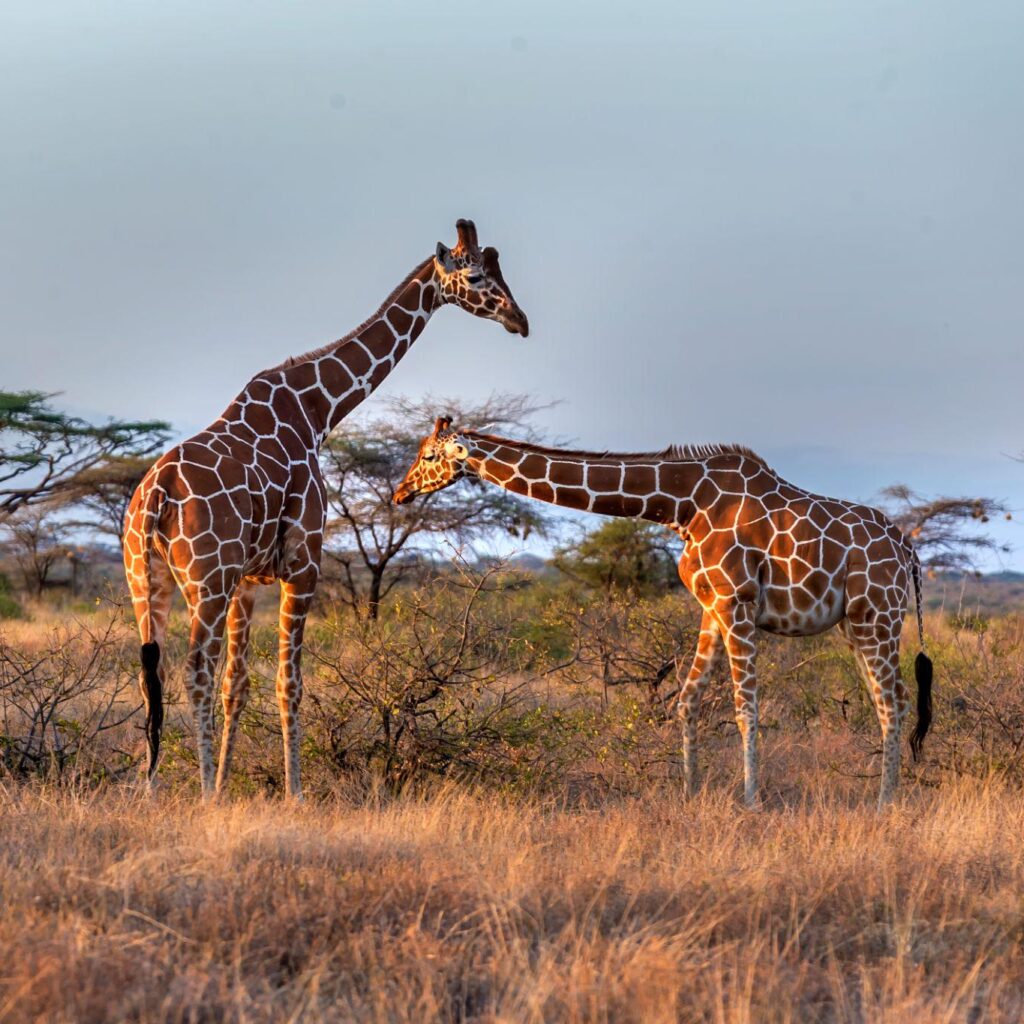
The reticulated giraffe is recognised by its striking coat pattern, consisting of large, sharply defined, polygonal patches separated by pale lines.
It is one of the most visually distinctive giraffe subspecies and a favourite subject for wildlife photography.
In Samburu, giraffes may be seen browsing on acacia trees and moving across open woodland. Their height and patterned coats make them relatively easy to identify when conditions provide clear visibility.
Gerenuk


The gerenuk is an unusual antelope known for its exceptionally long neck, slender body and ability to stand on its hind legs while feeding on higher branches.
This feeding behaviour helps distinguish it from many other antelope species.
Gerenuks are well adapted to dry environments and can obtain a significant proportion of their moisture from the vegetation they eat.
For visitors, spotting a gerenuk balancing upright to browse is one of Samburu’s most memorable wildlife experiences.
Beisa Oryx


The Beisa oryx is a powerful antelope recognised by its long, straight horns, contrasting facial markings and pale body.
Its adaptations allow it to survive in hot, relatively dry environments where water and vegetation may be limited.
Look for oryx in open country and areas where suitable grasses and browse are available.
Because its horns and markings are distinctive, the species is particularly rewarding for travellers interested in identifying northern Kenya’s specialised wildlife.
Somali Ostrich


The Somali ostrich is a large, flightless bird associated with northeastern Africa.
It differs from the common ostrich in several physical characteristics, including the blue-grey appearance of exposed skin on the neck and legs of males.
Seeing this species adds another dimension to Samburu’s appeal, especially for birders and travellers who want to learn more about the ecological differences between Kenya’s northern and southern regions.
Safari tip: Ask your guide to identify each member of the Samburu Special Five during your game drives. Their knowledge of animal behaviour, tracks and habitat can make sightings more rewarding.
Although Samburu offers excellent opportunities to look for these five species, sightings cannot be guaranteed. Wildlife movements depend on season, habitat conditions and chance.
4. Other Wildlife in Samburu National Reserve
Beyond the Special Five, Samburu supports a variety of mammals and birds that make game drives worthwhile throughout the year.
Elephants
Elephants are among the reserve’s most celebrated animals. They are frequently associated with the Ewaso Ng’iro River, where they may drink, feed and move through the surrounding vegetation.
Watching an elephant herd cross a riverbed or move through doum palms can be a highlight of a Samburu safari.
Lions
Lions are present in Samburu and may be encountered during morning or afternoon game drives. Guides look for tracks, listen for calls and monitor areas where prey animals gather.
However, lions are wild animals, and sightings depend on their movements and behaviour.
Leopards
Leopards are another attraction, although their secretive habits can make them challenging to find.
They may rest in trees, move through dense vegetation or become active when temperatures are cooler. Patient observation and an experienced guide can improve the chances of a sighting.
Cheetahs
Cheetahs may be seen in more open habitats, where their hunting style and preference for visibility can be advantageous.
As with all predators, sightings are not guaranteed.
Other Mammals
Depending on the area and season, visitors may also encounter impalas, waterbucks, olive baboons, warthogs, dik-diks and other antelope.
Birdlife
Samburu is also rewarding for birdwatching. The combination of riverine habitat, dry woodland, scrub and open savannah attracts a variety of resident and seasonal birds.
Birdwatchers should allow time to observe smaller species rather than concentrating exclusively on large mammals.
For travellers interested in specialised wildlife photography, a private safari can offer greater flexibility to spend time with particular species without having to follow a rigid group schedule.
5. Best Time to Visit Samburu National Reserve
The best time to visit Samburu National Reserve for many wildlife-focused safaris is during the drier months, particularly June to October. Animals may become easier to locate around permanent water sources, while reduced vegetation can improve visibility.
However, Samburu is a year-round destination, and the best month depends on whether your priority is wildlife viewing, birdwatching, photography, scenery or lower-season travel.
| Season | What to expect | Best suited to |
|---|---|---|
| June–October | Generally drier conditions and potentially easier wildlife viewing | First-time visitors and wildlife photographers |
| January–February | Often favourable conditions for game drives, depending on local rainfall | Wildlife viewing and shorter safaris |
| March–May | Long-rain period, with greener landscapes and potentially more challenging road conditions | Flexible travellers and landscape photographers |
| November–December | Short-rain period, with changing conditions and greener scenery | Birdwatchers and travellers seeking seasonal variety |
These are general seasonal patterns rather than guarantees. Rainfall can vary from year to year, and conditions in northern Kenya may differ from those in other parts of the country.
Is Samburu Worth Visiting During the Rainy Season?
Yes. The rainy season can offer greener scenery, atmospheric skies and excellent photographic opportunities.
Birdwatchers may also find seasonal changes particularly rewarding.
The main consideration is road accessibility. Heavy rainfall can affect tracks within the reserve, so travellers should confirm current conditions with their lodge or safari operator.
How Many Days Do You Need in Samburu?
For most visitors, two to three nights is a practical starting point.
- One night: Suitable as a brief stop on a tightly scheduled itinerary, but game-viewing time will be limited.
- Two nights: Allows time for several game drives and a meaningful introduction to the reserve.
- Three nights: Provides greater flexibility to search for the Special Five, observe predators and enjoy a slower safari pace.
- Four nights or longer: Suitable for wildlife photographers, birdwatchers and travellers combining the reserve with nearby conservancies or other northern Kenya destinations.
If Samburu is your main wildlife destination, consider staying at least three nights rather than rushing through the reserve.
6. Best Things to Do in Samburu National Reserve
Morning and Afternoon Game Drives
Game drives are the main activity in Samburu.
Early-morning drives can be productive because temperatures are cooler and some animals are more active. Afternoon drives offer another opportunity to observe wildlife as the day cools.
A knowledgeable guide can help identify tracks, explain animal behaviour and search for species that are easy to overlook.
Wildlife Photography
Samburu’s scenery provides excellent opportunities for wildlife photography.
The combination of elephants, distinctive giraffes, unusual antelopes, rocky hills and riverine vegetation creates a variety of photographic settings.
For the best results, consider a private vehicle, particularly if you want to spend extended periods photographing a particular species.
Birdwatching
Birdwatching is a worthwhile addition to a Samburu itinerary, whether you are an experienced birder or a beginner.
Bring binoculars and ask your guide to include suitable habitats in the day’s route.
Samburu Cultural Experiences
Cultural visits can help travellers understand the relationship between local communities, pastoral livelihoods, traditional knowledge and the surrounding environment.
Choose experiences organised with community participation and clear local benefits.
Ask permission before photographing people, respect individual preferences and avoid treating cultural traditions as performances for tourists.
Scenic Sundowners and Bush Dining
Some lodges and camps can arrange sundowners or bush dining in designated locations, subject to their operating procedures and safety rules.
These experiences add variety to a safari and provide time to appreciate northern Kenya’s landscapes beyond game drives.
Availability, location and additional charges depend on the property and package.
Important: Activities outside the reserve, such as guided walking safaris or certain night drives, may be available through specific conservancies or camps. Do not assume they are permitted inside Samburu National Reserve itself; confirm the location and rules before booking.
7. Where to Stay in Samburu National Reserve
Choosing the right accommodation affects your safari experience, budget and access to wildlife-viewing areas.
Options range from established safari lodges to luxury tented camps and simpler camping facilities. Some properties are inside the reserve, while others are in neighbouring conservancies or nearby areas.
The distinction matters because location can affect conservation fees, activity options and the time required to reach game-viewing areas.
The Samburu County Government identifies accommodation options that include Samburu Game Lodge, Larsen’s Camp, Samburu Sopa Lodge, Samburu Intrepids, Elephant Bedroom Camp and Elephant Watch Safaris Camp. Availability, operating status and current rates should be confirmed before making a booking.
Luxury Safari Accommodation
Luxury tented camps and lodges are suitable for travellers seeking personalised service, comfortable rooms or tents, quality dining and well-organised game drives.
Depending on the property, facilities may include private verandas, swimming pools, river views, private vehicles and tailored safari experiences.
A luxury Samburu safari can work particularly well for couples, honeymooners, photographers and travellers combining northern Kenya with other high-end safari destinations.
Mid-Range Lodges
Mid-range accommodation can provide comfortable rooms, meals and access to guided game drives without the pricing of the most exclusive camps.
These properties may be a good choice for families, couples and travellers who want to balance comfort with the overall cost of their safari.
Budget Camping
Camping can appeal to adventurous travellers seeking a simpler experience.
However, budget planning should account for campsite charges, reserve entry, vehicle costs, meals, transport and any required guide services.
Independent camping is not automatically the cheapest option once all logistics are included.
How to Choose the Right Camp
Before booking, check:
- Whether the property is inside Samburu National Reserve or in a neighbouring conservancy.
- Whether meals and game drives are included.
- Whether reserve or conservancy fees are included in the quotation.
- Whether transfers from an airstrip are included.
- Whether private game drives are available.
- Whether family accommodation or child-specific activities are offered.
- What cancellation terms and seasonal supplements apply.
For a private safari, the best camp is not necessarily the most expensive. It is the one that fits your travel dates, budget, preferred comfort level and wildlife interests.
8. How to Get to Samburu National Reserve
Travellers can reach Samburu by road or by scheduled or charter flight, depending on their itinerary and accommodation.
By Road from Nairobi
The road journey from Nairobi generally takes around six to seven hours, although traffic, stops, weather and road conditions can affect the total travel time.
A typical route follows the A2 north through Nanyuki and Isiolo towards Archer’s Post, the main gateway for Samburu National Reserve.
The journey offers a transition from Kenya’s busier central highlands to the drier landscapes of the north.
A suitable safari vehicle is important because roads inside the reserve may be rough, sandy or affected by rainfall.
By Air
Flying is a convenient option for travellers with limited time or those planning a luxury fly-in safari.
Scheduled services connect Nairobi with airstrips serving the Samburu area. AirKenya and Safarilink are among the operators associated with flights to the region; routes, operating days, luggage restrictions and schedules should be checked for your travel dates.
Flying reduces time spent travelling by road and can make it easier to combine Samburu with other destinations.
Travel-planning tip: Ask your safari operator to confirm the correct arrival airstrip and transfer arrangements for your chosen camp. Not every airstrip serves every property equally conveniently.
9. How Much Does a Samburu National Reserve Safari Cost?
The cost of a Samburu safari depends on accommodation, travel season, transport, group size, game drives and the length of your stay.
There is no single price that applies to every itinerary.
Main Factors That Affect Safari Prices
Accommodation: Luxury tented camps generally cost more than standard lodges or camping options.
Transport: A private road safari, a fly-in itinerary and a shared group safari have different cost structures.
Park fees: Reserve entry fees depend on visitor category and applicable county regulations. Vehicle charges may also apply.
Travel season: Accommodation rates and availability can change during popular travel periods.
Length of stay: Additional nights increase the total package cost but allow more time for game drives.
Additional experiences: Cultural visits, private vehicles, special dining arrangements and activities outside the reserve may add to the price.
What Should a Samburu Safari Package Include?
When comparing quotations, check whether the price covers:
- Accommodation and meals.
- Safari vehicle and driver-guide.
- Fuel and road transfers.
- Reserve entry fees.
- Game drives.
- Airport or airstrip transfers, where applicable.
- Applicable taxes and service charges.
- Any additional conservancy fees.
- Drinking water during scheduled activities.
Do not compare two packages on headline price alone. One may include park fees and transfers while another excludes them.
What Are the Samburu National Reserve Entry Fees?
Entry fees are set under the reserve’s applicable county arrangements and can change. Rates may differ for non-residents, Kenyan residents, citizens and children.
Published 2026 information indicates a non-resident adult rate of US$85 for Samburu National Reserve, but travellers should verify the applicable rate, eligibility category and payment procedure before departure. Buffalo Springs and Shaba are administered separately, so visiting neighbouring reserves may involve additional fees.
When budgeting, ask your safari operator to itemise reserve entry, vehicle charges and any neighbouring conservancy fees.
This helps prevent unexpected expenses and makes quotations easier to compare.
Conversion tip for Bunuli Safaris: Offer clients a tailored quotation based on their dates, preferred accommodation, group size and whether they want a road safari or fly-in experience. This is more useful than quoting one price that may not match their requirements.
10. Samburu National Reserve vs Maasai Mara: Which Is Better?
Neither destination is universally better. The right choice depends on the type of safari you want.
| Feature | Samburu National Reserve | Maasai Mara National Reserve |
|---|---|---|
| Main wildlife attraction | Samburu Special Five and northern dry-country species | Large mammal populations and the Great Migration in season |
| Landscape | Arid plains, rocky hills, acacia woodland and riverine habitat | Broad grasslands, rolling plains and river systems |
| Photography | Distinctive northern species and dramatic landscapes | Herds, predators and expansive savannah scenes |
| Seasonal highlight | Dry-season wildlife viewing around water sources | Seasonal wildebeest migration, generally concentrated in the wider Mara–Serengeti ecosystem at different times of year |
| Safari atmosphere | Northern Kenya experience with a distinctive ecological character | One of Africa’s most internationally recognised safari destinations |
| Ideal duration | Commonly two to three nights | Commonly three or more nights, depending on interests |
| Best for | Travellers seeking unusual species and a different Kenya safari | Travellers prioritising the Mara’s famous plains and migration experience |
Can You Visit Samburu and Maasai Mara on One Safari?
Yes. A longer Kenya itinerary can combine Samburu with the Maasai Mara, and potentially other destinations such as Lake Nakuru or Amboseli.
However, the two destinations are geographically separated. A well-designed itinerary should account for travel time, domestic flight connections or road transfers rather than attempting to fit too much into a short holiday.
If you have limited time, choose the destination that best matches your main wildlife interests. If you have more time, combining northern and southern Kenya can provide a broader safari experience.
For travellers who have already visited the Maasai Mara, Samburu can be an especially valuable addition because its characteristic northern species and landscapes create a noticeably different experience.
11. Suggested 3-Day Samburu Safari Itinerary
A three-day itinerary is a practical way to experience Samburu without rushing through every game drive.
Day 1: Nairobi to Samburu National Reserve
Depart Nairobi by road or take a scheduled flight, depending on your chosen package.
After arriving and transferring to your lodge, enjoy lunch and some time to settle in.
In the afternoon, head out for your first game drive. Your guide can introduce you to the reserve’s landscapes and help you begin searching for elephants, giraffes, antelopes and predators.
Return to your lodge for dinner and an overnight stay.
Day 2: Full Day of Wildlife Viewing
Start with an early-morning game drive, when temperatures are cooler and some animals are more active.
Look for the Samburu Special Five, while remaining open to other wildlife encounters.
Return to the lodge for breakfast and relaxation. Depending on the property’s schedule, you may have time for lunch and a rest before an afternoon game drive.
Alternatively, arrange a full-day outing if permitted by the reserve’s rules and your accommodation’s operating arrangements.
Return to camp in the evening.
Day 3: Morning Game Drive and Departure
Enjoy a final morning game drive before breakfast, allowing your guide to focus on species you have not yet seen.
After breakfast, depart for Nairobi by road or transfer to the appropriate airstrip for your return flight.
How to improve this itinerary: Add a third night if your priority is wildlife photography or finding particular species. Extra time allows you to adapt your game drives to sightings and local conditions rather than relying on a single opportunity.
12. Responsible Tourism and Conservation in Samburu
A responsible Samburu safari should support wildlife conservation while respecting local communities and the natural environment.
The region’s dry landscapes are sensitive to changes in rainfall, access to water and land use. Wildlife conservation also intersects with the livelihoods of communities that depend on pastoralism and other local economic activities.
Travellers can make more responsible choices by:
- Booking with operators who use qualified guides and follow reserve regulations.
- Keeping a respectful distance from wildlife.
- Never encouraging drivers to chase or crowd animals.
- Avoiding litter and single-use plastics wherever practical.
- Respecting restrictions on off-road driving.
- Asking permission before photographing community members.
- Choosing cultural visits that respect local people and provide clear community benefits.
- Supporting camps and businesses that communicate their conservation and sustainability practices transparently.
Responsible tourism is not simply about reducing a visitor’s environmental footprint. It also means recognising that the destination is a living landscape where wildlife, local communities and tourism must coexist.
For Bunuli Safaris, explaining these practices in itinerary proposals can help clients understand the value of knowledgeable guides, responsible accommodation and well-planned travel.
13. Essential Tips Before Booking Your Samburu Safari
Before confirming your trip, use the following checklist.
Choose the right season. If wildlife viewing is your priority, consider the drier months, while remaining flexible about weather and animal movements.
Allow enough time. Two to three nights is a useful starting point for most itineraries.
Confirm what your package includes. Ask for a breakdown of accommodation, meals, transport, game drives and reserve fees.
Choose road or air access according to your schedule. Flying saves time, while driving offers a more gradual journey through central and northern Kenya.
Pack for changing temperatures. Mornings and evenings can be cool, even when afternoons are hot.
Bring binoculars and suitable camera equipment. These are particularly useful for birdwatching and observing animals at a distance.
Follow your guide’s instructions. Wildlife encounters are safest and most rewarding when visitors respect the animals’ space and natural behaviour.
Verify current travel information. Confirm entry fees, lodge availability, flight schedules and road conditions close to your departure date.
Book accommodation according to location. A camp inside the reserve and a property in a neighbouring conservancy may offer different access arrangements, activities and charges.
Consider a private safari if flexibility matters. Private transport can make it easier to adjust game drives to your interests, especially if you are travelling as a couple, family or photography group.
Frequently Asked Questions About Samburu National Reserve
These questions target common informational and commercial search intent and can also inform a relevant FAQ section on the Bunuli Safaris website.
1. Is Samburu National Reserve worth visiting?
Yes. Samburu is particularly worthwhile for travellers interested in the Samburu Special Five, elephants, distinctive northern Kenyan landscapes and a safari experience different from the Maasai Mara. Its appeal is strongest for visitors who want to explore Kenya beyond the country’s most famous southern destinations.
2. What is Samburu National Reserve famous for?
Samburu is best known for the Samburu Special Five: the Grevy’s zebra, reticulated giraffe, gerenuk, Beisa oryx and Somali ostrich. It is also known for elephants, predators, birdlife and the Ewaso Ng’iro River.
3. What is the best month to visit Samburu National Reserve?
June to October is generally a strong period for wildlife viewing because drier conditions can make animals easier to locate. January and February may also offer favourable conditions, although seasonal weather varies.
4. How many days do you need in Samburu?
Two to three nights is a practical duration for most visitors. Travellers interested in wildlife photography, birdwatching or a slower safari pace may benefit from four nights or more.
5. Can you see the Big Five in Samburu National Reserve?
Samburu supports lions, leopards and elephants, but it is not generally chosen as a destination for reliably seeing all five members of the traditional Big Five. Travellers specifically seeking the complete Big Five should consider their wider Kenya itinerary carefully.
6. What is the Samburu Special Five?
The Samburu Special Five are the Grevy’s zebra, reticulated giraffe, gerenuk, Beisa oryx and Somali ostrich. These distinctive northern species are among the reserve’s principal wildlife attractions.
7. How much does a Samburu safari cost?
The cost depends on accommodation, travel dates, transport, group size, reserve fees and the number of nights. Request an itemised quotation that explains what is included rather than relying on a headline price alone.
8. Can you visit Samburu National Reserve from Nairobi?
Yes. You can travel by road or fly from Nairobi to an airstrip serving the Samburu area. The road journey generally takes around six to seven hours, while flying substantially reduces travel time.
9. Is Samburu suitable for a family safari?
Yes. Samburu can suit families interested in wildlife, landscapes and cultural experiences. The best accommodation depends on children’s ages, room arrangements, activity restrictions and the property’s family policies.
10. Is Samburu better than the Maasai Mara?
The answer depends on your priorities. Samburu is especially attractive for the Special Five and northern dry-country wildlife. The Maasai Mara is better known for its expansive grasslands, predators and the seasonal Great Migration.
11. Are there luxury lodges in Samburu National Reserve?
Yes. Samburu and the surrounding area have established lodges and tented camps across different comfort levels. Confirm the property’s location, current operating status, inclusions and rates before booking.
12. Can you combine Samburu with other Kenya safari destinations?
Yes. Samburu can be combined with the Maasai Mara, Lake Nakuru, Amboseli or other destinations on a longer itinerary. The route should be planned around realistic travel times and available flights.
13. Is Samburu a national park or a national reserve?
Samburu is officially a national reserve, managed by Samburu County. It is distinct from national parks administered directly by Kenya Wildlife Service, which matters when checking management arrangements and applicable entry fees.
14. What should I pack for a Samburu safari?
Pack lightweight neutral-coloured clothing, a warm layer for early mornings, comfortable closed shoes, a sun hat, sunscreen, binoculars, camera equipment and personal medication. A reusable water bottle is also useful where suitable refill arrangements are available.
15. Can I book a private Samburu safari?
Yes. A private safari can be tailored to your travel dates, preferred accommodation, budget, group size and wildlife interests. It may also offer more flexibility with game-drive timing and photography stops.
Plan Your Samburu National Reserve Safari with Bunuli Safaris
Samburu National Reserve is an excellent choice for travellers who want to discover a different side of Kenya. Its distinctive wildlife, scenic river landscapes and northern cultural setting create a safari experience that complements the country’s more familiar wildlife destinations.
Whether you are looking for a short Samburu wildlife getaway, a luxury tented safari, a family holiday or a longer Kenya adventure, the right itinerary will depend on your available time, travel style and budget.
At Bunuli Safaris, we can help you plan a personalised East African safari with accommodation, transport, wildlife-viewing experiences and itinerary arrangements matched to your interests.
Ready to explore Samburu?
Request a personalised Samburu safari quotation and tell us:
- Your preferred travel dates.
- The number of travellers.
- Your accommodation preference: budget, mid-range or luxury.
- Whether you prefer road travel or a fly-in safari.
- Whether you would like to combine Samburu with the Maasai Mara or other Kenyan destinations.
Start planning your Kenya safari with Bunuli Safaris and discover the remarkable wildlife and landscapes of northern Kenya.