Introduction
Best Birding Destinations in Uganda, Uganda is one of Africa’s most diverse birdwatching destinations, with more than 1,000 recorded bird species across a remarkably compact country. Uganda Wildlife Authority currently describes the country as a birding paradise with more than 1,073 recorded bird species, representing about half of Africa’s bird species. Its combination of tropical forests, wetlands, lakes, savannah, mountains and Albertine Rift habitats makes Uganda particularly attractive for both specialist birders and travelers who want to combine birdwatching with gorilla trekking, chimpanzee tracking and classic wildlife safaris.
For travelers planning a Uganda birding safari, the choice of destination depends largely on the species and habitats you want to experience. Mabamba Bay is particularly famous for the Shoebill, Bwindi and Mgahinga are important for Albertine Rift endemics, Semuliki provides access to Guinea-Congo forest species, while Murchison Falls, Queen Elizabeth, Lake Mburo and Kidepo combine excellent birding with traditional savannah safari experiences.
Whether you are a dedicated birder carrying a long lens and field guide or a first-time visitor interested in adding birdwatching to a Uganda safari, these are some of the best places to include in your itinerary.
Why Go Birdwatching in Uganda?
Uganda’s exceptional bird diversity comes from the meeting of several ecological zones. The country contains tropical forests, wetlands, lakes, rivers, montane environments, papyrus swamps and open savannahs, creating habitats for a wide range of resident and migratory birds.
The Albertine Rift is particularly important for specialist birders because several bird species are restricted to this region. Bwindi Impenetrable and Mgahinga Gorilla National Parks are among the accessible destinations for Albertine Rift endemics, while Semuliki’s Central African forest influence gives it a distinctive bird community.
Uganda also works particularly well for combination safaris. A traveler can spend time looking for the Shoebill around Mabamba Bay, continue west for gorilla trekking in Bwindi, track chimpanzees in Kibale and finish with savannah birding and wildlife in Queen Elizabeth or Murchison Falls.
1. Mabamba Bay Wetland — Best Place to See the Shoebill


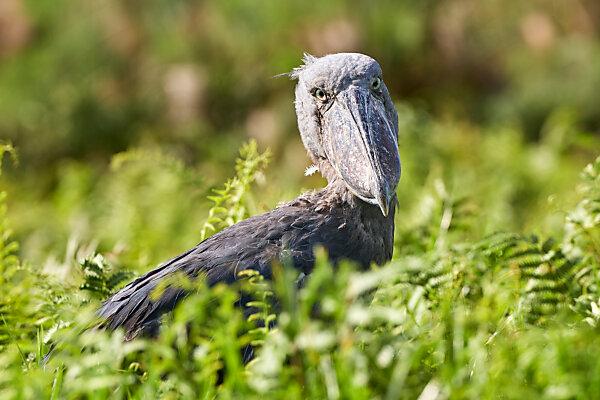
Mabamba Bay Wetland is one of Uganda’s most famous birding sites and should be high on the list for travelers specifically searching for the Shoebill.
Located on the shores of Lake Victoria west of Entebbe, Mabamba is a large papyrus wetland and an important habitat for wetland birds. Uganda Wildlife Authority monitoring has recorded the Shoebill and other species of conservation interest at the site, while the wetland has developed an established ecotourism experience centered around Shoebill viewing.
The traditional way to explore the wetland is by small canoe, allowing visitors to move quietly through papyrus channels while searching for birds.
Birds to look for at Mabamba Bay
- Shoebill
- Blue Swallow
- African fish eagle
- African jacana
- Kingfishers
- Herons
- Egrets
- Papyrus-associated species
Mabamba is also strategically convenient for travelers arriving through Entebbe International Airport, making it an excellent first or final activity on a Uganda birding itinerary.
Best for: Shoebill enthusiasts, short birding excursions, photographers and travelers with limited time.
2. Murchison Falls National Park — Birding and Big Game

Murchison Falls National Park combines birdwatching, wildlife and dramatic landscapes, making it one of the most versatile destinations for a Uganda safari.
Uganda Wildlife Authority lists more than 550 bird species for Murchison Falls. The park’s varied habitats include savannah, woodland, riverine environments and the Albert Nile, creating opportunities to see both widespread African species and sought-after specialties.
The Albert Delta is particularly important for birders searching for the Shoebill. Other notable species include the White-crested Turaco, Red-winged Grey Warbler, African Fish Eagle, Goliath Heron and Saddle-billed Stork.
Birding can be combined with:
- Game drives
- Nile boat cruises
- Nature walks
- Murchison Falls hikes
- Shoebill excursions
- Photography
Best for: First-time birders, wildlife lovers, photographers and travelers wanting birding plus a traditional safari.
3. Bwindi Impenetrable National Park — Albertine Rift Endemics


Bwindi is internationally known for mountain gorilla trekking, but it is also one of Uganda’s most important forest birding destinations.
The park contains more than 350 bird species, including 23 Albertine Rift endemics, according to Uganda Wildlife Authority. These include species such as the African Green Broadbill and Shelley’s Crimsonwing.
The combination of steep ridges, deep valleys, dense forest and different elevations creates a wide variety of habitats.
Birding can be particularly rewarding around forest trails and areas such as Ruhija, where specialist birders can search for Albertine Rift species.
Why combine Bwindi birding with gorilla trekking?
This is one of Bunuli Safaris’ strongest opportunities.
A traveler can combine:
Gorilla Trekking + Forest Birding + Cultural Experiences
instead of making a separate trip exclusively for birds.
Best for: Specialist birders, photographers, gorilla trekkers and travelers interested in Albertine Rift endemics.
4. Semuliki National Park — Central African Bird Species


For specialist birders, Semuliki National Park is one of the most important destinations in Uganda.
Its location on the western side of the Rwenzori Mountains and its connection to the eastern extension of the Congo Basin’s Ituri Forest give Semuliki a bird community with strong Central African characteristics.
Uganda Wildlife Authority records more than 435 bird species in the park, including Guinea-Congo forest species, Albertine Rift endemics and species with restricted ranges.
Some notable species include:
- Spot-breasted Ibis
- Hartlaub’s Duck
- Congo Serpent Eagle
- Chestnut-flanked Goshawk
- Red-thighed Sparrowhawk
- Western Bronze-naped Pigeon
- Yellow-throated Cuckoo
Semuliki is also home to the famous Sempaya Hot Springs, allowing travelers to combine specialist birding with nature walks and cultural experiences.
Best for: Serious birders, forest bird specialists and travelers looking for species associated with Central African habitats.
5. Kibale National Park — Forest Birding and Chimpanzees


Kibale is best known as Uganda’s premier chimpanzee tracking destination, but its forest ecosystem also provides excellent opportunities for birdwatching.
Uganda Wildlife Authority records approximately 370 bird species in Kibale, including Albertine Rift species.
Among the notable birds are:
- Nahan’s Francolin
- Cassin’s Spinetail
- Blue-headed Bee-eater
- Lowland Masked Apalis
- African Pitta
- Green-breasted Pitta
- Black Bee-eater
- Eastern Nicator
- Crowned Eagle
Kibale is particularly attractive for travelers who want a primate and birding safari rather than a bird-only trip.
You can combine:
Chimpanzee Tracking → Birding → Bigodi Wetland → Queen Elizabeth National Park
This creates a strong multi-experience itinerary for Bunuli Safaris.
6. Queen Elizabeth National Park — Savannah, Wetlands and Waterbirds


Queen Elizabeth National Park is one of Uganda’s most diverse safari destinations and supports more than 600 bird species, according to Uganda Wildlife Authority.
Its combination of savannah, crater lakes, forests, wetlands and the Kazinga Channel provides habitats for an impressive variety of birds.
A Kazinga Channel boat cruise is particularly useful for observing water-associated species while also seeing hippos, crocodiles, elephants and buffaloes.
Birds that may be encountered include:
- African Fish Eagle
- Saddle-billed Stork
- Pink-backed Pelican
- Shoebill
- Papyrus Gonolek
- Herons
- Egrets
- Kingfishers
This makes Queen Elizabeth particularly suitable for travelers who don’t want their birding experience to be separate from a conventional Uganda safari.
Best for: Birders, families, photographers and travelers combining birding with wildlife.
7. Lake Mburo National Park — Accessible Birding Safari


Lake Mburo National Park is one of Uganda’s most accessible birding destinations, particularly for travelers beginning or ending a safari in Kampala or Entebbe.
The park supports more than 315 bird species and contains a mixture of savannah, woodland, wetlands and lakes.
Notable birds include:
- Mosque Swallow
- Black-bellied Bustard
- Bare-faced Go-away Bird
- Rüppell’s Starling
- Southern Ground Hornbill
- Black-throated Barbet
The park also offers a different style of safari because visitors can combine birding with walking safaris, boat excursions and game drives.
Best for: Short birding trips, families, first-time visitors and travelers combining birding with wildlife.
8. Kidepo Valley National Park — Northern Uganda Birding

Kidepo Valley National Park offers a very different birding experience from Uganda’s tropical forests.
Located in the semi-arid Karamoja region, Kidepo supports more than 470 bird species, including birds associated with northern and dry-country habitats.
Birding highlights include:
- Ostrich
- Secretary Bird
- Northern Carmine Bee-eater
- Little Green Bee-eater
- Abyssinian Scimitarbill
Kidepo is particularly interesting for birders who want to combine their checklist with a remote wilderness experience and cultural encounters in Karamoja.
Best for: Experienced birders, photographers, wilderness travelers and northern Uganda specialists.
9. Mount Elgon National Park — Eastern Uganda Birding

Mount Elgon provides another distinctive birding environment, with habitats changing from montane forest to high-altitude moorland.
Uganda Wildlife Authority records more than 300 bird species in the park, including the Tacazze Sunbird, Jackson’s Francolin and the Bearded Vulture/Lammergeier.
Birding can be combined with:
- Mount Elgon hiking
- Sipi Falls
- Cultural experiences
- Coffee tours
- Forest walks
This makes eastern Uganda particularly attractive for travelers looking for birding and adventure in one itinerary.
10. Mgahinga Gorilla National Park — Birds of the Virunga Mountains
Mgahinga is another important destination for Albertine Rift birding.
The park’s high-altitude forests and volcanic landscapes provide habitat for specialized montane species. Uganda Wildlife Authority identifies Mgahinga, together with Bwindi, as one of Uganda’s accessible locations for Albertine Rift endemics.
For travelers already visiting Mgahinga for:
- Gorilla trekking
- Golden monkey tracking
- Volcano hiking
adding birding creates a more comprehensive forest experience.
Best Birding Destinations in Uganda at a Glance
| Destination | Main Birding Attraction | Best For |
|---|---|---|
| Mabamba Bay | Shoebill | Shoebill seekers |
| Murchison Falls | Shoebill + savannah birds | Birding + wildlife |
| Bwindi | Albertine Rift endemics | Specialist birders |
| Semuliki | Guinea-Congo species | Serious birders |
| Kibale | Forest birds | Birds + chimpanzees |
| Queen Elizabeth | Wetland & savannah birds | Birding + safari |
| Lake Mburo | Acacia & wetland species | Short birding safaris |
| Kidepo | Northern species | Wilderness birding |
| Mount Elgon | Montane birds | Birding + hiking |
| Mgahinga | Albertine Rift species | Birds + gorillas |
What Is the Best Birding Destination in Uganda?
There isn’t one destination that is best for every birder because Uganda’s strongest birding sites offer different habitats and specialties.
For the Shoebill: Mabamba Bay and Murchison Falls are key choices.
For Albertine Rift endemics: Bwindi and Mgahinga are particularly important.
For Central African forest species: Semuliki stands out because of its Ituri Forest influence and Guinea-Congo species.
For birding combined with chimpanzee trekking: Kibale is a natural choice.
For birding combined with classic wildlife safari: Murchison Falls and Queen Elizabeth offer particularly diverse experiences.
For northern Uganda species: Kidepo provides a distinctive dry-country birding experience.
Best Time for Birdwatching in Uganda
Uganda can be visited for birdwatching throughout the year, particularly because many of the country’s most sought-after species are resident birds. However, weather and habitat conditions can influence the experience.
Uganda Wildlife Authority identifies late May through September as a generally favorable period for birdwatching, when rainfall is lower and food availability is good. December and January can also provide good conditions, while the wetter periods can make some forest trails and roads more challenging.
For serious birders, the timing should also depend on the specific species and region being targeted.
How Many Days Do You Need for a Uganda Birding Safari?
The ideal duration depends on your birding goals.
3–4 Days
Suitable for:
- Mabamba Bay
- Entebbe
- Lake Mburo
5–7 Days
A good introduction to Uganda birding could combine:
Mabamba Bay → Kibale → Queen Elizabeth
8–10 Days
A longer itinerary can include:
Mabamba → Murchison Falls → Kibale → Queen Elizabeth
12–14+ Days
Dedicated birders can consider a broader route covering:
Mabamba Bay → Murchison Falls → Kibale → Semuliki → Bwindi → Mgahinga
The longer itineraries allow more time for specialist forest birding rather than simply adding birdwatching as a secondary activity.
Uganda Birding Safari vs Wildlife Safari
One of Uganda’s biggest advantages is that you don’t necessarily have to choose between birdwatching and wildlife.
A single safari can combine:
Birding + Gorillas + Chimpanzees + Big Game + Wetlands + Cultural Experiences
For example, a traveler could begin with a Shoebill excursion at Mabamba Bay, continue to Kibale for chimpanzee tracking, visit Queen Elizabeth for savannah and waterbirds, and finish in Bwindi for gorilla trekking and Albertine Rift birding.
This makes Uganda particularly attractive for travelers who want a multi-interest African safari rather than a single-purpose birding holiday.
What to Pack for a Uganda Birding Safari
A good birding safari requires a few items beyond normal safari equipment.
Recommended birding gear
- Binoculars
- Camera with telephoto lens
- Field guide
- Birding checklist
- Lightweight backpack
- Neutral-colored clothing
- Waterproof jacket
- Comfortable walking shoes
- Sun hat
- Sunscreen
- Insect repellent
- Reusable water bottle
- Extra camera batteries
- Power bank
- Waterproof protection for electronics
For forest birding, comfortable footwear is particularly important because trails can become wet and muddy during rainy periods.
Why Choose Bunuli Safaris for a Uganda Birding Safari?
A birding safari is most rewarding when the itinerary is built around the species, habitats and regions you want to see, rather than simply adding birdwatching to a standard wildlife itinerary.
Bunuli Safaris can design private and customized Uganda journeys combining birding with other experiences such as Shoebill excursions, gorilla trekking, chimpanzee tracking, game drives, boat cruises, forest walks and cultural experiences.
Whether you have three days for a Shoebill-focused trip or two weeks for a dedicated Uganda birding expedition, the itinerary can be structured around your interests, travel dates, preferred accommodation level and budget.
Plan Your Uganda Birding Safari
Looking for the Shoebill, Albertine Rift endemics or a complete Uganda birding experience? Talk to Bunuli Safaris about creating a private, tailor-made birding safari in Uganda.
Plan Your Uganda Birding Safari → Request a Customized Itinerary
Frequently Asked Questions About Birding in Uganda
1. How many bird species are found in Uganda?
Uganda Wildlife Authority currently states that Uganda has more than 1,073 recorded bird species, making the country one of Africa’s highly diverse birding destinations.
2. Where is the best place to see the Shoebill in Uganda?
Mabamba Bay Wetland is one of Uganda’s best-known Shoebill sites. Murchison Falls, particularly the Albert Delta, is another important destination for Shoebill sightings.
3. What is the best time for birdwatching in Uganda?
Birding is possible throughout the year, but Uganda Wildlife Authority generally identifies late May to September as a favorable period because of lower rainfall and good food availability.
4. Is Uganda good for a birding safari?
Yes. Uganda’s combination of tropical forests, wetlands, lakes, mountains and savannah creates habitats for a highly diverse bird population.
5. Which Uganda national park is best for birding?
The answer depends on your target species. Semuliki is particularly valuable for Guinea-Congo forest species, Bwindi and Mgahinga for Albertine Rift endemics, while Murchison Falls and Queen Elizabeth offer excellent birding combined with traditional safari experiences.
6. Can I combine birding with gorilla trekking?
Yes. Bwindi and Mgahinga are especially suitable for combining birding with gorilla trekking because they are important habitats for Albertine Rift birds.
7. Can I combine birding with chimpanzee trekking?
Yes. Kibale National Park is an excellent option because it combines chimpanzee experiences with forest birding and supports approximately 370 bird species.
8. Is Uganda suitable for beginner birdwatchers?
Yes. Uganda offers a mixture of easily accessible birding locations and specialist sites, meaning beginners can enjoy birdwatching while experienced birders can target rare and range-restricted species.