Introduction
Kidepo Valley National Park is Uganda’s remote wilderness destination, famous for vast savannah landscapes, dramatic mountain scenery, exceptional wildlife and an authentic sense of isolation that is increasingly difficult to find in East Africa.
Located in Uganda’s far northeastern corner between the borders of South Sudan and Kenya, Kidepo is unlike the country’s more frequently visited safari destinations.
There are no large urban centers immediately outside the park. There is no busy tourism circuit passing through every day. Instead, visitors encounter enormous open valleys, rugged mountains, seasonal rivers, wildlife and communities whose culture remains deeply connected to the landscape.
Uganda Wildlife Authority manages Kidepo as one of Uganda’s national parks and describes the country’s protected areas as important for wildlife conservation, tourism and community development.
For travelers searching for an off-the-beaten-path Uganda safari, Kidepo offers something particularly valuable:
space, wilderness and exclusivity.


Kidepo Valley National Park at a Glance
| Feature | Details |
|---|---|
| Country | Uganda |
| Region | Northeastern Uganda |
| Park size | Approximately 1,442 km² |
| Established | 1962 |
| Main attractions | Wildlife, wilderness, mountains and culture |
| Famous wildlife | Lions, elephants, giraffes, buffaloes, zebras, cheetahs and antelopes |
| Signature areas | Narus Valley and Kidepo Valley |
| Major activities | Game drives, night drives, walking safaris, hiking, birding and cultural tours |
| Main cultural experiences | Karamojong and Ik communities |
| Recommended stay | 3–4 days |
| Best for | Wilderness, wildlife, photography and adventurous travelers |
| Main safari style | Private, remote and experiential |
Kidepo covers roughly 1,442 km², making it considerably smaller than Murchison Falls but exceptionally diverse in landscape and wildlife.
Where Is Kidepo Valley National Park?
Kidepo Valley National Park is located in northeastern Uganda, in the Karamoja region near the borders of South Sudan and Kenya.
Its remote position is one of the reasons the park feels so different from destinations closer to Kampala.
The journey itself becomes part of the adventure.
Travelers driving to Kidepo pass through changing landscapes as Uganda transitions from central and eastern regions toward the dry, open terrain of Karamoja.
This remoteness also explains why Kidepo is best suited to travelers who can dedicate several days to the experience.
If you only have two or three days for a Uganda safari, Murchison Falls or Queen Elizabeth may be logistically easier.
If you have four or more days and want genuine wilderness, Kidepo becomes much more compelling.
Why Is Kidepo Valley National Park Famous?
Kidepo is famous for remote wilderness, dramatic landscapes and wildlife that is less commonly encountered elsewhere in Uganda.
The park is particularly attractive because its wildlife community has a strong northeastern African character.
Depending on the area and season, visitors can encounter:
- Lions
- Elephants
- Buffaloes
- Giraffes
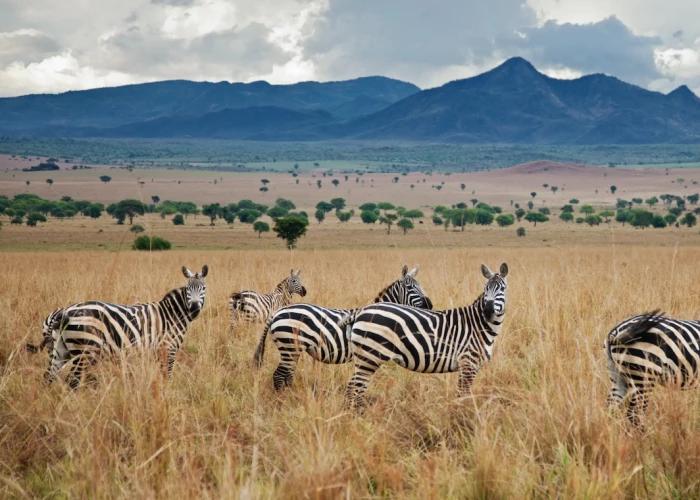
- Zebras
- Leopards
- Cheetahs
- Hyenas
- Antelopes
- Ostriches
- Warthogs
- Uganda kobs
- Jackson’s hartebeest
- Elands
- Kudus
- Dik-diks
- Other dry-country wildlife
Recent specialist wildlife guides identify Kidepo as supporting several species that are rare or absent from many other Ugandan parks, including cheetah, aardwolf, caracal, striped hyena, bat-eared fox, greater and lesser kudu and Guenther’s dik-dik.
That makes Kidepo particularly valuable for experienced safari travelers who have already visited the more conventional destinations.
Wildlife in Kidepo Valley National Park
Lions
Kidepo is one of Uganda’s strongest destinations for lion sightings.
The open valleys provide excellent habitat for predators, while the concentration of prey around the Narus Valley during dry periods can improve opportunities for wildlife viewing.
Lion sightings can never be guaranteed, but Kidepo’s relatively wild character makes predator encounters one of the major attractions.
Elephants
Large elephant herds can be encountered in Kidepo, particularly around water sources and river valleys.
Seeing elephants against the dramatic mountain backdrop is one of the park’s defining photographic experiences.
Giraffes
Kidepo provides excellent opportunities to encounter Rothschild’s giraffes, often against wide-open savannah landscapes.
The combination of giraffes, mountains and golden grasslands makes the park particularly attractive to photographers.
Cheetahs
Cheetahs are among Kidepo’s most exciting potential sightings.
Unlike many other Ugandan parks, Kidepo provides habitat for this elusive big cat.
However, cheetah sightings are uncommon and should never be advertised as guaranteed.
This is exactly the type of wildlife encounter that makes Kidepo attractive to experienced safari travelers.
Zebras and Antelopes
Kidepo supports a fascinating variety of grazing animals.
Depending on location and season, travelers may encounter:
- Zebras
- Uganda kobs
- Jackson’s hartebeest
- Elands
- Kudus
- Oribis
- Dik-diks
- Waterbucks
- Warthogs
The diversity of antelope species contributes to Kidepo’s predator-rich ecosystem.

The Narus Valley
The Narus Valley is one of the most productive wildlife-viewing areas in Kidepo Valley National Park.
The valley contains relatively reliable water sources compared with the surrounding dry landscape, making it particularly important during dry periods.
This concentration of water and vegetation can attract:
- Elephants
- Buffaloes
- Lions
- Giraffes
- Antelopes
- Warthogs
- Other wildlife
For travelers visiting Kidepo primarily for game viewing, spending substantial time around the Narus Valley is highly worthwhile.
Kidepo Valley
The Kidepo Valley itself provides a dramatically different landscape from the Narus Valley.
The northern section is characterized by broad, open plains and seasonal riverbeds framed by mountains.
One of the most memorable experiences is simply driving through this enormous landscape with few signs of human development.
The famous Kanangorok Hot Springs are located in the northern part of the park and can be incorporated into a scenic game-drive excursion.
This is where Kidepo demonstrates why it is more than simply a wildlife destination.
The landscape itself is part of the safari.
Game Drives in Kidepo Valley National Park
Game drives are the foundation of a Kidepo safari.
Unlike some parks where the primary experience involves following a predictable circuit, Kidepo rewards travelers who allow time for exploration.
Morning drives are particularly useful because temperatures are cooler and wildlife can be active.
Afternoon drives provide opportunities to watch the landscape change as temperatures fall.
UWA’s published tariff includes separate charges for guided day game drives, night game drives, birdwatching/nature walks and hiking activities.
Morning game drive
Start early and explore the Narus Valley while wildlife is active.
Full-day game drive
A full day gives you the flexibility to explore farther into Kidepo Valley.
Northern Kidepo excursion
Combine wildlife viewing with the scenery and Kanangorok Hot Springs area.
Night Game Drives in Kidepo
Kidepo is one of the Ugandan destinations where a night game drive can add a completely different dimension to the safari.
After sunset, nocturnal animals become active while daytime species settle down.
Potential sightings can include:
- Hyenas
- Jackals
- Genets
- Civets
- Bushbabies
- Nightjars
- Other nocturnal wildlife
The experience is particularly valuable for photographers and repeat safari travelers.
UWA’s tariff lists a separate night-game-drive fee, and current arrangements should be confirmed when booking.
Because night driving involves wildlife risks, travelers should use authorized guides/rangers and follow current park regulations.
Walking Safaris in Kidepo
One of Kidepo’s greatest advantages is that safari experiences are not limited to vehicles.
Guided walking safaris allow travelers to experience the landscape at ground level.
Walking can reveal details that are easily missed from a vehicle:
- Animal tracks
- Plants
- Insects
- Bird calls
- Smaller mammals
- Rock formations
- Dry riverbeds
Recent Kidepo walking information highlights routes around Narus Valley, Lomej Hills, Mount Morungole, Namamukweny Valley and Lonyili.
Walking activities should always be undertaken with the appropriate authorized guide/ranger and according to current safety requirements.
Lomej Hills Hiking
For travelers wanting more adventure, Lomej Hills offer a hiking experience within the Kidepo landscape.
The terrain provides elevated perspectives across the savannah.
It is particularly appealing to:
- Adventure travelers
- Photographers
- Hikers
- Landscape enthusiasts
- Travelers looking for experiences beyond game drives
UWA’s published tariff includes a separate Lomej hiking charge.
Mount Morungole and the Ik People
One of the most culturally distinctive experiences around Kidepo involves the Ik people, who live in the mountainous region around Mount Morungole.
A cultural visit can provide insight into:
- Traditional livelihoods
- Local food
- Crafts
- Community life
- Indigenous knowledge
- Relationships between people and the environment
The experience should be approached respectfully and through properly organized community tourism arrangements.
Travelers should avoid treating communities as photographic attractions.
The strongest cultural experiences are those where visitors engage respectfully, learn and contribute economically to local communities.
Karamojong Cultural Experiences
A Kidepo safari also provides opportunities to learn about the Karamojong, one of Uganda’s most distinctive pastoral communities.
A cultural experience may include:
- Traditional dances
- Homestead visits
- Local storytelling
- Traditional crafts
- Cattle-based livelihoods
- Food and cultural traditions
This is one of the reasons Kidepo is so valuable as a destination.
The safari is not only about wildlife.
It connects the traveler with the landscape, wildlife and people of northeastern Uganda.
Birdwatching in Kidepo Valley National Park
Kidepo is also a highly interesting destination for birdwatchers.
Its dry-country ecosystem supports bird species that may be difficult to encounter in Uganda’s wetter western forests.
Specialist Kidepo birding sources highlight species including:
- Ostrich
- Abyssinian roller
- Northern carmine bee-eater
- Pygmy falcon
- Verreaux’s eagle
- Black-breasted barbet
- Superb starling
- Other dryland species
Recent birding information also highlights the arrival of migratory species during parts of the year.
For serious birders, Kidepo offers a different species composition from Kibale, Bwindi and Queen Elizabeth.
Best Time to Visit Kidepo Valley National Park
The best time for a classic Kidepo wildlife safari is generally during the drier months, when animals tend to concentrate around remaining water sources and game-viewing conditions can be easier.
Commonly recommended dry periods include:
December–February and June–September, although conditions vary and the park remains open throughout the year.
However, travelers should understand that Kidepo’s seasons are not simply “good” and “bad.”
December–February
Typically hot and dry, with wildlife often concentrating around water.
June–August
Drier conditions and good wildlife viewing, although temperatures can be high.
September–November
Landscape conditions can vary, with changing rainfall patterns and potentially attractive scenery.
March–May
Greener landscapes and potentially excellent birding, although rainfall can affect road conditions and wildlife distribution.
For photography and scenery, green-season Kidepo can be spectacular. For concentrated wildlife viewing, the dry season is usually preferable.
How Many Days Do You Need in Kidepo?
2 Days
Possible, but not recommended for most travelers because of Kidepo’s remote location.
You spend too much of the trip traveling and too little actually experiencing the wilderness.
3 Days
A reasonable minimum for travelers flying into the park.
Possible structure:
Day 1: Arrival + afternoon game drive
Day 2: Morning game drive + Kidepo Valley excursion
Day 3: Morning game drive + departure
4 Days
Four days is my recommended minimum for a road-based Kidepo safari.
This allows time for:
- Multiple game drives
- Narus Valley
- Kidepo Valley
- Cultural experiences
- Walking
- Relaxation at the lodge
5–6 Days
Ideal for travelers who want to experience Kidepo slowly and combine wildlife with hiking, birding and culture.
4-Day Kidepo Valley National Park Safari Itinerary
Day 1: Travel to Kidepo Valley National Park
Travel from your starting point toward Kidepo.
If arriving by air, transfer from the airstrip to your lodge and enjoy an afternoon game drive where time permits.
Overnight in Kidepo.
Day 2: Narus Valley Game Drive
Begin with an early morning game drive through the Narus Valley.
Search for elephants, buffaloes, giraffes, lions and antelopes.
Return to the lodge for lunch and relaxation.
Take an afternoon or evening game drive.
Day 3: Kidepo Valley and Kanangorok
Explore the northern Kidepo Valley.
Enjoy the dramatic landscape and continue toward the Kanangorok Hot Springs area where conditions and park regulations permit.
Return to your lodge.
Optional cultural experience or night drive.
Day 4: Final Game Drive and Departure
Enjoy an early morning game drive before beginning your journey out of Kidepo or transferring to the airstrip for your onward flight.
Kidepo Safari Cost
There is no single price for a Kidepo Valley safari.
The total cost depends heavily on:
- Road versus fly-in transport
- Number of travelers
- Number of nights
- Accommodation level
- Vehicle type
- Park entry
- Ranger/guide services
- Game drives
- Night drives
- Hiking
- Cultural experiences
- Season
The current UWA tariff available for the 2024–2026 tariff period lists Kidepo park entry at US$40 for foreign non-residents, US$30 for foreign residents and UGX 20,000 for East African Community visitors. It separately lists day game drives, night drives, birding/nature walks and hiking charges.
Important: Since UWA tariffs are periodically revised, travelers should verify the applicable tariff for their actual travel date before booking.
Your safari quotation should clearly state what is included rather than presenting a single headline price without explaining the components.
Road Safari or Fly-In Safari to Kidepo?
This is one of the most important decisions when planning Kidepo.
Road Safari
Best for travelers who:
- Have more time
- Enjoy scenic road journeys
- Want to explore Uganda beyond the parks
- Want to include destinations along the way
- Prefer potentially lower transport costs
The downside is the long journey.
Fly-In Safari
Best for:
- Luxury travelers
- Honeymooners
- Travelers with limited time
- Photographers
- Families who prefer shorter transfers
Flying turns Kidepo from a demanding road journey into a much more accessible wilderness experience.
For a 3–4 day Kidepo trip, I would strongly consider flying. For a longer northern Uganda circuit, driving can be part of the adventure.
Where to Stay in Kidepo Valley National Park
Kidepo accommodation ranges from basic and community-oriented options to high-end safari lodges.
Your choice should depend on the experience you want.
Budget
Suitable for travelers prioritizing wildlife experiences over luxury accommodation.
Mid-range
A good balance between comfort, location and safari activities.
Luxury
Ideal for travelers wanting premium accommodation, excellent service, private wilderness atmosphere and fly-in safari arrangements.
When comparing lodges, consider location inside or near the park, road access, meal arrangements, electricity, transfers and proximity to the areas you want to explore.
Kidepo vs Murchison Falls National Park
| Feature | Kidepo | Murchison Falls |
|---|---|---|
| Main attraction | Wilderness + wildlife | Wildlife + Nile + waterfall |
| Location | Northeastern Uganda | Northwestern Uganda |
| Landscape | Dry savannah + mountains | Savannah + Nile |
| Cheetah | Possible | Not a major attraction |
| Lions | Excellent | Excellent |
| Giraffes | Excellent | Excellent |
| Boat safari | No | Yes |
| Waterfall | No | Yes |
| Walking safari | Strong option | More limited |
| Cultural tourism | Strong | Available |
| Accessibility | Remote | Easier |
| Best for | Wilderness seekers | First-time classic safari |
Choose Kidepo if you want remoteness, unusual wildlife and cultural experiences.
Choose Murchison Falls if you want an easier-to-reach safari combining wildlife, a Nile boat cruise and a spectacular waterfall.
For travelers with enough time, both are worth experiencing.
Kidepo vs Queen Elizabeth National Park
| Feature | Kidepo | Queen Elizabeth |
|---|---|---|
| Wilderness | Exceptional | High |
| Wildlife | Excellent | Excellent |
| Chimpanzees | No | Kyambura Gorge |
| Tree-climbing lions | No | Ishasha |
| Cheetah | Possible | Not a major attraction |
| Boat safari | No | Kazinga Channel |
| Mountains | Dramatic | Rwenzori backdrop |
| Culture | Major attraction | Available |
| Remote feeling | Very high | Moderate |
| Best for | Adventure + wilderness | Diverse western Uganda safari |
Is Kidepo Valley National Park Worth Visiting?
Yes—especially if you want a Uganda safari that feels genuinely remote and different from the country’s more established wildlife circuits.
Kidepo’s greatest strength isn’t simply the number of animals.
It is the combination of wildlife, landscape, isolation and culture.
Imagine driving through an enormous valley with mountains rising on the horizon while elephants cross the plains.
Or watching a lion in the golden grass with almost no other safari vehicles around.
Or walking through the wilderness with a ranger rather than viewing everything through a vehicle.
Or spending time with a Karamojong or Ik community and learning about a completely different cultural landscape.
That is the Kidepo experience.
Responsible Tourism in Kidepo
Kidepo’s remote ecosystem makes responsible tourism especially important.
Uganda Wildlife Authority’s mandate includes wildlife conservation, ecosystem management, monitoring and community involvement.
Visitors should:
- Follow UWA regulations
- Stay with authorized guides/rangers
- Never approach wildlife
- Never feed animals
- Avoid litter
- Keep noise low
- Respect local communities
- Ask permission before taking photographs of people
- Support legitimate community tourism
- Avoid buying illegal wildlife products
- Follow instructions during walking safaris
The future of Kidepo depends on ensuring that tourism benefits both wildlife conservation and the communities living around the park.
What to Pack for a Kidepo Safari
Kidepo can be hot and dusty, so practical safari clothing is important.
Pack:
- Lightweight long-sleeved shirts
- Neutral-colored trousers
- Comfortable walking shoes
- Hat
- Sunglasses
- Sunscreen
- Insect repellent
- Binoculars
- Camera
- Zoom lens
- Spare batteries
- Power bank
- Lightweight rain jacket
- Reusable water bottle
- Small backpack
- Personal medication
- Light fleece for cooler mornings
For walking safaris, bring sturdy footwear with good grip.
For photographers, a telephoto lens is particularly valuable because wildlife may remain at a considerable distance.
Frequently Asked Questions About Kidepo Valley National Park
What is Kidepo Valley National Park famous for?
Kidepo is famous for its remote wilderness, spectacular savannah landscapes, mountains, lions, elephants, giraffes, cheetahs, diverse antelopes and cultural experiences.
Is Kidepo the best safari destination in Uganda?
There is no single best park for every traveler. Kidepo is arguably Uganda’s strongest destination for travelers prioritizing remote wilderness, unusual wildlife and an uncrowded safari experience.
How much does a Kidepo safari cost?
The price depends on transport, accommodation, group size, number of nights and activities. UWA park entry and activity fees are separate components of the overall safari cost.
How many days do you need in Kidepo?
Three days is a practical minimum if flying, while four or more days is preferable for a road safari.
Can I see the Big Five in Kidepo?
Kidepo is known for four of the traditional Big Five—lion, leopard, elephant and buffalo. Rhinos are not resident in Kidepo.
Can you see cheetahs in Kidepo?
Yes, Kidepo is one of the Ugandan destinations where cheetahs can occur, although sightings are rare and never guaranteed.
Are there giraffes in Kidepo?
Yes. Rothschild’s giraffes are among the park’s notable wildlife attractions.
Can I do a night game drive in Kidepo?
Yes, night game drives are among the activities listed in UWA’s Kidepo tariff, subject to current regulations and arrangements.
Can I do a walking safari in Kidepo?
Yes. Guided walking experiences are available, including routes around areas such as Narus and Lomej, subject to current arrangements and ranger requirements.
What is the best time to visit Kidepo?
For concentrated wildlife viewing, dry periods are generally preferred. June–August and December–February are commonly recommended, although the park can be rewarding throughout the year.
Is Kidepo suitable for a honeymoon?
Yes. Its remote setting can be excellent for couples seeking privacy, wilderness and a less conventional safari experience. A fly-in luxury safari is particularly suitable.
Can I combine Kidepo with Murchison Falls?
Yes, although the distance makes this better suited to a longer Uganda itinerary or a combination using domestic flights.
Can I combine Kidepo with gorilla trekking?
Yes, but this requires a longer Uganda itinerary because Bwindi is in southwestern Uganda. Flying between regions can make the combination considerably more practical.
Is Kidepo safe for tourists?
Visitors should travel with experienced safari professionals, follow UWA regulations and use authorized guides/rangers, particularly for walking and night activities.
Plan Your Kidepo Valley Safari With Bunuli Safaris
Kidepo Valley National Park is not simply another entry on a list of Uganda’s national parks.
It is Uganda’s wilderness statement.
It is where the road becomes part of the adventure, where mountains frame enormous savannah valleys, where wildlife encounters can feel remarkably private and where a safari can connect travelers with both wildlife and the cultures of northeastern Uganda.
For travelers who want the classic Uganda experience, a combination such as:
Kibale → Queen Elizabeth → Bwindi
may be the ideal route.
But for travelers searching for something more remote:
Kidepo → Karamoja → wildlife → culture → wilderness
offers an entirely different journey.
Bunuli Safaris can create a Kidepo itinerary around your travel style, whether you prefer budget, mid-range or luxury accommodation, road travel or a fly-in safari.
Ready to explore Uganda’s remote wilderness?
Request a customized Kidepo Valley National Park safari from Bunuli Safaris.
Share your travel dates, number of travelers, preferred accommodation level and whether you want a road or fly-in safari, and your itinerary can be built around the experiences that matter most to you.