Introduction
Lake Nakuru National Park is one of Kenya’s most accessible wildlife destinations, combining a scenic Rift Valley lake with rhino conservation, birdwatching, woodland, grassland and classic African safari landscapes.
Located in Nakuru County, approximately 156 kilometres northwest of Nairobi, the park is particularly known for its black and white rhinos, birdlife, flamingos, lions, leopards, giraffes, zebras and buffaloes. Kenya Wildlife Service describes Lake Nakuru as an ornithological paradise with approximately 450 bird species and identifies it as a major sanctuary for black and white rhinos.
The park covers approximately 188 square kilometres and sits around the alkaline waters of Lake Nakuru in the Great Rift Valley. Its landscape includes grasslands, acacia woodland, rocky escarpments, hills and wetlands.
For travellers with limited time in Kenya, Lake Nakuru is particularly useful because it can be incorporated into a safari itinerary between Nairobi, Lake Naivasha, the Maasai Mara and other Rift Valley destinations.
Why Visit Lake Nakuru National Park?
Lake Nakuru offers something different from Kenya’s larger savannah reserves.
Its strongest attractions include:
- Black rhinos
- White rhinos
- Flamingos and other waterbirds
- Lions
- Leopards
- Rothschild’s giraffes
- Buffaloes
- Zebras
- Waterbucks
- Impalas
- Baboons
- Birdwatching
- Makalia Waterfalls
- Baboon Cliff
- Lion Hill
- Out of Africa Hill
- Scenic Rift Valley landscapes
KWS describes the park as a flagship sanctuary for endangered black and white rhinos and notes its approximately 450 bird species.
This makes Lake Nakuru particularly attractive for travellers searching for a Kenya rhino safari, short safari from Nairobi, birdwatching safari in Kenya or a destination to combine with the Maasai Mara.
Where Is Lake Nakuru National Park?
Lake Nakuru National Park is located in Nakuru County in Kenya’s Great Rift Valley.
The park is approximately 156 kilometres northwest of Nairobi and is accessible from the Nairobi–Nakuru highway. KWS identifies Lanet Gate, Nderit Gate and the Main Gate, which is approximately 4 kilometres from Nakuru City.
There is also an airstrip at Naishi, located near Naishi Guest House, providing an option for travellers using safari flights.
Approximate road connections
Nairobi → Lake Nakuru: about 2½–3½ hours depending on traffic and road conditions.
Lake Nakuru → Lake Naivasha: approximately 1–2 hours.
Lake Nakuru → Maasai Mara: approximately 4–6 hours depending on the route and conditions.
Actual driving time varies considerably, particularly around Nairobi and during busy travel periods.
Lake Nakuru National Park Wildlife
Lake Nakuru’s relatively compact size makes it possible to encounter a wide range of wildlife during a game drive.
Rhinos
Rhinos are among the park’s biggest attractions.
Lake Nakuru was designated Kenya’s first government-managed rhino sanctuary in 1987, and KWS identifies it as an important sanctuary for both black and white rhinos.
For travellers specifically interested in rhino photography and conservation, this is one of the strongest reasons to include Lake Nakuru in a Kenya safari.
Lions
Lions occur within the park and can sometimes be encountered resting in the grasslands or around woodland areas.
Early morning and late afternoon game drives are particularly useful for observing large predators when temperatures are cooler.
Leopards
Lake Nakuru supports leopards, although they are naturally more difficult to find than herbivores such as zebra, giraffe and buffalo.
A leopard sighting should therefore be considered a rewarding possibility rather than a guaranteed encounter.
Giraffes
Giraffes are another regular attraction.
The park’s woodland and open grassland provide habitat for giraffes, making them relatively easy to spot during game drives.
Buffaloes
Large herds of buffalo can be encountered in the park’s grassland and woodland habitats.
Zebras
Zebras are common safari sightings around Lake Nakuru and can often be found grazing in open areas.
Other Wildlife
KWS lists a broader range of wildlife including:
- Waterbucks
- Impalas
- Bushbucks
- Baboons
- Vervet monkeys
- Hyenas
- Servals
- Jackals
- Civets
- Genets
- Mongooses
- Rock hyraxes
- Hippopotamuses
- Various antelope species
The park’s official information also identifies lions and leopards among its carnivores.
Are There Elephants in Lake Nakuru National Park?
No, Lake Nakuru is not an elephant safari destination.
This is an important distinction when planning a Kenya safari.
If seeing elephants is a priority, destinations such as Amboseli National Park, Tsavo East, Tsavo West or Maasai Mara may be more appropriate depending on your itinerary.
Lake Nakuru’s strongest wildlife selling points are instead rhinos, birdlife, big cats, giraffes, buffaloes and Rift Valley scenery.
This makes the park particularly useful as part of a multi-park Kenya safari rather than as a stand-alone Big Five destination.
Lake Nakuru Flamingos: Are They Still There?
This is one of the most important questions travellers ask.
Yes, flamingos can still be seen at Lake Nakuru, but their numbers fluctuate considerably.
Lake Nakuru has historically been famous for large concentrations of lesser and greater flamingos. However, changes in water levels and the lake’s ecological conditions have affected the availability of algae and therefore flamingo distribution. Ramsar’s information on Lake Nakuru notes that the site supports large populations of lesser flamingos and remains an internationally important wetland.
KWS itself currently describes Lake Nakuru as a major birdwatching destination with approximately 450 bird species, including flamingos.
The important travel advice
Do not book Lake Nakuru expecting a guaranteed wall of thousands or millions of flamingos.
Bird numbers are influenced by:
- Lake water levels
- Salinity
- Algae availability
- Rainfall
- Food availability
- Movement between Rift Valley lakes
This makes Lake Nakuru particularly interesting for serious birdwatchers because the lake is a dynamic ecosystem rather than a fixed wildlife display.
Lake Nakuru Birdwatching
Lake Nakuru is one of Kenya’s important birding destinations.
KWS records approximately 450 bird species in the park. Species mentioned in its official park information include:
- Flamingos
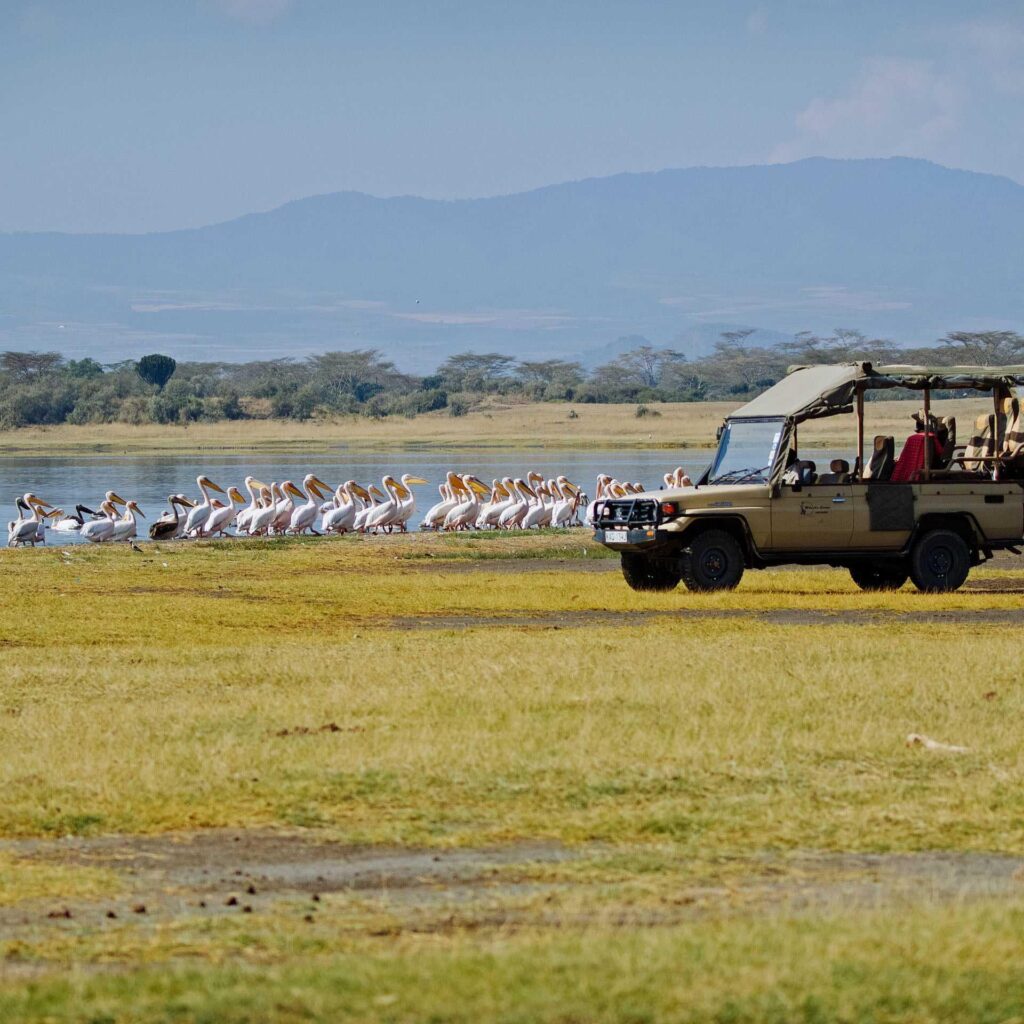
- Pelicans
- African fish eagles
- Secretary birds
- Herons
- Egrets
- Hamerkops
- Grebes
The wider Lake Nakuru wetland is also designated as a Ramsar Site, with the designation dating to 1990. Ramsar identifies Lake Nakuru as an internationally important wetland supporting large populations of lesser flamingos and numerous other waterbirds.
This makes the destination particularly valuable for a Kenya birdwatching safari.
Best Things to Do in Lake Nakuru National Park
1. Game Drives
The primary activity is a traditional game drive.
A game drive can combine:
- Rhino viewing
- Lion sightings
- Giraffe photography
- Zebra
- Buffalo
- Antelope
- Birdwatching
- Lake scenery
The compact nature of the park makes it possible to cover substantial areas during a full-day safari.
2. Rhino Watching
Lake Nakuru is one of the best places in Kenya to build a safari around rhino conservation.
The park’s history as Kenya’s first government-managed rhino sanctuary makes this experience particularly significant.
3. Birdwatching
With approximately 450 recorded bird species, Lake Nakuru is excellent for bird enthusiasts.
Bring:
- Binoculars
- Long-lens camera
- Bird identification guide
- Extra batteries
4. Visit Makalia Waterfalls
Makalia Waterfalls is one of the park’s scenic attractions.
The falls are particularly attractive after periods of rainfall when water flow increases.
KWS lists Makalia Waterfalls among the park’s key attractions.
5. Visit Baboon Cliff
Baboon Cliff provides an elevated perspective over the lake and surrounding landscape.
It is a popular viewpoint for photography and understanding the geography of the Rift Valley.
6. Lion Hill
Lion Hill offers another scenic viewpoint and is useful for combining wildlife viewing with landscape photography.
7. Out of Africa Hill
The viewpoint is associated with the landscapes made famous through Out of Africa and offers broad views over the park and lake.
Lake Nakuru National Park Entrance Fee 2026
The current KWS park page lists Lake Nakuru under its premium park fee structure.
For the current published rates:
| Visitor Category | Adult | Child |
|---|---|---|
| East African Citizen | KES 1,500 | KES 750 |
| Kenya Resident | KES 2,025 | KES 1,050 |
| African Citizen | US$50 | US$25 |
| Non-Resident | US$90 | US$45 |
These are the rates currently displayed by Kenya Wildlife Service for Lake Nakuru National Park.
These are park conservation/entry fees, not the price of a complete Lake Nakuru safari.
A safari quotation may additionally include:
- Safari vehicle
- Driver-guide
- Fuel
- Accommodation
- Meals
- Airport transfers
- Other park fees
- Guide services
- Optional activities
This distinction should always be made clear when comparing Kenya safari packages.
How Much Does a Lake Nakuru Safari Cost?
There is no single fixed Lake Nakuru safari price because accommodation and transport categories vary.
For planning purposes, a 1–2 day Lake Nakuru safari from Nairobi can commonly fall into different budget levels:
| Safari Style | Indicative Planning Range |
|---|---|
| Budget | US$250–$500+ per person |
| Mid-range | US$450–$800+ per person |
| Luxury | US$800–$1,500+ per person |
These are indicative package-planning ranges, not official KWS tariffs.
The final quotation depends on:
- Number of travellers
- Travel dates
- Lodge
- Private/shared vehicle
- Meals
- Number of nights
- Transport route
- Additional destinations
For example, adding Lake Nakuru to Lake Naivasha and Maasai Mara creates a very different total safari cost from a one-night Lake Nakuru visit from Nairobi.
How Many Days Do You Need in Lake Nakuru?
For most travellers, 1–2 nights are sufficient.
One-Day Lake Nakuru Safari
A one-day trip can work particularly well for travellers staying in Nairobi or Nakuru.
It allows time for:
- Morning game drive
- Rhino viewing
- Birdwatching
- Lake viewpoints
- Afternoon game drive
Two-Day Lake Nakuru Safari
Two days provide a more relaxed experience.
You can include:
Day 1: Nairobi → Lake Nakuru + afternoon game drive
Day 2: Morning game drive + viewpoints + onward journey
This is a better option for photographers and birdwatchers.
Best Time to Visit Lake Nakuru National Park
Lake Nakuru can be visited throughout the year.
KWS describes Kenya’s parks as year-round destinations, while noting that July–December and December–March generally provide favourable wildlife-viewing conditions, with April–June corresponding to the long-rains period.
June to October
This is generally a strong period for safari travel because vegetation can be less dense and wildlife viewing can be easier.
January to March
Another useful period for wildlife viewing, depending on rainfall and local conditions.
April to June
These months coincide with the long rains.
The landscape becomes greener, but some roads can become more challenging and wildlife may be more dispersed.
November to December
Short rains can create lush scenery and excellent photographic conditions.
Best time for flamingos?
There is no guaranteed flamingo month.
Their numbers respond to ecological conditions, particularly water levels and food availability.
Therefore, if flamingos are your primary reason for visiting, check current lake conditions rather than relying solely on historical photographs.
Lake Nakuru National Park Weather
Lake Nakuru sits at approximately 1,750 metres above sea level, so temperatures are generally cooler than Kenya’s lower-elevation safari destinations.
Expect:
- Cool mornings
- Warmer afternoons
- Cooler evenings
- Rain possible throughout the year
- Variable conditions around the lake
A light jacket is useful for early morning game drives.
Where to Stay in Lake Nakuru National Park
Accommodation is available both inside and around the park.
KWS currently lists accommodation options including:
- Naishi Guest House
- Mbugani Homes
- Makalia public campsite
- Special campsites
- The Cliff
- Flamingo Hill Camp
- Lake Nakuru Lodge
- Lake Nakuru Sopa Lodge
- Sarova Lion Hill Game Lodge
Your choice should depend on whether you want:
- Budget camping
- Mid-range lodge
- Luxury accommodation
- Lake views
- Easy access to game drives
- A romantic safari setting
- Family-friendly accommodation
Lake Nakuru Camping
Camping is available at designated sites.
KWS identifies Makalia as a public campsite and lists special campsites including:
- Reedbuck
- Naishi
- Rhino
- Chui
- Soysambu
- Kambi Nyuki
- Kambi Nyati
KWS advises campers to check conditions with park management because campsites can be affected by heavy rains and flooding.
Is Lake Nakuru Good for a Family Safari?
Yes.
Its relatively compact size and varied wildlife make it a practical destination for families.
Children can enjoy:
- Giraffes
- Zebras
- Rhinos
- Buffalo
- Flamingos
- Scenic viewpoints
- Waterfalls
- Shorter game drives
However, children should remain inside the safari vehicle except in designated areas.
KWS also requires visitors to respect wildlife, remain on designated roads and maintain appropriate viewing distances.
Lake Nakuru for Couples and Honeymoons
Lake Nakuru can work particularly well as part of a romantic Kenya itinerary.
Combine it with:
Nairobi → Lake Nakuru → Maasai Mara
or:
Nairobi → Lake Naivasha → Lake Nakuru → Maasai Mara
For couples, the combination of:
- Rift Valley scenery
- Luxury lodge accommodation
- Game drives
- Rhino sightings
- Sunset views
- Photography
can create a strong safari experience.
Is Lake Nakuru a Big Five Destination?
Lake Nakuru can offer sightings of several of the Big Five, particularly:
- Lion
- Leopard
- Rhino
- Buffalo
However, elephants are not a characteristic species of the park, so Lake Nakuru should not be marketed as a complete Big Five destination.
If your objective is to maximise the chance of seeing a broader range of large mammals, combine Lake Nakuru with destinations such as Maasai Mara or Amboseli.
Lake Nakuru vs Lake Naivasha
These two Rift Valley destinations are frequently combined but offer different experiences.
| Feature | Lake Nakuru | Lake Naivasha |
|---|---|---|
| Main attraction | Wildlife & rhinos | Lake & nature |
| Rhinos | Yes | No |
| Flamingos | Possible | Not the primary attraction |
| Game drives | Excellent | Limited compared with Nakuru |
| Birdwatching | Excellent | Excellent |
| Boat safari | Not the main activity | Major attraction |
| Hiking | Limited | Hell’s Gate nearby |
| Best for | Wildlife safari | Lake & outdoor experiences |
Combining the two creates a more diverse Kenya itinerary.
Lake Nakuru vs Maasai Mara
These parks should not be treated as substitutes.
Lake Nakuru is particularly strong for:
- Rhinos
- Birdwatching
- Short safaris
- Rift Valley scenery
- Easy access from Nairobi
Maasai Mara is particularly strong for:
- Big cats
- Large herbivore herds
- Open savannah
- Great Migration season
- Longer safari experiences
A combined itinerary provides a more complete Kenya safari.
Can You Combine Lake Nakuru With Maasai Mara?
Absolutely.
One of the strongest Kenya safari routes is:
5-Day Kenya Safari
Day 1: Nairobi → Lake Nakuru
Day 2: Lake Nakuru → Maasai Mara
Day 3: Full-day Maasai Mara game drive
Day 4: Maasai Mara full-day safari
Day 5: Maasai Mara → Nairobi
This route combines rhino conservation and Rift Valley scenery with the open savannah and predators of the Maasai Mara.
For travellers with more time, add Lake Naivasha or Amboseli.
How to Get to Lake Nakuru National Park
By Road
Road travel is the most common option.
From Nairobi, the journey follows the Nairobi–Nakuru route.
KWS identifies the park as approximately 156 kilometres northwest of Nairobi.
Main access gates
- Lanet Gate
- Nderit Gate
- Main Gate
The Main Gate is approximately 4 kilometres from Nakuru City.
By Air
Travellers can use Naishi Airstrip, which is located near Naishi Guest House.
Fly-in safaris are particularly useful for travellers combining Lake Nakuru with longer luxury itineraries.
Lake Nakuru Safari Safety Rules
KWS provides several important visitor rules.
Visitors should:
- Remain inside the vehicle unless in designated areas
- Keep doors closed
- Stay on designated roads
- Observe the 40 km/h speed limit
- Avoid disturbing animals
- Avoid feeding wildlife
- Keep noise low
- Carry out rubbish
- Avoid single-use plastics
- Maintain at least 20 metres from wildlife where required
- Follow park opening and closing times
The park gates generally open at 6:00 a.m. and close at 6:00 p.m., unless visitors are staying overnight.
What to Pack for Lake Nakuru Safari
Bring:
- Binoculars
- Camera
- Long-sleeved clothing
- Light jacket
- Comfortable shoes
- Sunglasses
- Sunscreen
- Insect repellent
- Drinking water
- Hat
- Personal medication
- Power bank
- Extra camera batteries
For early morning game drives, layering is particularly useful.
Sample 2-Day Lake Nakuru Safari Itinerary
Day 1 — Nairobi to Lake Nakuru
Depart Nairobi after breakfast and drive through the Great Rift Valley.
Stop at a suitable viewpoint before continuing toward Nakuru.
Enter the park and begin an afternoon game drive.
Look for:
- Rhinos
- Giraffes
- Zebras
- Buffalo
- Lions
- Waterbirds
Later, check into your lodge.
Overnight: Lake Nakuru.
Day 2 — Morning Game Drive & Departure
Wake early for a morning game drive.
This is a productive period for wildlife viewing before temperatures rise.
Explore different areas of the park and visit viewpoints such as:
- Baboon Cliff
- Lion Hill
- Out of Africa Hill
Depending on the itinerary, visit Makalia Waterfalls before continuing toward your next destination.
You can then proceed to:
Maasai Mara
or
Lake Naivasha
or
Nairobi
Frequently Asked Questions About Lake Nakuru National Park
What is Lake Nakuru National Park famous for?
Lake Nakuru is particularly famous for black and white rhinos, birdlife, flamingos, scenic Rift Valley landscapes and diverse wildlife. KWS identifies approximately 450 bird species in the park.
Are there still flamingos at Lake Nakuru?
Yes, flamingos still occur at Lake Nakuru, but their numbers fluctuate with water levels, salinity, food availability and wider ecological conditions.
How much is Lake Nakuru National Park entry in 2026?
The current KWS rate for an international non-resident adult is US$90, while an African citizen adult pays US$50. East African citizens pay KES 1,500 and Kenya residents pay KES 2,025.
Is Lake Nakuru worth visiting?
Yes, particularly for travellers interested in rhinos, birdwatching, short Kenya safaris and Rift Valley scenery.
Can you see rhinos at Lake Nakuru?
Yes. Lake Nakuru is a major black and white rhino sanctuary and one of the park’s principal attractions.
Are there lions in Lake Nakuru?
Yes. Lions are among the carnivores recorded in the park.
Are there elephants in Lake Nakuru?
Elephants are not a characteristic wildlife attraction of Lake Nakuru National Park.
How many days do you need in Lake Nakuru?
One full day can be enough, while two days/one night allows a more relaxed safari and better opportunities for photography and birdwatching.
How far is Lake Nakuru from Nairobi?
KWS gives the park’s location as approximately 156 km northwest of Nairobi. Actual travel time depends on traffic and road conditions.
What is the best time to visit Lake Nakuru?
Lake Nakuru is open year-round. The drier periods are generally favourable for wildlife viewing, while rainy periods produce greener scenery and can be rewarding for birdwatchers.
Can I visit Lake Nakuru and Maasai Mara on one safari?
Yes. The two destinations combine naturally and are frequently included in multi-day Kenya safari itineraries.
Is Lake Nakuru good for birdwatching?
Yes. KWS identifies approximately 450 bird species, making it one of Kenya’s important birdwatching destinations.
Can Lake Nakuru be visited as a day trip from Nairobi?
Yes. Its proximity to Nairobi makes a day trip possible, although staying one night provides more time for game drives and a less rushed experience.
Plan Your Lake Nakuru Safari With Bunuli Safaris
Lake Nakuru is a strong addition to a Kenya safari because it combines rhino conservation, birdlife, scenic viewpoints and accessible game viewing in a relatively compact park.
Instead of treating Lake Nakuru as a standalone stop, Bunuli Safaris can incorporate it into a tailor-made Kenya itinerary based on your travel dates, budget and interests.
Your safari can combine:
- Lake Nakuru
- Maasai Mara
- Lake Naivasha
- Amboseli National Park
- Tsavo East
- Tsavo West
- Ol Pejeta
- Samburu
- Nairobi
Ready to Explore Lake Nakuru?
Contact Bunuli Safaris for a personalised Lake Nakuru safari quotation with accommodation, transport, park fees and activities clearly outlined.
Whether you want a 1-day Lake Nakuru safari from Nairobi, a 2-day Lake Nakuru wildlife safari, or a longer Kenya safari combining Nakuru and Maasai Mara, we can design the itinerary around your priorities.