Introduction: Discover the Extraordinary Mabamba Swamp
Mabamba Swamp is one of Uganda’s most remarkable birdwatching destinations, internationally recognised for its population of the rare and prehistoric-looking Shoebill Stork. Located along the northern shores of Lake Victoria, west of Entebbe, this extensive papyrus wetland offers visitors an exceptional opportunity to encounter one of Africa’s most sought-after bird species in its natural habitat.
Officially known as the Mabamba Bay Wetland System, the destination is a Ramsar Wetland of International Importance and an Important Bird and Biodiversity Area (IBA). It supports hundreds of bird species, including resident wetland birds, migratory species and globally threatened birds.
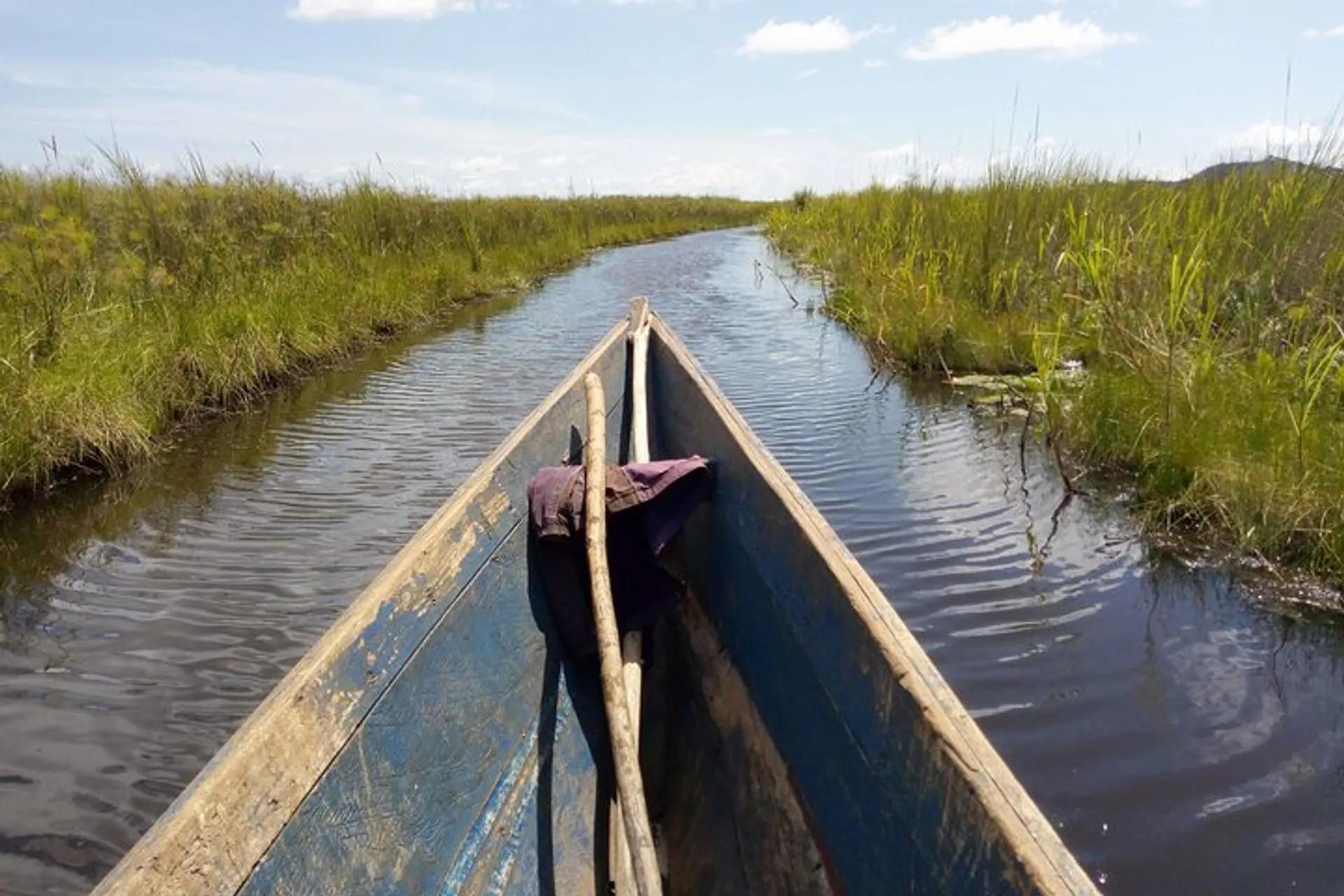
The highlight of visiting Mabamba is a guided canoe excursion through narrow channels of papyrus vegetation, where experienced local guides help visitors search for the elusive Shoebill.
Whether you are an experienced birder, wildlife photographer, nature enthusiast or traveller exploring Uganda for the first time, Mabamba offers an unforgettable experience.
Its proximity to Entebbe International Airport and Kampala also makes it one of the most accessible birdwatching destinations in Uganda.
For travellers planning a Uganda safari, Mabamba Swamp is an excellent addition to a wider itinerary combining birdwatching, wildlife encounters, cultural experiences and exploration of East Africa.
1. Where Is Mabamba Swamp Located in Uganda?
Mabamba Swamp is located on the northern shoreline of Lake Victoria in central Uganda, approximately 35–55 kilometres from Kampala, depending on the access route.
The wetland extends across parts of Wakiso and Mpigi districts, with its extensive papyrus marshes opening towards Lake Victoria.
Its geographical location makes it particularly convenient for visitors staying in Entebbe or Kampala.
The wetland can be accessed through different routes, including:
- From Entebbe: Visitors can travel by road around the lake or arrange a boat transfer across Lake Victoria from the Nakiwogo landing area.
- From Kampala: The destination can be reached by road through the western outskirts of the city.
- From Entebbe International Airport: Mabamba is a convenient destination for travellers arriving in Uganda who want to experience birdwatching before continuing to other safari destinations.
The landscape consists of extensive papyrus swamps, floating vegetation, open-water channels, water lilies and natural marshes.
These habitats create ideal conditions for numerous wetland bird species, particularly the Shoebill.
2. Why Is Mabamba Swamp Famous?
Mabamba Swamp is internationally famous for providing one of the most reliable opportunities to see the Shoebill in Uganda.
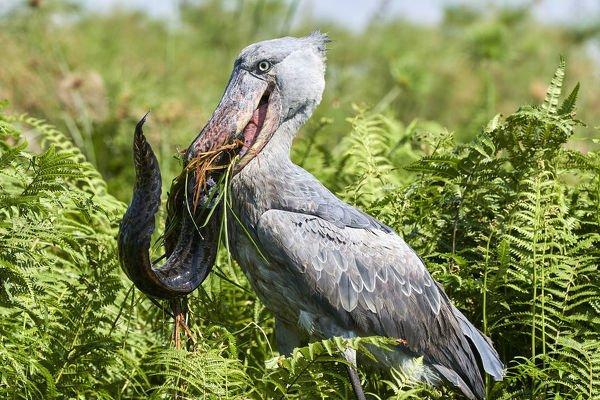
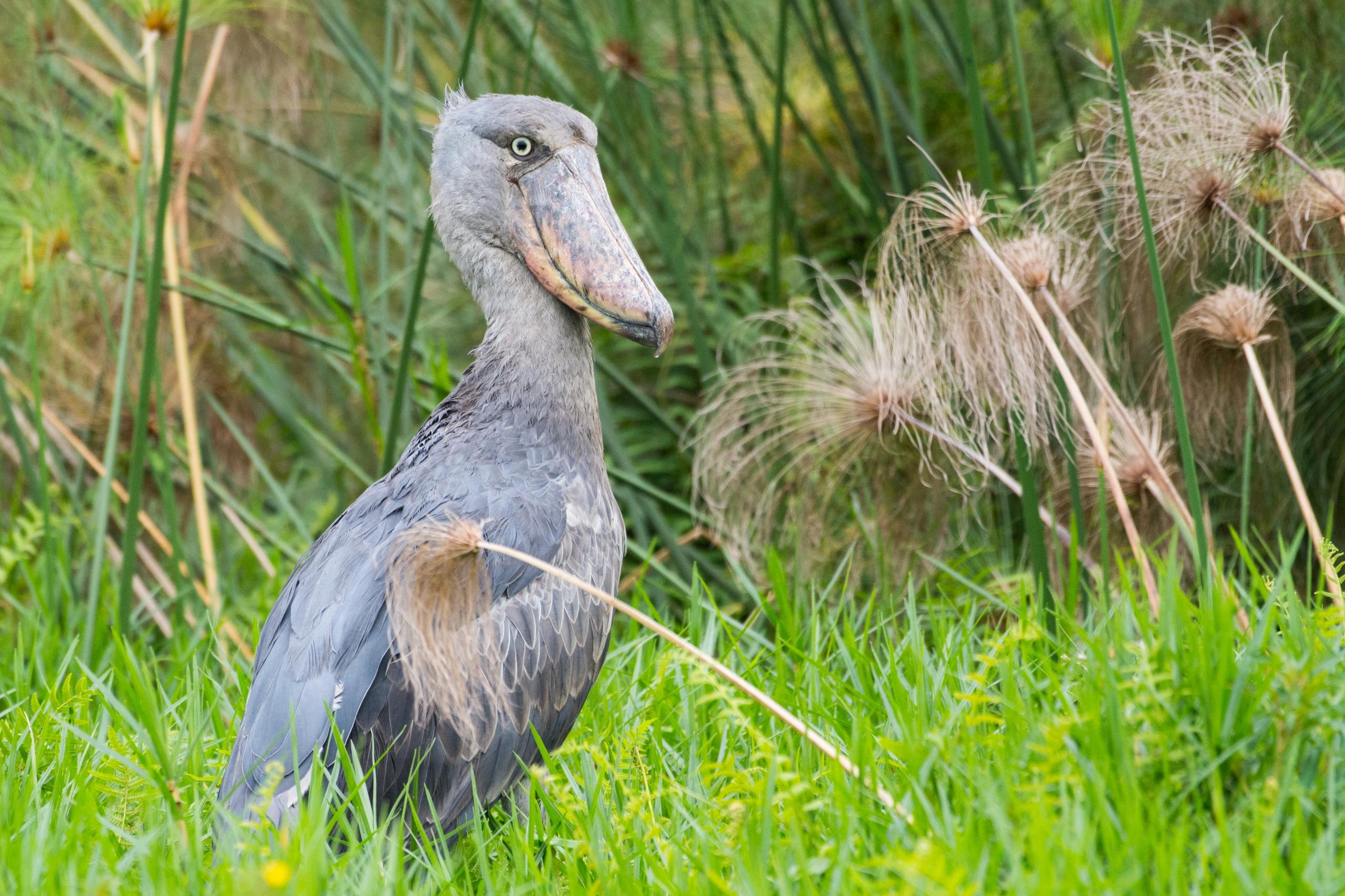
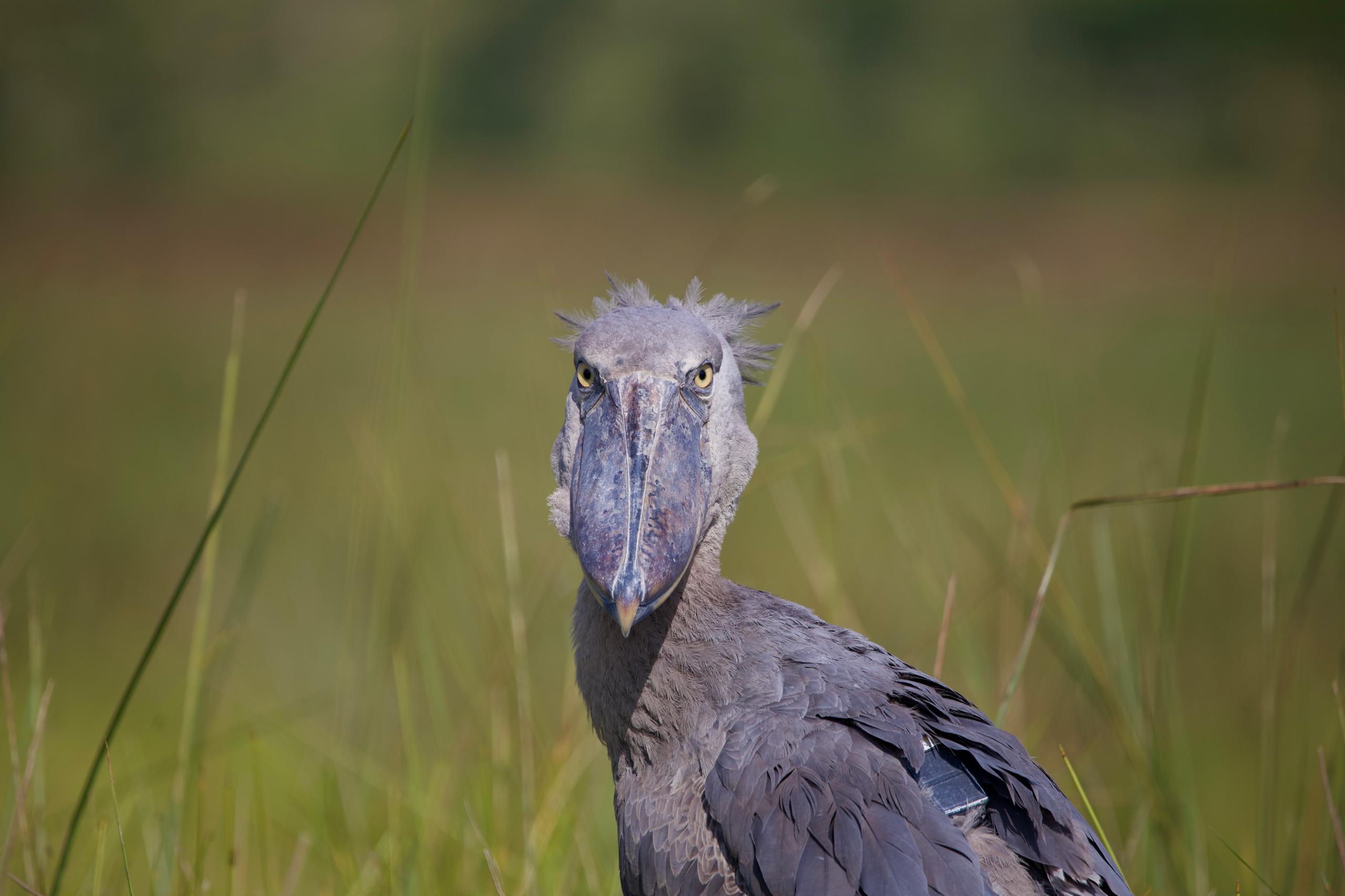
The Shoebill (Balaeniceps rex) is a large, distinctive bird recognised by its enormous shoe-shaped bill, powerful body, grey plumage and almost prehistoric appearance.
It is one of Africa’s most fascinating bird species and a major attraction for international birdwatchers.
Unlike many birdwatching destinations where sightings require extensive travel and several days of searching, Mabamba offers a relatively accessible opportunity to encounter this remarkable species.
However, sightings are never guaranteed because Shoebills are wild birds whose movements depend on feeding conditions, water levels and other environmental factors.
What makes Mabamba particularly important?
There are several reasons why the wetland is internationally significant:
- It supports an important population of globally threatened Shoebills.
- It provides habitat for more than 300 recorded bird species according to conservation and site records.
- It supports migratory birds, including the Blue Swallow.
- It provides important breeding and feeding habitats for wetland birds.
- It supports local fishing communities and traditional livelihoods.
- It is recognised internationally under the Ramsar Convention.
Mabamba was designated a Ramsar site in September 2006.
Its importance extends beyond tourism because the wetland contributes to biodiversity conservation, fisheries, water regulation and the livelihoods of surrounding communities.
3. Shoebill Watching at Mabamba Swamp
Shoebill watching is the main reason most international visitors travel to Mabamba.
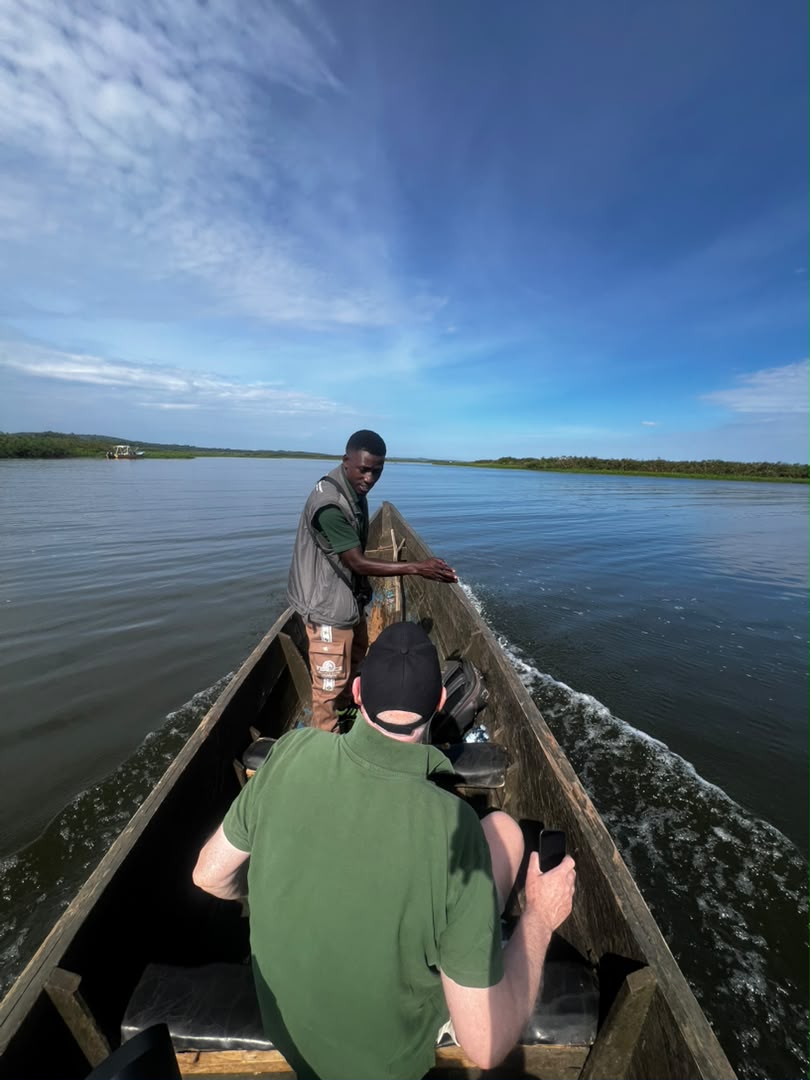
The experience involves navigating the wetland’s natural waterways in a traditional canoe or small motorised boat accompanied by an experienced local birding guide.
The guides understand the wetland’s channels and feeding areas and often communicate with local fishermen who share information about recent Shoebill sightings.
What makes the Shoebill special?
The Shoebill is among the most unusual birds found in Africa.
Its most distinctive feature is its massive, clog-shaped bill, which helps it capture prey in shallow wetlands.
Adult Shoebills are generally grey, with broad wings, long legs and a powerful body.
They are particularly associated with freshwater swamps containing papyrus, reeds and other wetland vegetation.
Their diet mainly consists of fish, especially lungfish, although they also feed on other aquatic animals.
One of the most fascinating characteristics of the Shoebill is its hunting technique.
It can remain motionless for extended periods while waiting for prey before suddenly striking with its powerful bill.
What is a Shoebill-watching excursion like?
A typical excursion begins at a local landing site.
Visitors meet their guide, board a canoe and gradually enter the papyrus channels.
The guide navigates slowly through the vegetation while searching for birds resting along the water channels.
Once a Shoebill is located, the boat approaches carefully to allow visitors to observe and photograph the bird without disturbing it.
The experience is particularly rewarding for photographers because Shoebills often remain relatively still while hunting.
A typical boat excursion takes approximately one to two hours, although longer experiences can be arranged.
4. Other Birds to See at Mabamba Swamp
Although the Shoebill is the principal attraction, Mabamba is an exceptional birdwatching destination in its own right.
Its combination of papyrus vegetation, shallow waters, open marshes and surrounding woodland supports a remarkable variety of birdlife.
Some notable species include:
| Bird Species | What Makes It Special |
|---|---|
| Shoebill | The wetland’s most famous and sought-after bird. |
| Papyrus Gonolek | A striking papyrus specialist. |
| Papyrus Yellow Warbler | A globally threatened wetland bird. |
| Blue Swallow | A migratory species associated with the wetland system. |
| African Pygmy Goose | One of Africa’s smallest waterfowl species. |
| African Jacana | Recognised for its exceptionally long toes. |
| Lesser Jacana | A small and elusive wetland bird. |
| Goliath Heron | One of the world’s largest herons. |
| African Fish Eagle | A powerful bird of prey frequently associated with Lake Victoria. |
| White-winged Tern | A migratory waterbird. |
| Squacco Heron | A distinctive heron found in wetland habitats. |
| Malachite Kingfisher | A colourful kingfisher commonly associated with freshwater habitats. |
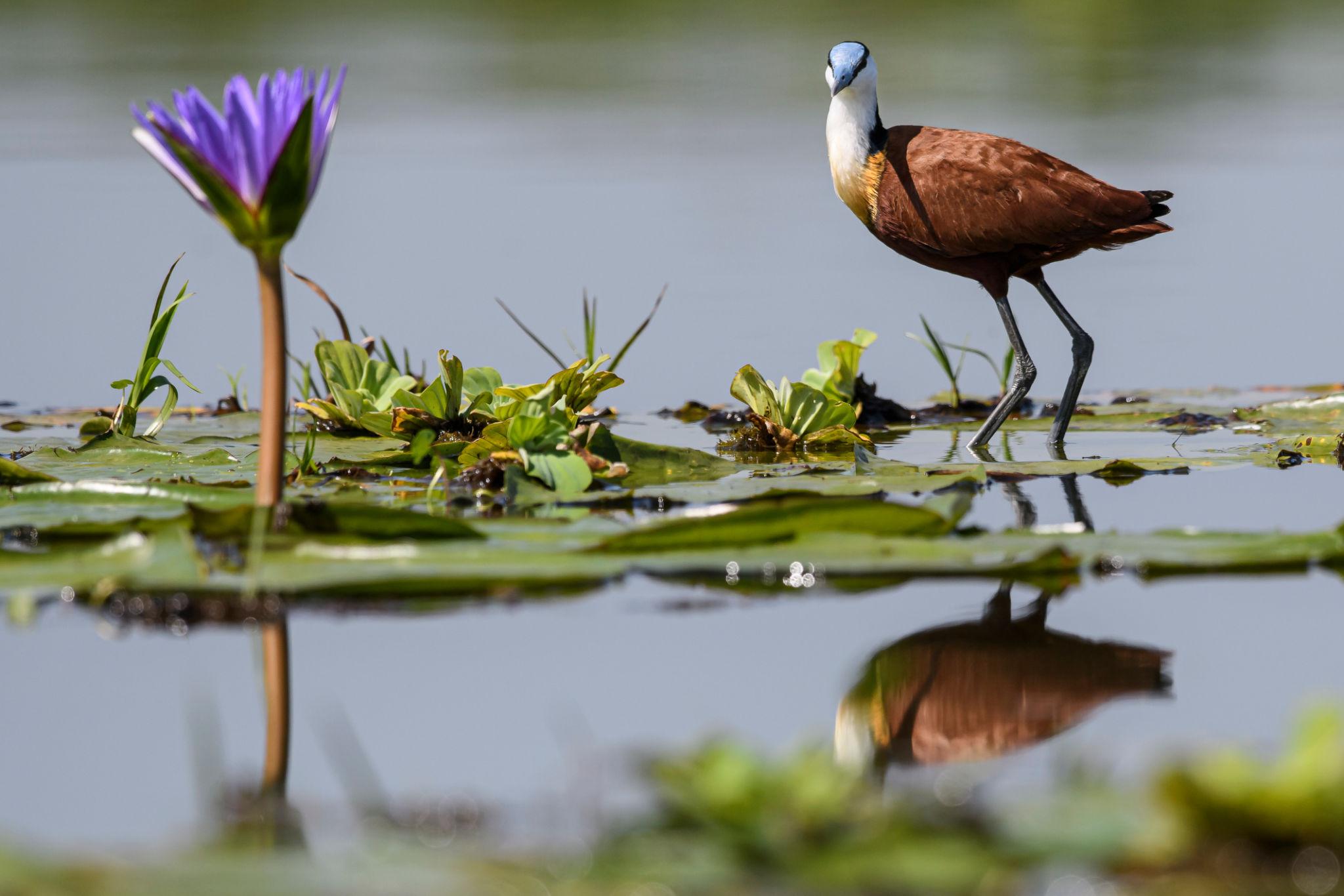
 For serious birdwatchers, Mabamba offers opportunities to observe both common and specialised wetland species.
The Papyrus Gonolek and Papyrus Yellow Warbler are particularly interesting for visitors hoping to identify birds adapted to papyrus ecosystems.
Combining a Shoebill excursion with additional birding around the wetland can make the experience considerably more rewarding.
5. Best Time to Visit Mabamba Swamp for Shoebill Watching
Mabamba Swamp can be visited throughout the year, and Shoebills are resident birds rather than seasonal visitors.
This means travellers do not need to plan their entire Uganda safari around a particular migration season to have an opportunity to see them.
Nevertheless, weather conditions and seasonal variations influence the overall birdwatching experience.
Dry seasons: June to August and December to February
These months are generally favourable for visitors who prefer relatively drier travel conditions.
Advantages include:
- Generally more manageable road conditions.
- Convenient transfers from Entebbe and Kampala.
- Comfortable conditions for canoe excursions.
- Opportunities to combine Mabamba with other Uganda safari destinations.
Rainy seasons: March to May and September to November
The rainy seasons offer a different wetland experience.
The surrounding vegetation becomes greener, and the wetland landscape can be particularly attractive for nature photography.
However, heavy rainfall can affect road accessibility and travel arrangements.
What is the best time of day to see the Shoebill?
Morning excursions are particularly popular because temperatures are generally cooler and conditions are comfortable for birdwatching and photography.
An early start also provides sufficient flexibility to explore different channels if the Shoebill is not immediately located.
Afternoon excursions are possible too.
Our recommendation: Plan a morning Shoebill excursion and allow enough time for the guide to explore different sections of the wetland.
6. Things to Do at Mabamba Swamp
Mabamba offers more than Shoebill watching. Visitors can enjoy several nature-based activities that provide a deeper understanding of the wetland ecosystem and the communities living around Lake Victoria.
6.1 Shoebill Birdwatching by Canoe
This is the signature activity at Mabamba.
Visitors explore the papyrus channels with local guides, searching for Shoebills and other wetland birds.
It is suitable for dedicated birdwatchers, photographers and first-time visitors.
6.2 General Birdwatching
Beyond the Shoebill, visitors can identify numerous resident and migratory species.
Dedicated birders may spend additional time exploring different sections of the wetland to maximise their sightings.
6.3 Bird Photography
Mabamba is an attractive destination for bird photographers.
The open waterways and papyrus channels provide opportunities to photograph birds in their natural surroundings.
A camera with a telephoto lens is recommended, particularly when photographing the Shoebill from a respectful distance.
6.4 Community and Fishing Experiences
Fishing is an important livelihood for communities surrounding Mabamba.
Visitors may gain insights into traditional fishing practices, local livelihoods and the relationship between communities and the wetland.
When arranged respectfully through local operators, these experiences add a cultural dimension to the excursion.
6.5 Nature Walks
Depending on the location and arrangements, visitors can explore selected wetland boundaries and nearby natural habitats on foot.
Nature walks provide additional opportunities to observe birds, vegetation and the surrounding landscape.
7. How to Get to Mabamba Swamp from Kampala or Entebbe
Mabamba is relatively easy to incorporate into a Uganda safari because of its location near the country’s main international airport.
There are two main access options.
Option 1: Travel by Road
Visitors can travel from Kampala or Entebbe by private vehicle.
From Kampala, the journey takes approximately 1.5–2 hours, depending on traffic, road conditions and the selected route.
From Entebbe, visitors can reach Mabamba through the road network around the northern shores of Lake Victoria.
Road travel is particularly suitable for visitors who prefer a private safari vehicle and want to combine the excursion with other destinations.
Option 2: Boat Transfer Across Lake Victoria
Another option is arranging a boat transfer from the Nakiwogo area in Entebbe towards Mabamba.
This offers a scenic experience across Lake Victoria and provides additional opportunities to observe birds around the lake.
The boat transfer can also be combined with a guided canoe excursion through the wetland.
For visitors staying in Entebbe, this can be an attractive alternative to travelling entirely by road.
Travel tip: Discuss the access route with your tour operator before travelling. The best option depends on your accommodation, available time, weather conditions and preferred experience.
8. How Much Does a Mabamba Swamp Shoebill Tour Cost?
The cost of visiting Mabamba depends on the starting location, transport arrangements, number of travellers, boat type and guiding services.
A basic excursion starting directly from the wetland will generally cost less than a private day trip departing from Kampala or Entebbe.
The main expenses to consider include:
| Cost Component | Description |
|---|---|
| Transport | Private vehicle or boat transfer to Mabamba. |
| Canoe/Boat Hire | Traditional canoe or motorised boat for exploring the wetland. |
| Local Guide | Experienced birding guide to assist with bird identification and Shoebill tracking. |
| Entrance/Community Fees | Applicable site and community charges. |
| Meals and Refreshments | Depending on the duration of the excursion. |
| Photography Equipment | Optional equipment rental or personal photography gear. |
Published local operator rates can change, so visitors should request an updated quotation before booking.
For example, some locally published packages advertise separate rates for boat hire, guiding and entrance fees, while others offer combined excursions.
Is a private Mabamba Shoebill tour worth it?
Yes, particularly for international visitors, photographers and travellers with limited time.
A private tour offers several advantages:
- Flexible departure times.
- Personalised birdwatching arrangements.
- More time for photography.
- Private transport from Kampala or Entebbe.
- Easier integration into a wider Uganda safari itinerary.
At Bunuli Safaris, we recommend arranging the experience according to your travel schedule, interests and preferred level of comfort.
9. Where to Stay When Visiting Mabamba Swamp
Visitors can explore Mabamba as a day trip without necessarily spending a night near the wetland.
However, accommodation in Entebbe or Kampala provides convenient access for travellers planning a morning excursion.
Staying in Entebbe
Entebbe is an excellent base for visitors interested in Mabamba because of its proximity to the wetland and Entebbe International Airport.
It also offers additional attractions, including:
- Uganda Wildlife Conservation Education Centre.
- Entebbe Botanical Gardens.
- Lake Victoria waterfront.
- Local restaurants and cultural experiences.
Staying in Kampala
Kampala offers a wider selection of accommodation, restaurants and urban experiences.
Visitors staying in the capital can arrange a private day trip to Mabamba and return to the city later in the day.
Staying near Mabamba
There are also accommodation options around the wider Mabamba area for travellers who prefer a quieter environment and want to spend more time exploring the wetland.
For dedicated birdwatchers, staying nearby can provide additional flexibility for early morning and extended birding activities.
10. Conservation Importance of Mabamba Swamp
Mabamba is not simply a tourist destination. It is an important ecological system that supports biodiversity and provides essential resources to surrounding communities.
Its Ramsar designation recognises its international importance as a wetland ecosystem.
The wetland supports:
Bird conservation: It provides feeding, breeding and resting habitats for numerous resident and migratory birds.
Fisheries: Local communities depend on its waters for fishing and related economic activities.
Wetland biodiversity: Its papyrus vegetation supports specialised bird species and other wildlife, including the elusive Sitatunga antelope.
Water and ecological regulation: The wetland contributes to the wider Lake Victoria ecosystem by supporting natural water processes and providing important ecological services.
Threats facing Mabamba Wetland
Despite its importance, Mabamba faces several conservation challenges.
These include:
- Wetland encroachment.
- Pollution and agricultural runoff.
- Unsustainable fishing practices.
- Habitat degradation.
- Illegal hunting and wildlife disturbance.
- Invasive aquatic vegetation.
Conservation organisations, local communities and government institutions play important roles in protecting the wetland.
How tourism supports conservation
Responsible tourism can contribute to the long-term protection of Mabamba.
When visitors pay local guides and boat operators, tourism creates economic opportunities for communities living around the wetland.
This encourages local participation in conservation and demonstrates the economic value of maintaining healthy wetland habitats.
Visitors can contribute by following responsible birdwatching practices, avoiding littering and respecting wildlife.
11. Is Mabamba Swamp Worth Visiting?
Absolutely.
Mabamba is one of the most rewarding birdwatching destinations in Uganda, particularly for travellers hoping to see the Shoebill.
Its accessibility, biodiversity and distinctive wetland landscape make it an excellent destination for both short excursions and longer Uganda birding safaris.
It is particularly worthwhile for:
- International birdwatchers searching for the Shoebill.
- Wildlife photographers interested in rare African birds.
- Nature enthusiasts exploring Uganda’s wetlands.
- Families interested in educational nature experiences.
- Travellers with limited time in Entebbe or Kampala.
- Visitors combining birdwatching with a wider Uganda safari.
One of Mabamba’s greatest advantages is that visitors can experience a globally important wetland without travelling deep into the Ugandan countryside.
For travellers arriving through Entebbe International Airport, it is an excellent introduction to Uganda’s natural attractions.
12. Frequently Asked Questions About Mabamba Swamp Uganda
1. Where is Mabamba Swamp found in Uganda?
Mabamba Swamp is located on the northern shores of Lake Victoria in central Uganda, west of Entebbe. It extends across parts of Wakiso and Mpigi districts.
2. What is Mabamba Swamp famous for?
Mabamba is famous for Shoebill watching and exceptional birdwatching opportunities. It is one of Uganda’s most accessible destinations for observing the rare Shoebill in its natural habitat.
3. Can you see the Shoebill at Mabamba Swamp?
Yes. Mabamba is one of the best-known places in Uganda to see the Shoebill. Experienced local guides help visitors locate the bird in its natural feeding habitat. However, sightings cannot be guaranteed.
4. What is the best time to visit Mabamba Swamp?
Mabamba can be visited throughout the year. The drier months of June to August and December to February are particularly convenient for travel. Morning excursions are generally recommended for comfortable birdwatching conditions.
5. How much does a Mabamba Swamp tour cost?
The cost depends on transport, boat hire, guiding, entrance fees and group size. Visitors should request an updated quotation from their tour operator before booking.
6. How long does a Shoebill tour take?
The canoe excursion generally takes approximately one to two hours. A complete excursion from Entebbe or Kampala may take half a day or longer, depending on transport arrangements.
7. How far is Mabamba Swamp from Entebbe?
The distance depends on the access route. Visitors can travel by road around the lake or arrange a boat transfer from the Nakiwogo area.
8. How far is Mabamba Swamp from Kampala?
Mabamba is approximately 35–55 kilometres from Kampala, depending on the route. The road journey generally takes around 1.5–2 hours.
9. What other birds can I see at Mabamba?
Other notable species include the Papyrus Gonolek, Papyrus Yellow Warbler, African Pygmy Goose, African Jacana, Lesser Jacana, Goliath Heron and Blue Swallow.
10. Is Mabamba Swamp suitable for beginner birdwatchers?
Yes. Visitors do not need previous birdwatching experience. Local guides help identify different bird species and explain their behaviour and habitats.
11. Can I visit Mabamba Swamp as a day trip from Kampala?
Yes. Mabamba is suitable for a day trip from Kampala. A private vehicle and guided canoe excursion can be arranged to explore the wetland and return to Kampala on the same day.
12. Can I combine Mabamba Swamp with other Uganda attractions?
Yes. Mabamba can be combined with Entebbe Botanical Gardens, Uganda Wildlife Conservation Education Centre and other attractions around Lake Victoria. It can also be included at the beginning or end of a longer Uganda safari.
13. What should I bring for a Mabamba Swamp excursion?
Bring binoculars, a camera, sunscreen, a hat, drinking water, insect repellent and comfortable clothing. A waterproof bag is useful for protecting electronic equipment during the canoe excursion.
14. Is Mabamba Swamp a Ramsar site?
Yes. Mabamba Bay Wetland System was designated a Ramsar Wetland of International Importance in September 2006.
15. Are Shoebills endangered?
The Shoebill is classified as Vulnerable on the IUCN Red List. Habitat degradation, disturbance and other environmental pressures threaten its long-term survival.
13. Explore Mabamba Swamp with Bunuli Safaris
A visit to Mabamba Swamp offers much more than an opportunity to photograph the extraordinary Shoebill. It provides an opportunity to experience one of Uganda’s most important wetland ecosystems, discover fascinating bird species and appreciate the relationship between nature and local communities.
At Bunuli Safaris, we organise personalised Uganda birdwatching excursions and safari experiences designed around your interests, available time and travel preferences.
Whether you are looking for a private Mabamba Shoebill-watching excursion from Entebbe, a birdwatching day trip from Kampala or a comprehensive Uganda birding safari, our team can help arrange a memorable experience.
We can incorporate Mabamba into wider Uganda itineraries featuring destinations such as Bwindi Impenetrable National Park, Queen Elizabeth National Park, Murchison Falls National Park, Kibale National Park and Lake Mburo National Park.
Our approach focuses on personalised itineraries, professional guiding, comfortable transport and meaningful experiences.
Ready to see the Shoebill in its natural habitat?
Contact Bunuli Safaris today to plan your Mabamba Swamp birdwatching experience in Uganda.
Website: Bunuli Safaris