Introduction
If you are looking for an unforgettable wildlife experience in Nairobi, a visit to the Sheldrick Wildlife Trust offers something different from a conventional game drive. Instead of simply observing wildlife in the distance, visitors have an opportunity to learn about the rescue, rehabilitation and eventual return to the wild of orphaned elephants.
Located within Nairobi National Park, the Sheldrick Wildlife Trust’s Nairobi Nursery is internationally recognised for its work rescuing and raising orphaned elephants and other vulnerable wildlife. The Trust combines hands-on wildlife rehabilitation with broader conservation programmes, including anti-poaching operations, veterinary support, habitat protection, community outreach and aerial conservation operations.
For travelers planning a Kenya safari, the Nairobi Nursery is particularly convenient because it can be incorporated into a Nairobi itinerary before or after visiting destinations such as Nairobi National Park, Amboseli, Tsavo, Maasai Mara and other Kenyan safari destinations.
Most importantly, the experience is designed around conservation rather than entertainment. Human interaction with the elephants is deliberately restricted because the ultimate objective is to prepare the animals for life back in the wild.
What Is the Sheldrick Wildlife Trust?
The Sheldrick Wildlife Trust, commonly abbreviated as SWT, is a Kenyan conservation organisation best known for its orphan elephant rescue and rehabilitation programme.
The organisation was founded around the conservation legacy of David and Daphne Sheldrick and has grown into a broader wildlife conservation initiative operating across Kenya.
Although elephants are at the heart of its public profile, the Trust’s work extends well beyond orphaned elephants. Its conservation programmes address threats facing wildlife and ecosystems through measures such as anti-poaching, veterinary intervention, habitat protection, community conservation and other field operations.
The organisation describes its elephant rescue programme as a long-term process. An orphan does not simply remain at the nursery permanently. Instead, the animal progresses through different stages of care before eventually being reintegrated into the wild.
This makes a visit particularly meaningful for travelers interested in ethical wildlife tourism, elephant conservation in Kenya and responsible safari experiences.
Where Is Sheldrick Wildlife Trust Located?
The Sheldrick Wildlife Trust’s famous Nairobi Nursery is located inside Nairobi National Park, with access through the KWS Mbagathi Gate, also known as the KWS Workshop Gate, on Magadi Road.
This location makes the elephant orphanage relatively easy to combine with a Nairobi wildlife itinerary.
Travelers can, for example, arrange a Nairobi programme that combines:
- Sheldrick Wildlife Trust
- Nairobi National Park game drive
- Giraffe Centre
- Karen attractions
- Nairobi city sightseeing
- Local cultural experiences
For international visitors arriving in Kenya, this can be an excellent way to begin a safari before travelling onward to Kenya’s major wildlife destinations.
Travel tip: Because the nursery is located inside Nairobi National Park, visitors should not confuse the SWT Nursery entry donation with the Kenya Wildlife Service national park entry fee. They are separate charges.
What Happens During a Sheldrick Wildlife Trust Visit?
The public Nairobi Nursery experience lasts approximately one hour, from 11:00 AM to 12:00 PM.
The visit is scheduled around the orphan elephants’ midday milk feed and mud bath.
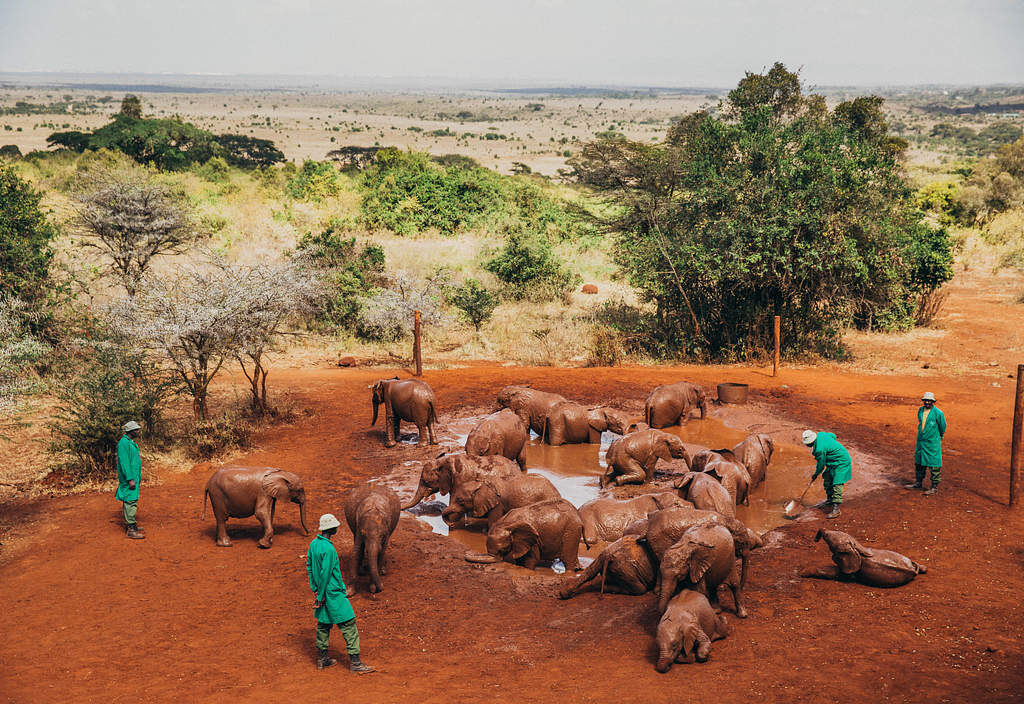
Visitors can watch as the elephants emerge from the forest for their specialist milk formula. After feeding, the young elephants have time to play, wallow in mud, dust themselves and interact with one another.
A senior keeper introduces visitors to the elephants and explains their individual stories, personalities and the wider conservation work carried out by the Trust. There is also an opportunity for visitors to ask questions.
The experience is therefore more than simply watching baby elephants being fed.
It provides insight into:
- Why elephants become orphaned
- How rescued elephants are cared for
- How young elephants are raised
- The importance of specialist nutrition
- Elephant social behaviour
- Wildlife veterinary care
- Anti-poaching conservation
- The process of returning elephants to the wild
Can You Touch or Feed the Baby Elephants?
No. Visitors are not permitted to feed or directly interact with the orphan elephants.
Only the Keepers feed and directly interact with the animals during the public nursery experience.
This restriction is intentional.
The Trust’s long-term goal is for every orphan to eventually return to the wild. Excessive human contact could interfere with that objective, so exposure to visitors is carefully controlled.
This is an important distinction between a genuine conservation experience and wildlife attractions that encourage visitors to physically interact with wild animals.
For responsible travelers, the limited-contact approach is one of the strongest aspects of the experience.
How to Book Sheldrick Wildlife Trust
Advance booking is mandatory for the Nairobi Nursery public visit. Walk-in visits are not accepted.
The Trust currently recommends booking through its Nairobi office.
When requesting a booking, visitors should provide:
- Preferred visit date
- Number of adults
- Number of children
- Full name of each adult
- Name and age of each child
The Trust advises visitors to allow at least two business days for a response, while bookings can currently be made only within the following three months. Same-day bookings are not accepted.
Only booking confirmations issued by the Sheldrick Wildlife Trust are valid for entry. The Trust specifically warns visitors about purported third-party bookings.
For the safest travel planning, always verify booking instructions directly with the official Trust before making payment or travelling.
Official Sheldrick Wildlife Trust Visiting Information
How Much Does Sheldrick Wildlife Trust Cost?
The Nairobi Nursery public visit operates through a minimum donation.
According to the Trust’s current visitor information:
| Visitor | Minimum SWT Nursery Donation |
|---|---|
| Adult, age 12+ | US$20 |
| Child, under 12 | US$5 |
| Kenya resident adult | KSh 2,000 |
| Kenya resident child | KSh 500 |
The donation is paid directly to the Trust on the day of the visit and is separate from the Nairobi National Park fee charged by Kenya Wildlife Service.
Because park fees and visitor regulations can change, travelers should confirm the latest KWS charges before travelling.
Important: There Are Two Different Charges
One of the most important things to understand when planning a Sheldrick Wildlife Trust visit is that:
SWT Nursery donation ≠ Nairobi National Park entry fee.
Visitors must also pay the applicable KWS national park entry fee because the nursery is located inside Nairobi National Park.
What Is the Best Time to Visit Sheldrick Wildlife Trust?
The public Nairobi Nursery experience takes place from 11:00 AM to 12:00 PM every day except 25 December, so the primary consideration is not choosing between different public visiting times but securing your preferred booking date.
For travelers combining the nursery with a Nairobi National Park safari, an efficient itinerary can involve an early-morning game drive followed by the nursery visit.
Alternatively, the nursery can be scheduled before other afternoon activities in Nairobi.
Because the visit cannot be delayed or extended for late arrivals, the Trust recommends arriving early. Visitors should allow additional time for entry procedures at the KWS gate.
What Should You Wear to Sheldrick Wildlife Trust?
The nursery is an outdoor wildlife environment, so comfortable safari clothing is recommended.
Bring:
- Comfortable walking shoes
- Lightweight clothing
- Sun hat
- Sunscreen
- Drinking water
- Rain protection during wet weather
- Camera or smartphone for personal photography
During rainy periods, the ground can become muddy, so appropriate footwear is particularly useful.
The Trust also advises visitors that there are no refreshments provided on site, so travelers should bring water while leaving snacks and other drinks at the hotel or elsewhere as instructed.
Can You Adopt a Sheldrick Wildlife Trust Elephant?
Yes. Elephant adoption, also known as fostering, is one of the ways travelers can continue supporting the Trust after their visit.
The Trust allows supporters to adopt individual orphaned animals, with adoption contributions helping fund the specialised long-term care required by rescued wildlife.
The Trust currently lists a minimum contribution of US$50 for one year for an orphan adoption.
An adoption is not simply a symbolic experience. The funds contribute towards the wider Orphans’ Project, helping provide the care required as rescued animals progress through rehabilitation.
For wildlife enthusiasts unable to travel to Kenya, adoption provides an opportunity to support conservation remotely.
Explore Sheldrick Wildlife Trust Adoption Options
What Happens to the Elephants After the Nairobi Nursery?
This is perhaps the most fascinating part of the Sheldrick Wildlife Trust model.
The Nairobi Nursery is only the beginning of an orphan elephant’s rehabilitation journey.
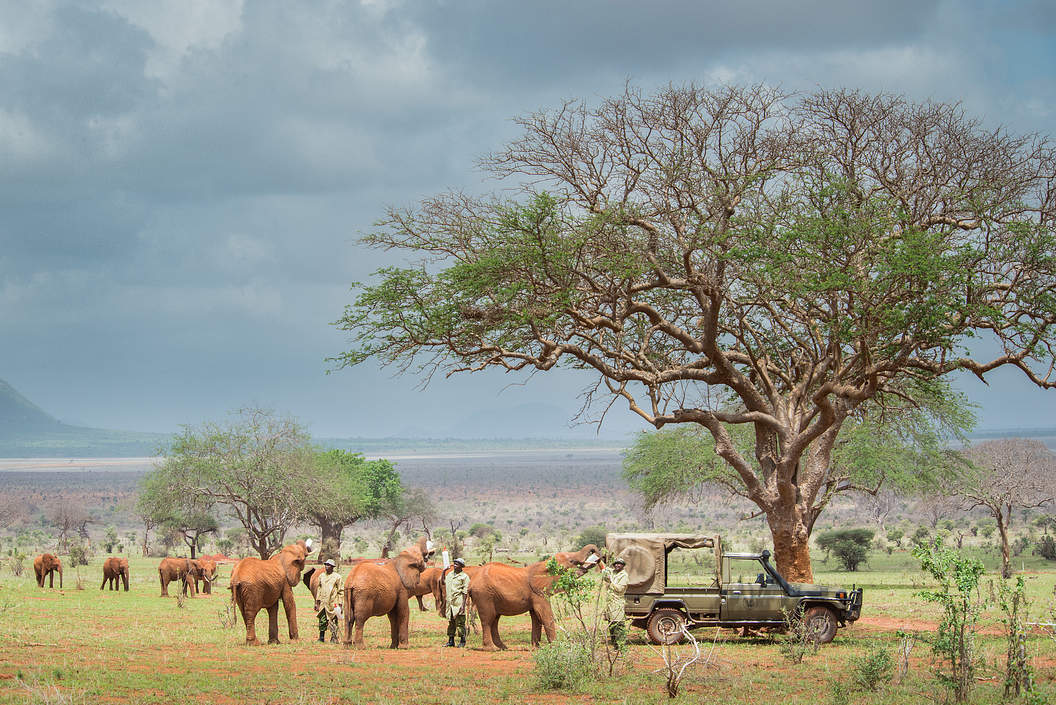
Once elephants graduate from the Nursery, they move to reintegration facilities where they gradually develop the skills and social connections required for life in the wild.
The Trust currently operates three principal Reintegration Units:
- Ithumba in Tsavo East National Park
- Voi in Tsavo East National Park
- Umani Springs in Kibwezi Forest
These locations act as transition areas where elephants can progressively move towards a wild existence.
This long-term process is what makes the Sheldrick Wildlife Trust particularly important to Kenya’s elephant conservation landscape.
Sheldrick Wildlife Trust and Tsavo
The relationship between the Sheldrick Wildlife Trust and Tsavo East National Park is particularly significant.
Tsavo is one of Kenya’s most important elephant landscapes, and the Trust’s conservation activities extend deeply into the wider Tsavo ecosystem.
The Trust’s work in the region includes elephant rehabilitation alongside broader field conservation operations such as anti-poaching, veterinary support, aerial surveillance, habitat protection and water-related conservation initiatives.
For travelers interested in combining Sheldrick Wildlife Trust with a Kenya safari, a journey from Nairobi towards Tsavo can therefore create a powerful conservation-focused itinerary.
Instead of seeing the nursery as an isolated Nairobi attraction, travelers can understand it as the first stage of a much larger wildlife conservation story.
Can You Visit the Sheldrick Wildlife Trust Reintegration Units?
Yes, but access is different from the Nairobi Nursery.
The Trust’s reintegration facilities at Ithumba, Voi and Umani Springs are not ordinary public tourist attractions.
Visitors staying at the Trust’s conservation lodges can receive access to the corresponding reintegration unit.
This is an important distinction for travelers searching for a Sheldrick elephant experience in Tsavo.
The experience is structured around conservation, observation and minimal human interference rather than close-contact wildlife encounters.
Why Sheldrick Wildlife Trust Is Important for Elephant Conservation
African elephants face multiple threats, including habitat loss, human-wildlife conflict, poaching and other pressures.
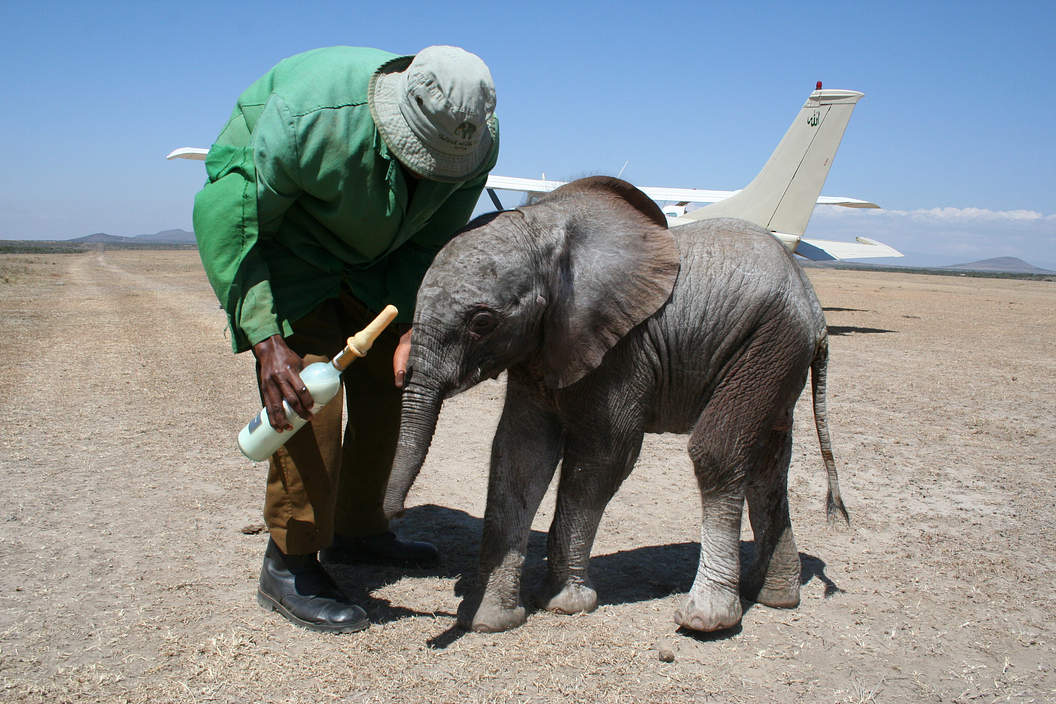
When an elephant calf loses its mother, survival in the wild can become extremely difficult.
Young elephants depend heavily on their social groups, and orphaned calves require specialist care, nutrition, protection and companionship.
The Sheldrick Wildlife Trust addresses this problem through a rehabilitation system designed to take elephants from rescue through specialised care and ultimately towards reintegration into wild landscapes.
But elephant rescue is only one component.
The organisation’s broader conservation model includes anti-poaching teams, veterinary units, aerial operations, habitat protection, community outreach and ecosystem conservation.
This wider approach is critical because rescuing individual elephants cannot solve the conservation problem unless the ecosystems they depend on are also protected.
Is Sheldrick Wildlife Trust Worth Visiting?
Yes, particularly for travelers interested in wildlife conservation, elephants and responsible tourism.
The experience is especially suitable for:
- First-time visitors to Nairobi
- Families travelling with children
- Wildlife photographers
- Elephant enthusiasts
- Conservation-minded travelers
- First-time Kenya safari visitors
- Responsible tourism advocates
- Travelers looking for unique Nairobi experiences
However, visitors should arrive with realistic expectations.
This is not an elephant petting attraction.
You will not be encouraged to hug, ride, walk with or freely feed the elephants. Instead, you observe them under carefully managed conditions while learning about their rehabilitation.
That distinction is important—and it is precisely what makes the experience conservation-focused.
How to Combine Sheldrick Wildlife Trust With a Kenya Safari
For travelers booking a Kenya safari, the Nairobi Nursery can be incorporated into several itinerary styles.
Option 1: Nairobi Wildlife Experience
Day 1: Arrive in Nairobi
Day 2: Nairobi National Park + Sheldrick Wildlife Trust
Day 3: Giraffe Centre + transfer to safari destination
Option 2: Nairobi + Maasai Mara
Day 1: Arrival in Nairobi
Day 2: Sheldrick Wildlife Trust + Nairobi National Park
Day 3: Transfer to Maasai Mara
Days 4–5: Maasai Mara game drives
Day 6: Return to Nairobi
Option 3: Elephant Conservation + Tsavo
Travelers particularly interested in elephants can create a safari route linking Nairobi with Tsavo, allowing them to experience the broader landscape associated with the Trust’s conservation work.
For a customized Kenya itinerary, Bunuli Safaris can combine Nairobi wildlife experiences with Maasai Mara, Amboseli, Tsavo, Samburu, Lake Nakuru and other destinations according to your available time and safari budget.
Sheldrick Wildlife Trust FAQs
Is Sheldrick Wildlife Trust open to the public?
Yes. The Nairobi Nursery welcomes the public for a one-hour visiting experience from 11:00 AM to 12:00 PM, except on 25 December. Advance booking is required.
Do I need to book Sheldrick Wildlife Trust in advance?
Yes. The Nairobi Nursery requires advance booking and does not accept same-day walk-in visitors.
How much is Sheldrick Wildlife Trust?
The current minimum SWT Nursery donation is US$20 for adults aged 12 and above and US$5 for children under 12. A separate KWS Nairobi National Park entry fee also applies.
Where is Sheldrick Wildlife Trust located?
The Nairobi Nursery is inside Nairobi National Park and is accessed through the KWS Mbagathi/Workshop Gate on Magadi Road.
Can you touch the baby elephants?
No. Visitors are not allowed to feed or directly interact with the elephants. Human interaction is deliberately limited to support the elephants’ eventual return to the wild.
Can I adopt an elephant at Sheldrick Wildlife Trust?
Yes. Supporters can adopt an orphan and receive updates about their adopted animal. The Trust currently lists adoption from US$50 per year.
How long does a Sheldrick Wildlife Trust visit take?
The public Nairobi Nursery visit takes approximately one hour, from 11:00 AM to 12:00 PM.
Can I combine Sheldrick Wildlife Trust with Nairobi National Park?
Yes. Since the Nursery is located within Nairobi National Park, travelers can combine the experience with a Nairobi National Park game drive.
Plan Your Sheldrick Wildlife Trust Experience With Bunuli Safaris
A visit to the Sheldrick Wildlife Trust can transform an ordinary Nairobi stopover into a meaningful wildlife-conservation experience.
Rather than simply ticking an attraction off your Kenya itinerary, you get an opportunity to understand what happens behind the scenes of elephant rescue—from the care of vulnerable calves at the Nairobi Nursery to the long process of rehabilitation and eventual reintegration into the wild.
Planning a Kenya safari that includes Sheldrick Wildlife Trust?
Bunuli Safaris can help you build a tailor-made Kenya itinerary combining the Nairobi Nursery with Nairobi National Park, Maasai Mara, Amboseli, Tsavo, Samburu, Lake Nakuru and other Kenyan wildlife destinations.
Contact Bunuli Safaris today to plan a Kenya safari built around the wildlife experiences that matter most to you.