
Introduction
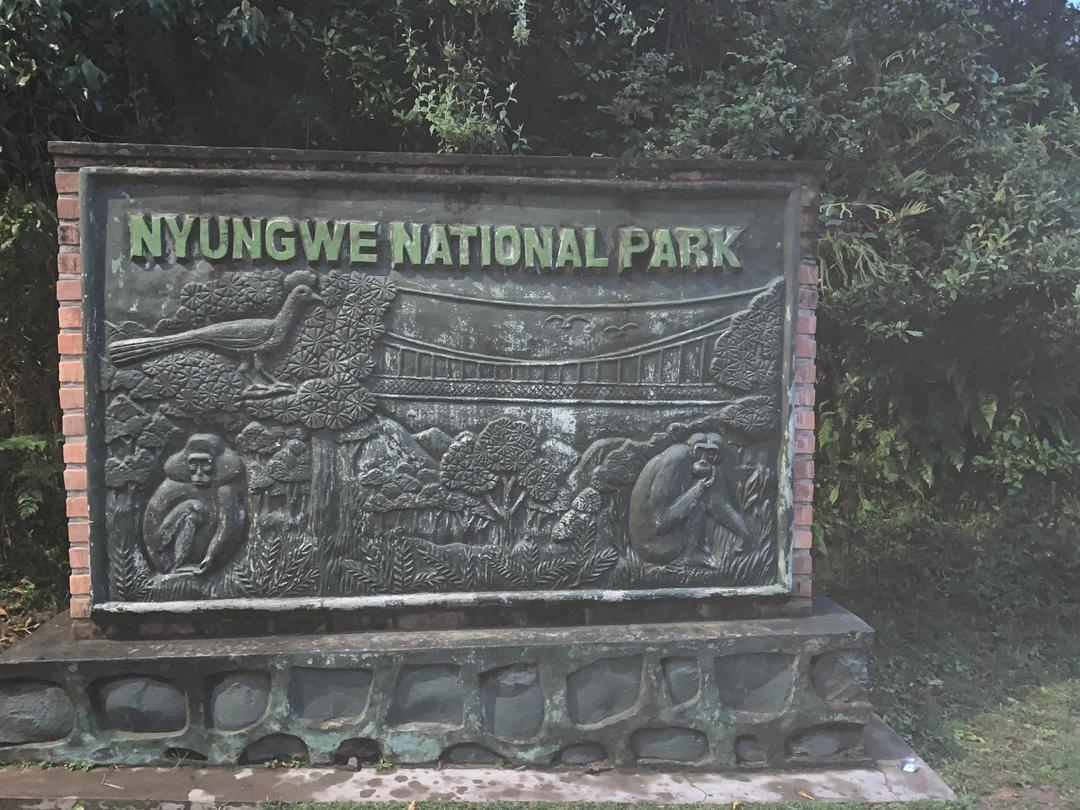
Nyungwe National Park is Rwanda’s ultimate rainforest destination and one of Africa’s most important montane forest ecosystems. Located in southwestern Rwanda, this ancient rainforest is famous for chimpanzee trekking, 13 species of primates, exceptional birdwatching, hiking trails, waterfalls and its spectacular canopy walkway.
Unlike Akagera National Park, where travelers experience open savannah and Big Five wildlife, Nyungwe offers an entirely different side of Rwanda: mist-covered mountains, dense rainforest, rare primates, endemic birds, orchids, wetlands and ancient trees.
Nyungwe is also far more than a chimpanzee destination. In 2023, it was inscribed on the UNESCO World Heritage List, recognizing its exceptional biodiversity and importance within the Albertine Rift. UNESCO describes the park as one of Africa’s most biologically important Afromontane forests, with habitats ranging from montane rainforest to bamboo, peat bogs, moors and grasslands.
For travelers planning a Rwanda wildlife safari, Nyungwe is particularly valuable because it can be combined with Akagera’s savannah wildlife and Volcanoes National Park’s mountain gorillas to create a comprehensive Rwanda safari.
Why Visit Nyungwe National Park?
Nyungwe is one of the best places in Rwanda for travelers interested in chimpanzees, primates, rainforest hiking, birdwatching and forest adventure.
The park contains approximately 1,019 square kilometres of forest, making it the largest remaining natural forest block in Rwanda. Its ecosystem includes dense Afromontane forest, bamboo-covered slopes, wetlands and grasslands.
A visit can include:
- Chimpanzee trekking
- Canopy walkway
- Forest hiking
- Waterfall hikes
- Colobus monkey experiences
- Primate watching
- Birdwatching
- Nature photography
- Forest canopy ziplining
- Rope-course adventure
- Tea experiences around the forest
- Cultural and community encounters
Nyungwe is therefore an excellent destination for travelers who want a more immersive rainforest experience rather than a traditional savannah safari.
Where Is Nyungwe National Park?
Nyungwe National Park is located in southwestern Rwanda, within the Albertine Rift region.
The park extends across a mountainous landscape with elevations ranging from approximately 1,480 to 2,950 metres above sea level. UNESCO recognizes its exceptional combination of montane rainforest, high-altitude wetlands, peat bogs, moors and grasslands.
Its location makes Nyungwe particularly suitable for a southern Rwanda itinerary that can include:
Kigali → Nyungwe → Lake Kivu → Volcanoes National Park
Travelers arriving through Kigali should allow considerably more road time for Nyungwe than for Akagera because the park lies much farther from the capital.
How Far Is Nyungwe National Park From Kigali?
Nyungwe is approximately a 5–6 hour drive from Kigali, depending on the exact destination within the park, road conditions and stops along the way.
The journey is part of the experience.
The route passes through Rwanda’s hilly countryside, tea-growing landscapes, rural communities and changing elevations before reaching the rainforest.
For travelers with limited time, it is therefore better to plan at least 3 days for a Nyungwe safari, rather than trying to rush the destination into a single overnight stay.
Travelers combining Nyungwe with gorilla trekking or Lake Kivu should consider a longer itinerary.
What Is Nyungwe National Park Famous For?
Nyungwe is best known for:
- Chimpanzee trekking
- Canopy walks
- Primate diversity
- Albertine Rift endemic birds
- Rainforest hiking
- Waterfalls
- Colobus monkeys
- Exceptional biodiversity
- UNESCO World Heritage status
- Forest adventure experiences
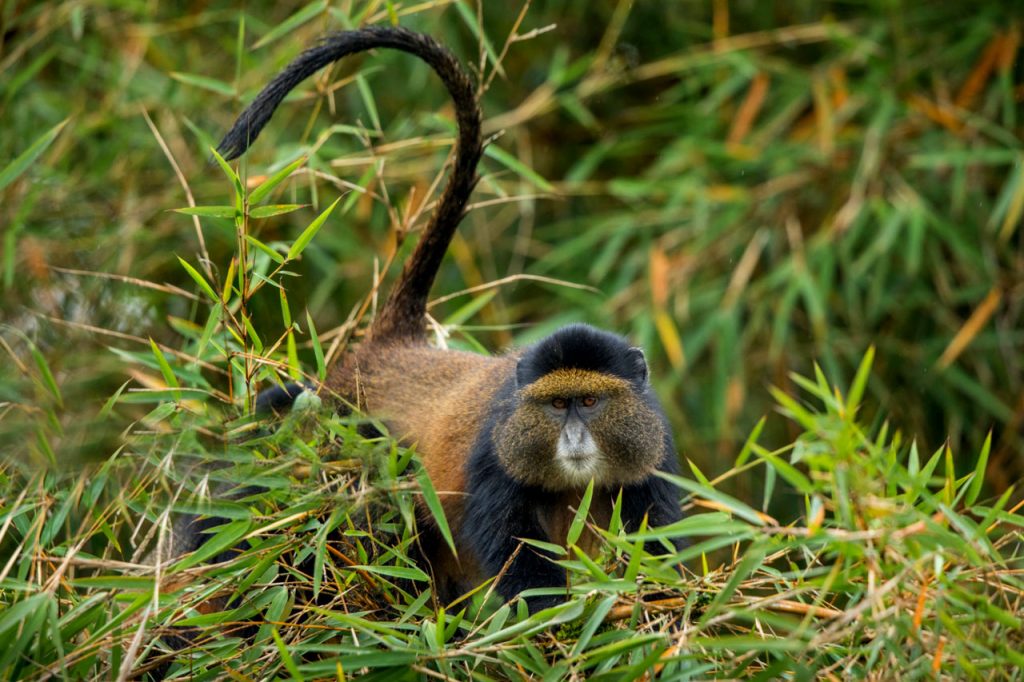
The park is home to 13 primate species, including eastern chimpanzees, Ruwenzori black-and-white colobus and L’Hoest’s monkeys. African Parks also records 85 mammal species and 345 bird species in Nyungwe.
Chimpanzee Trekking in Nyungwe National Park
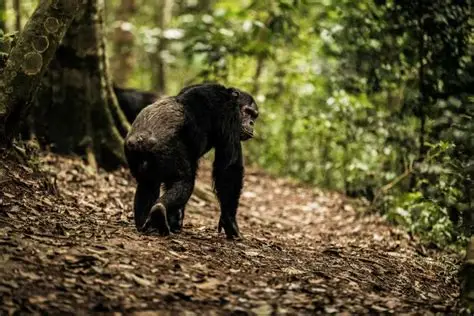
Chimpanzee trekking is the signature wildlife experience in Nyungwe National Park.
Unlike mountain gorilla trekking, chimpanzee tracking involves following highly mobile primates through dense forest as they move through the canopy and undergrowth.
The experience can involve:
- Early morning preparation
- Forest walking
- Tracking chimpanzee calls
- Hiking through steep terrain
- Observing chimpanzees feeding and moving through trees
- Watching other primates and forest wildlife
- Returning through the rainforest after the encounter
Nyungwe currently has several semi-habituated chimpanzee communities available for visitor experiences, including communities at Cyamudongo, Mayebe and Gisovu according to the park’s visitor information.
Can you see chimpanzees in Nyungwe?
Yes. Nyungwe is one of Rwanda’s premier destinations for chimpanzee trekking.
However, chimpanzees are wild animals and sightings cannot be guaranteed. Their movements are influenced by food availability, weather, social behaviour and forest conditions.
A good safari operator should therefore describe chimpanzee trekking as an opportunity to encounter habituated or semi-habituated communities rather than promise a guaranteed sighting.
What Other Primates Can You See in Nyungwe?
Nyungwe is one of Africa’s outstanding primate destinations.
The park supports 13 primate species, representing a significant concentration of Africa’s mainland primate diversity.
Potential sightings include:
- Eastern chimpanzee
- Ruwenzori black-and-white colobus
- L’Hoest’s monkey
- Mona monkey
- Blue monkey
- Red-tailed monkey
- Olive baboon
- Vervet monkey
- Dent’s mona monkey
- Grey-cheeked mangabey
- Owl-faced monkey
The Ruwenzori black-and-white colobus is particularly interesting for primate enthusiasts.
African Parks reports a single observed community of approximately 600 Ruwenzori colobus, described as the largest recorded primate grouping of its kind on the continent.
Colobus Monkey Tracking in Nyungwe
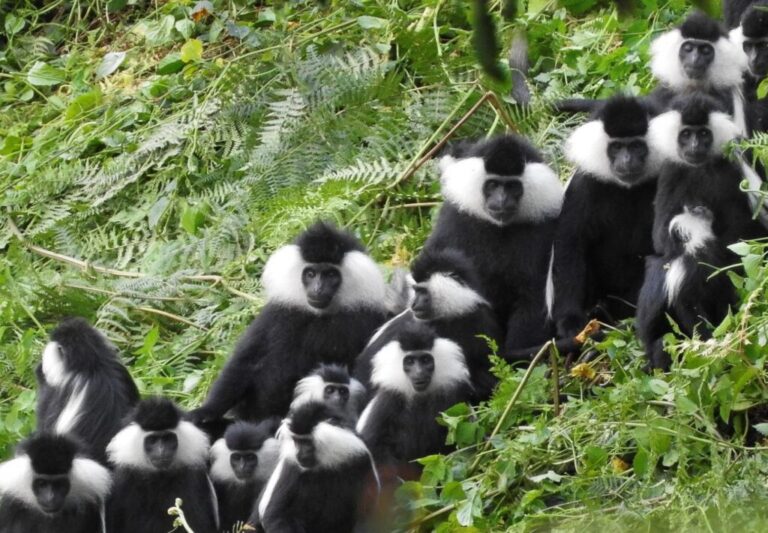
Travelers particularly interested in primates can include a dedicated colobus experience in their Nyungwe itinerary.
Unlike a standard chimpanzee trek, a primate-focused visit can allow more time to understand Nyungwe’s monkey species, forest ecology and conservation.
This makes Nyungwe especially attractive for:
- Wildlife photographers
- Primate researchers
- Nature enthusiasts
- Families interested in wildlife
- Repeat East Africa travelers
Nyungwe Canopy Walkway
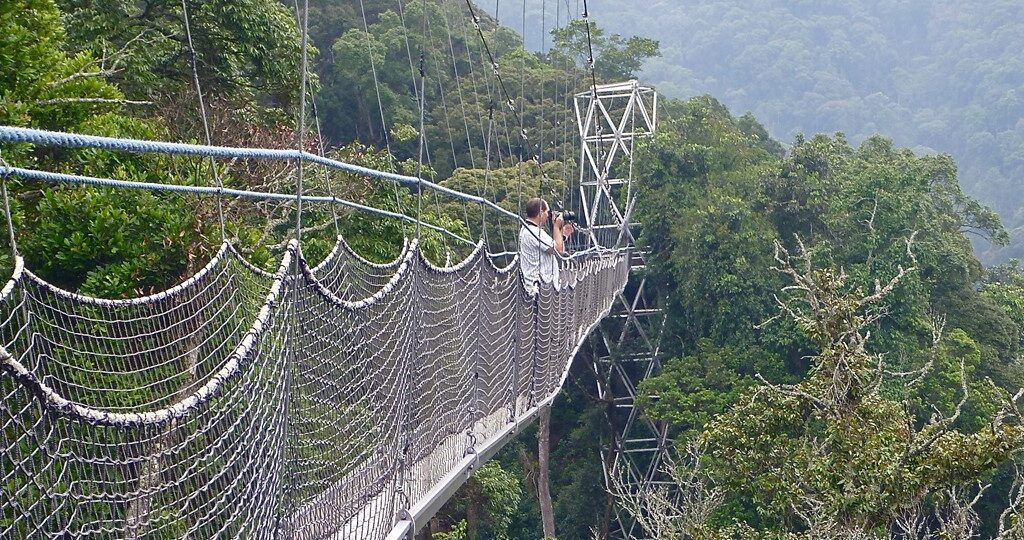
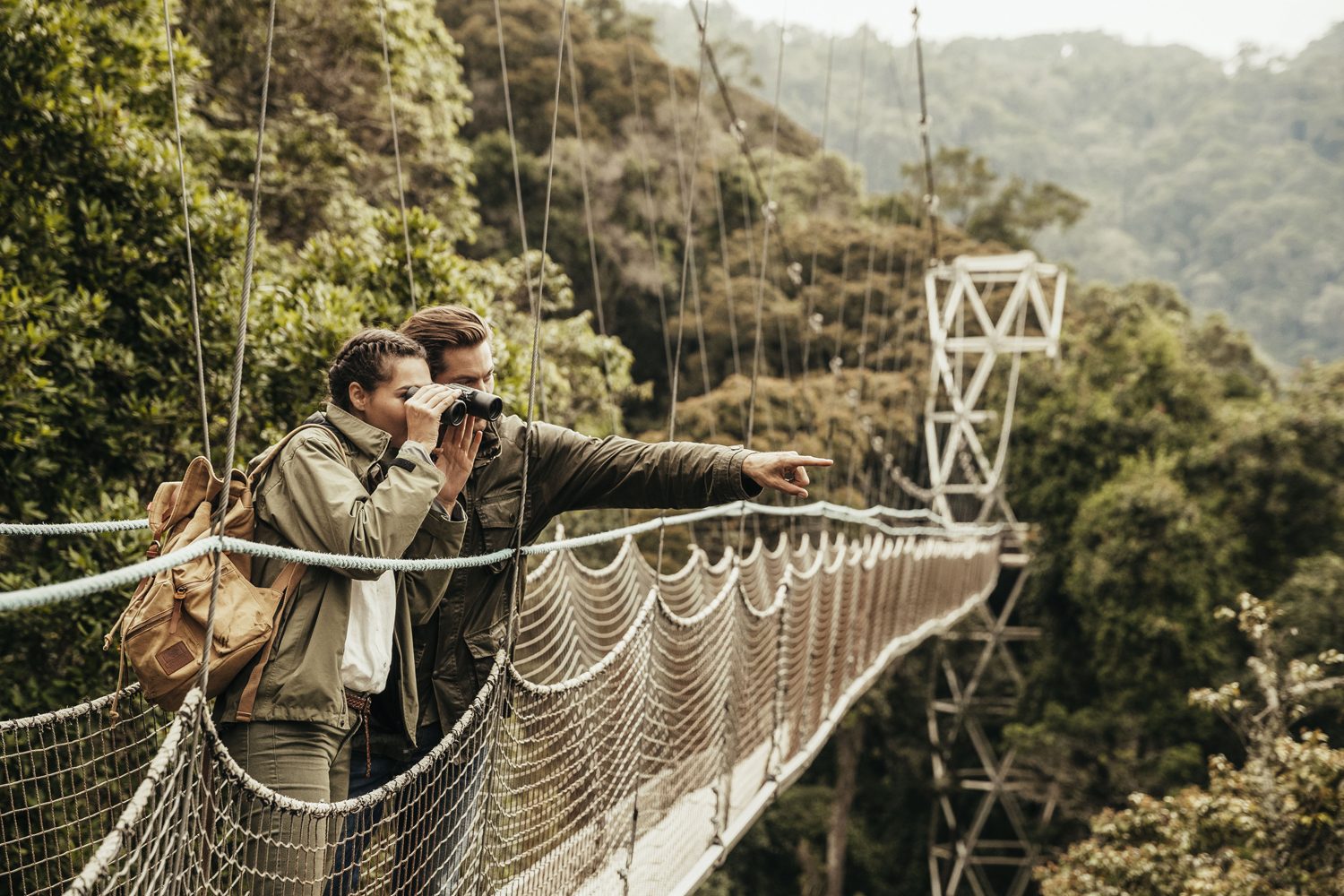
The Nyungwe Canopy Walkway is one of Rwanda’s most recognizable forest adventures.
The suspension bridge provides an elevated perspective over the rainforest canopy and surrounding mountainous landscape.
Current Visit Rwanda information describes the walkway as approximately 160 metres long and 70 metres high, accessed through guided forest trails from the Uwinka area.
The experience is not simply about walking across a bridge.
The hike toward the canopy walkway passes through rainforest habitat where travelers may encounter:
- Birds
- Butterflies
- Orchids
- Monkeys
- Dense vegetation
- Ancient trees
The elevated viewpoint can provide an entirely different perspective of Nyungwe.
Is the Nyungwe canopy walk worth it?
Yes, especially for first-time visitors to Nyungwe.
If you have enough time, combining the canopy walk with chimpanzee trekking creates two contrasting experiences:
Chimpanzee trekking = inside the forest
Canopy walkway = above the forest
Nyungwe Canopy Zipline
Nyungwe’s adventure offering expanded in 2025 with the introduction of a 1,935-metre canopy zipline at Uwinka Visitor Centre.
African Parks describes it as one of Africa’s longest canopy ziplines and says it is divided into three sections.
This provides another way to experience the rainforest from above.
The zipline is particularly suitable for travelers looking to combine wildlife tourism with adventure.
A Nyungwe itinerary can therefore combine:
Chimpanzee trekking + canopy walk + canopy zipline
for a more active rainforest experience.
Hiking in Nyungwe National Park
Nyungwe is an excellent hiking destination because of its mountainous terrain and extensive network of forest trails.
Popular hiking experiences include routes associated with:
- Igishigishigi Trail
- Imbaraga Trail
- Umuyove Trail
- Isumo Waterfall Trail
- Kamiranzovu Trail
- Bigugu Trail
- Ngabwe Trail
- Irebero Trail
- Rukuzi Trail
- Uwinka Trail
Each trail offers a different combination of forest scenery, elevation, wildlife and botanical interest.
The best trail depends on your available time and interests.
Isumo Waterfall Trail
The Isumo Waterfall Trail is one of Nyungwe’s popular hiking experiences.
The trail takes visitors through the rainforest toward a dramatic waterfall surrounded by dense vegetation.
It is particularly appealing to travelers who want a forest adventure without making the entire trip exclusively about primate tracking.
The trail can also complement a chimpanzee trekking itinerary.
Kamiranzovu Swamp
Kamiranzovu is one of Nyungwe’s most distinctive wetland environments.
The high-altitude swamp sits within the forest ecosystem and contributes to Nyungwe’s remarkable habitat diversity.
Wetlands such as Kamiranzovu demonstrate why Nyungwe should not simply be described as a rainforest.
The park contains:
Rainforest + bamboo + wetlands + peat bogs + moorlands + grasslands
This ecological variety is part of what gives Nyungwe its global conservation importance.
Birdwatching in Nyungwe National Park
Nyungwe is one of Rwanda’s premier birdwatching destinations.
African Parks records 345 bird species, including 30 Albertine Rift endemics.
UNESCO also recognizes Nyungwe as an important bird conservation site, with 317 species recorded in its World Heritage assessment.
Birders may encounter species such as:
- Great blue turaco
- Red-throated alethe
- Rwenzori turaco
- Purple-breasted sunbird
- Albertine owlet
- Rwenzori nightjar
- Regal sunbird
- Yellow-eyed black flycatcher
- White-tailed ant-thrush
- Dwarf honeyguide
The precise species list and sighting opportunities vary by habitat and season.
For serious birdwatchers, a specialist guide can make a significant difference.
Nyungwe National Park Wildlife
Although Nyungwe is not a Big Five safari destination, its wildlife diversity is impressive.
The park supports approximately 85 mammal species, including primates and smaller forest mammals.
Wildlife may include:
- Chimpanzees
- Colobus monkeys
- L’Hoest’s monkeys
- Blue monkeys
- Red-tailed monkeys
- Duikers
- Bushbuck
- Serval
- African civet
- Genets
- Bats
- Forest elephants historically associated with the wider ecosystem
Nyungwe should therefore be marketed as a rainforest wildlife and primate destination, rather than as a traditional Big Five safari park.
That distinction is important for setting realistic visitor expectations.
Best Time to Visit Nyungwe National Park
Nyungwe National Park is open for tourism throughout the year.
However, the ideal travel period depends on what you want to do.
Drier Months
The generally drier periods can be favorable for:
- Hiking
- Chimpanzee trekking
- Canopy walks
- Photography
- Forest trails
The commonly recognized drier periods are around June to September and December to February, although rainfall can still occur because Nyungwe is a rainforest ecosystem.
Wetter Months
The wetter months can bring:
- Lush vegetation
- Dramatic rainforest photography
- Excellent botanical experiences
- Fewer visitors at some times
- Strong birding opportunities
The important point is that Nyungwe is a rainforest.
Rain is part of the ecosystem and can occur even during traditionally drier periods.
Anyone planning a chimpanzee trek or forest hike should therefore carry suitable rain protection regardless of season.
How Many Days Do You Need in Nyungwe?
For a meaningful Nyungwe experience, 2–3 nights is a good starting point.
2-Day Nyungwe Safari
A short itinerary could include:
Day 1: Kigali → Nyungwe → forest experience
Day 2: Chimpanzee trekking → canopy walk or return toward Kigali
However, this can feel rushed because of the long transfer from Kigali.
3-Day Nyungwe Safari
A three-day itinerary gives you more flexibility.
Day 1: Kigali → Nyungwe
Day 2: Chimpanzee trekking → forest experience
Day 3: Canopy walk or hiking → continue to Lake Kivu/Kigali
4-Day Nyungwe Experience
For serious nature travelers, photographers and birders, four days can allow:
- Chimpanzee trekking
- Canopy walkway
- Hiking
- Waterfall experience
- Birdwatching
- Primate viewing
- Relaxation
Nyungwe National Park and Lake Kivu
Nyungwe pairs exceptionally well with Lake Kivu.
After several days hiking through rainforest terrain, travelers can continue toward Lake Kivu for a slower-paced lakeside experience.
A popular itinerary structure is:
Kigali → Nyungwe → Lake Kivu → Volcanoes National Park
This creates a varied Rwanda journey covering:
- Capital-city culture
- Rainforest
- Chimpanzees
- Primates
- Lake scenery
- Mountain gorillas
Nyungwe vs Akagera National Park
Nyungwe and Akagera offer completely different safari experiences.
| Nyungwe National Park | Akagera National Park |
|---|---|
| Montane rainforest | Savannah and wetlands |
| Chimpanzees | Big Five |
| 13 primate species | Lions, elephants, rhinos and buffalo |
| Canopy walkway | Game drives |
| Forest hiking | Savannah game viewing |
| Albertine Rift birds | Wetland and savannah birds |
| Waterfalls | Lake Ihema boat safari |
| UNESCO World Heritage Site | Major conservation success story |
If your priority is chimpanzees and rainforest, choose Nyungwe.
If your priority is Big Five wildlife and savannah safari, choose Akagera.
If you have enough time, visit both.
Nyungwe vs Volcanoes National Park
These destinations are sometimes confused because both are important primate destinations.
Choose Nyungwe for:
- Chimpanzee trekking
- Colobus monkeys
- Rainforest hiking
- Canopy walkway
- Birdwatching
- Waterfalls
- Albertine Rift biodiversity
Choose Volcanoes National Park for:
- Mountain gorilla trekking
- Golden monkey trekking
- Volcano hiking
- Dian Fossey-related experiences
A traveler interested in primates can combine both destinations.
Nyungwe + Volcanoes National Park creates one of Rwanda’s strongest primate-focused itineraries.
Is Nyungwe National Park a UNESCO World Heritage Site?
Yes. Nyungwe National Park was inscribed on the UNESCO World Heritage List in 2023.
It became one of Rwanda’s first UNESCO World Heritage properties and was recognized under natural heritage criterion (x) because of its exceptional biodiversity and importance for threatened and endemic species.
UNESCO highlights Nyungwe’s importance within the Albertine Rift and its extensive range of habitats.
This status adds another dimension to visiting the park: travelers are not simply entering a rainforest; they are visiting a globally recognized natural heritage site.
Nyungwe National Park Conservation
Nyungwe’s conservation importance extends far beyond tourism.
The forest is part of the Albertine Rift, one of Africa’s most biologically important regions.
It contains:
- More than 1,100 recorded plant species
- Approximately 85 mammal species
- Approximately 345 bird species
- 13 primate species
- Numerous endemic species
African Parks reports that at least 265 plant species are endemic to the Nyungwe mountains, while 30 bird species are Albertine Rift endemics.
Nyungwe also plays a major role in Rwanda’s water systems.
African Parks notes that the forest feeds the Congo and Nile river systems and provides a significant proportion of Rwanda’s freshwater.
Tourism therefore has the potential to contribute to the continued protection of an ecosystem that is important well beyond Rwanda’s borders.
Who Manages Nyungwe National Park?
Nyungwe is managed through a partnership between the Rwanda Development Board and African Parks.
African Parks entered a 20-year management partnership with the Rwandan government in 2020. The partnership focuses on conservation, ecological restoration, community development and long-term sustainability.
The park’s World Heritage framework also emphasizes community benefit sharing.
UNESCO notes that 10% of park revenues are allocated through a tourism revenue-sharing programme for neighbouring community projects, with an additional mechanism addressing wildlife-related damages.
This makes responsible tourism an important part of Nyungwe’s broader conservation model.
Nyungwe National Park Accommodation
Accommodation around Nyungwe ranges from campsites and guesthouses to high-end forest lodges.
Your choice depends on:
- Budget
- Location
- Comfort level
- Chimpanzee trekking plans
- Hiking interests
- Birdwatching
- Length of stay
For a short safari, choosing accommodation strategically can reduce unnecessary transfers and maximize time in the forest.
In 2025, Munazi Eco Lodge was added to Nyungwe’s tourism offering alongside the new zipline and rope course.
What to Pack for Nyungwe National Park
Because Nyungwe is a high-altitude rainforest, packing for variable weather is essential.
Recommended items include:
- Waterproof hiking shoes
- Lightweight hiking trousers
- Long-sleeved shirts
- Waterproof jacket
- Small backpack
- Hat
- Insect repellent
- Sunscreen
- Binoculars
- Camera
- Spare batteries
- Waterproof camera protection
- Reusable water bottle
- Walking stick
- Warm layer for cool mornings
For chimpanzee trekking, sturdy footwear is particularly important because forest trails can become muddy and slippery after rain.
Is Nyungwe National Park Safe?
Nyungwe is a professionally managed protected area with established conservation, monitoring and visitor-management systems.
Visitors should always:
- Follow their guide’s instructions
- Stay on designated trails
- Maintain appropriate distance from wildlife
- Never feed animals
- Avoid touching wild animals
- Follow park regulations
- Carry appropriate hiking equipment
Chimpanzee trekking requires particular attention to responsible wildlife viewing because visitors are entering the natural habitat of wild primates.
How Much Does a Nyungwe Safari Cost?
The cost of a Nyungwe safari depends on several factors.
These include:
- Chimpanzee trekking permits
- Accommodation category
- Number of nights
- Transport
- Guide services
- Park activities
- Canopy experiences
- Hiking
- Meals
- Season
- Private versus shared safari
Because tourism fees can change, travelers should verify current official prices before booking rather than relying on old travel blogs.
A tailor-made safari can be designed around budget, mid-range or luxury travel preferences.
For travelers combining destinations, a Rwanda itinerary can also package Nyungwe with Akagera, Volcanoes National Park, Lake Kivu and Kigali.
Is Nyungwe National Park Worth Visiting?
Yes. Nyungwe is absolutely worth visiting if you are interested in primates, chimpanzees, rainforest, hiking, birdwatching and nature-based adventure.
It is particularly worthwhile for travelers who want to experience a side of Rwanda that is completely different from the savannah landscapes of Akagera.
The strongest reason to visit is the combination of experiences:
Chimpanzee trekking + 13 primate species + UNESCO rainforest + canopy walkway + Albertine Rift birds + hiking + waterfalls
Few destinations offer that combination within one protected forest ecosystem.
Best Rwanda Safari Combination With Nyungwe
For travelers with approximately one week or more, one of the strongest combinations is:
Option 1: Nyungwe + Gorilla Trekking
Kigali → Nyungwe → Volcanoes National Park
Ideal for:
- Chimpanzees
- Mountain gorillas
- Primates
- Rainforest
- Volcanoes
Option 2: Akagera + Nyungwe
Kigali → Akagera → Nyungwe
Ideal for travelers wanting:
- Big Five
- Chimpanzees
- Savannah
- Rainforest
- Boat safari
- Primates
Option 3: Complete Rwanda Wildlife Safari
Kigali → Akagera → Nyungwe → Lake Kivu → Volcanoes National Park
This is the strongest option for travelers wanting a comprehensive Rwanda experience.
It combines:
Big Five + chimpanzees + gorillas + primates + rainforest + wetlands + mountains + lakes
Frequently Asked Questions About Nyungwe National Park
What is Nyungwe National Park famous for?
Nyungwe is famous for chimpanzee trekking, primate diversity, rainforest hiking, birdwatching, the canopy walkway, waterfalls and its UNESCO World Heritage status.
Can you see chimpanzees in Nyungwe?
Yes. Chimpanzee trekking is one of Nyungwe’s principal wildlife experiences. The park has semi-habituated chimpanzee communities that visitors can track with guides.
How many primates are in Nyungwe?
Nyungwe supports 13 primate species, including eastern chimpanzees, Ruwenzori black-and-white colobus and L’Hoest’s monkeys.
Is Nyungwe National Park a rainforest?
Yes. Nyungwe is a large Afromontane rainforest ecosystem containing additional habitats including bamboo, wetlands, peat bogs, moorlands and grasslands.
Is Nyungwe a UNESCO World Heritage Site?
Yes. Nyungwe National Park was inscribed on the UNESCO World Heritage List in 2023 because of its exceptional biodiversity and conservation importance.
How long should I spend in Nyungwe?
A minimum of two nights is advisable, while three or four nights provide more time for chimpanzee trekking, canopy walks, hiking, birdwatching and other forest experiences.
Is the Nyungwe canopy walk worth it?
Yes. The canopy walkway provides an elevated perspective of the rainforest and is one of Nyungwe’s signature experiences.
Can you hike in Nyungwe National Park?
Yes. Nyungwe has an extensive network of hiking trails ranging from shorter forest experiences to more demanding mountain routes.
What is the best time to visit Nyungwe?
Nyungwe can be visited throughout the year. The relatively drier periods around June–September and December–February are often preferred for hiking and forest activities, but rainfall can occur at any time because Nyungwe is a rainforest.
Can Nyungwe be combined with gorilla trekking?
Yes. Combining Nyungwe chimpanzee trekking with gorilla trekking in Volcanoes National Park creates an excellent Rwanda primate safari.
Can Nyungwe be combined with Akagera National Park?
Yes. Akagera and Nyungwe complement each other exceptionally well because Akagera provides savannah and Big Five wildlife while Nyungwe provides rainforest, chimpanzees and primates.
Is Nyungwe good for birdwatching?
Yes. Nyungwe supports hundreds of bird species, including numerous Albertine Rift endemics, making it one of Rwanda’s leading birding destinations.
Plan Your Nyungwe National Park Safari With Bunuli Safaris
Nyungwe is not simply another stop on a Rwanda itinerary.
It is a UNESCO-recognized rainforest, primate sanctuary, birdwatching destination and adventure landscape where chimpanzee trekking, canopy experiences, hiking and conservation come together.
Whether you want a 3-day Nyungwe chimpanzee safari, a private Rwanda primate tour, a Nyungwe and gorilla trekking itinerary, a Rwanda wildlife safari combining Akagera and Nyungwe, or a tailor-made East African adventure, Bunuli Safaris can build the journey around your interests, available time and preferred accommodation level.
Ready to explore Rwanda’s ancient rainforest?
Talk to Bunuli Safaris about your Nyungwe National Park safari.
From chimpanzee trekking and canopy walks to gorilla trekking and Big Five game viewing, we can help you create a Rwanda itinerary that connects the country’s most remarkable ecosystems and wildlife experiences.
