Introduction
The Great Migration of Kenya and Tanzania
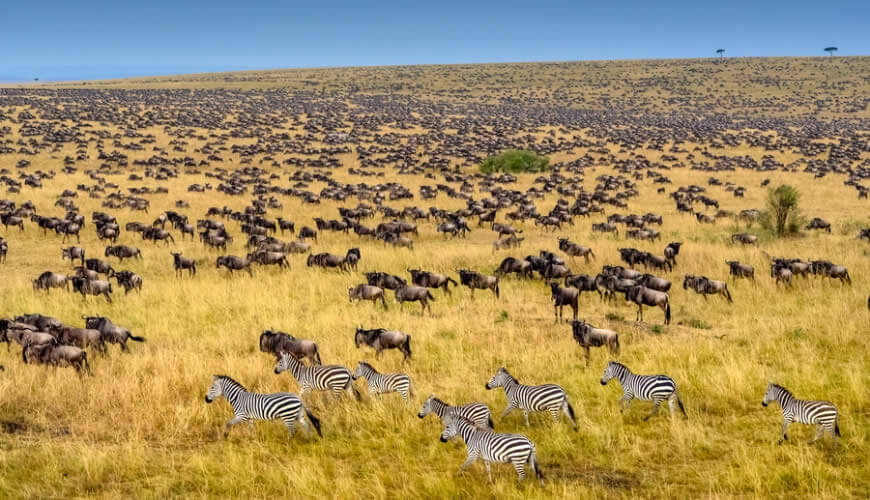
The Great Migration of Kenya and Tanzania is a continuous, circular wildlife movement across the Serengeti–Mara ecosystem. It is not a single event that happens for a few weeks each year.
The migration is driven primarily by seasonal rainfall, fresh grazing and water availability. The migratory population includes roughly 1.3 million wildebeest according to the Convention on Migratory Species, alongside large numbers of zebras and other herbivores.
For safari planning, the most important fact is this:
Tanzania offers the migration for most of the year, while Kenya’s Maasai Mara is most strongly associated with the northern migration and Mara River crossing season.
That means there is no single answer to the question, “Which is better, Kenya or Tanzania for the Great Migration?” The right destination depends on when you travel and what you want to see.
Great Migration at a Glance
| Experience | Best Destination | Typical Period |
|---|---|---|
| Wildebeest calving | Southern Serengeti & Ndutu, Tanzania | January–March |
| Huge herds on open plains | Southern/Central Serengeti | March–May |
| Rutting and northern movement | Central & Western Serengeti | May–June |
| Grumeti River movement | Western Corridor, Tanzania | June–July |
| Mara River crossings | Northern Serengeti & Maasai Mara | July–October |
| Migration in Kenya | Maasai Mara | Usually July–October |
| Southward return | Northern to Central Serengeti | October–November |
| Green-season migration | Central/Southern Serengeti | November–December |
These periods are planning guidelines, not guarantees. Rainfall can cause the herds to move earlier, later or along different routes.
What Is the Great Migration ?
The Great Migration is the annual movement of enormous herds across the wider ecosystem shared by Tanzania and Kenya.
The journey is a survival strategy.
The animals move in search of:
- Fresh grass
- Water
- Nutrient-rich grazing
- Suitable calving grounds
The cycle generally begins and ends on Tanzania’s southern plains, where seasonal rains produce nutrient-rich short grass. As the landscape dries, the herds move west and north toward more reliable grazing and water before eventually returning south with the rains.
This is why the Great Migration should be understood as a year-round ecosystem event, rather than simply “the wildebeest crossing the Mara River.”
Great Migration in Tanzania
Why Tanzania Is the Best Choice for a Year-Round Migration Safari
Tanzania holds the migration for a larger part of the annual cycle.
From approximately December through July, the main herds are generally found within the Serengeti ecosystem, although their exact location changes significantly during that period.
Tanzania gives travelers access to multiple chapters of the migration:
- Calving season
- Predator action
- Massive moving columns
- Rutting season
- Western Corridor movement
- Grumeti River crossings
- Northern Serengeti and Mara River crossings
For travelers who have flexibility with their dates, Tanzania is therefore often the strongest overall destination for a Great Migration safari.
January to March: Calving Season in Southern Serengeti and Ndutu
For travelers looking for one of the most reliable and dramatic phases of the migration, the calving season in Tanzania is an exceptional choice.
The herds gather across the southern Serengeti and Ndutu short-grass plains, where nutrient-rich grazing supports pregnant and lactating wildebeest.
TANAPA’s migration information notes that the ecosystem supports a massive annual movement and describes the southern short-grass plains as important calving habitat because of their highly nutritious soils and grasses.
Why visit during calving season?
You can expect opportunities to see:
- Newborn wildebeest calves
- Large concentrations of herds
- Lions
- Cheetahs
- Hyenas
- Dramatic predator-prey interactions
- Green open plains
- Excellent wildlife photography
The peak calving period is often associated with February, although exact timing varies with conditions. The key advantage is that the migration is generally concentrated across a relatively defined southern region, making this phase easier to plan than trying to predict a specific river crossing.
April to May: The Great Northern Movement
As grazing conditions change, the migration begins moving through the Serengeti.
This period can involve vast columns of wildebeest and zebra moving across the landscape toward the central and western sections of the ecosystem.
May is also associated with the wildebeest rut, when breeding activity increases as the herds continue their journey.
Why this period is underrated
Many travelers focus entirely on river crossings.
However, the visual scale of thousands of animals moving across the plains can be just as impressive—and often offers a less crowded migration experience.
This is a valuable low-competition SEO opportunity:
“Best time to see the Great Migration without river crossing crowds.”
June to July: Western Corridor and Grumeti River
By June, much of the migration is moving toward Tanzania’s Western Corridor.
The Grumeti region becomes an important stage in the journey, with herds negotiating rivers and continuing north as grazing conditions evolve.
The exact timing varies. Some herds can move north faster than others, and groups may split across different routes.
Best for:
- Travellers visiting Tanzania in June
- Migration photography
- Wildlife safaris away from the busiest Maasai Mara period
- Combining Central Serengeti and Western Corridor
July to October: Northern Serengeti and Mara River Crossings
The northern Serengeti is one of the most sought-after destinations during the migration.
This is the period most associated with the famous Mara River crossings.
However, one of the biggest misconceptions in safari planning is believing that a crossing occurs at a predictable time every day.
It does not.
A herd may gather near a river for hours—or even longer—before crossing. Animals may also cross and later return in the opposite direction.
The decision to cross is influenced by the movement of the herd and natural conditions.
The best strategy is therefore to spend multiple nights in the northern Serengeti or Maasai Mara, giving yourself enough time and flexibility rather than booking a one-day “river crossing guarantee.”
“Can you guarantee a Mara River crossing?”
The answer is no.
A reputable safari operator should never promise a specific crossing on a specific day.
Great Migration in Kenya
Maasai Mara: The Most Famous Migration Destination
Maasai Mara National Reserve
Kenya’s Maasai Mara represents the northern extension of the wider Serengeti–Mara ecosystem.
The migration generally reaches the Mara during the dry-season phase, commonly from around July through October, although exact arrival and departure dates vary from year to year.
The Maasai Mara is famous for:
- Mara River crossings
- High wildlife density
- Big cats
- Open grasslands
- Excellent photographic opportunities
- Luxury camps and lodges
- Conservancy safaris
Why choose Kenya?
Kenya is ideal for travelers who:
- Have limited safari time
- Want to combine Nairobi and Maasai Mara
- Are specifically targeting the migration season
- Want to focus on river-crossing opportunities
- Prefer a shorter East African safari itinerary
Kenya vs Tanzania for the Great Migration
Choose Tanzania if you want:
- A year-round migration experience
- Calving season
- Ndutu
- Southern Serengeti
- Central Serengeti
- Western Corridor
- Luxury Safaris Tanzania
- Grumeti River
- Northern Serengeti
- A longer and more varied safari
Choose Kenya if you want:
- Maasai Mara
- A shorter safari
- Migration viewing during the northern season
- Mara River landscapes
- A Kenya-focused luxury safari
Choose Both Kenya and Tanzania if you want:
The ultimate migration experience.
A cross-border safari can follow different sections of the ecosystem and combine destinations such as:
Serengeti → Northern Serengeti → Maasai Mara
This type of itinerary is particularly attractive for high-end travelers, photographers and wildlife enthusiasts who want to maximize their time in the ecosystem.
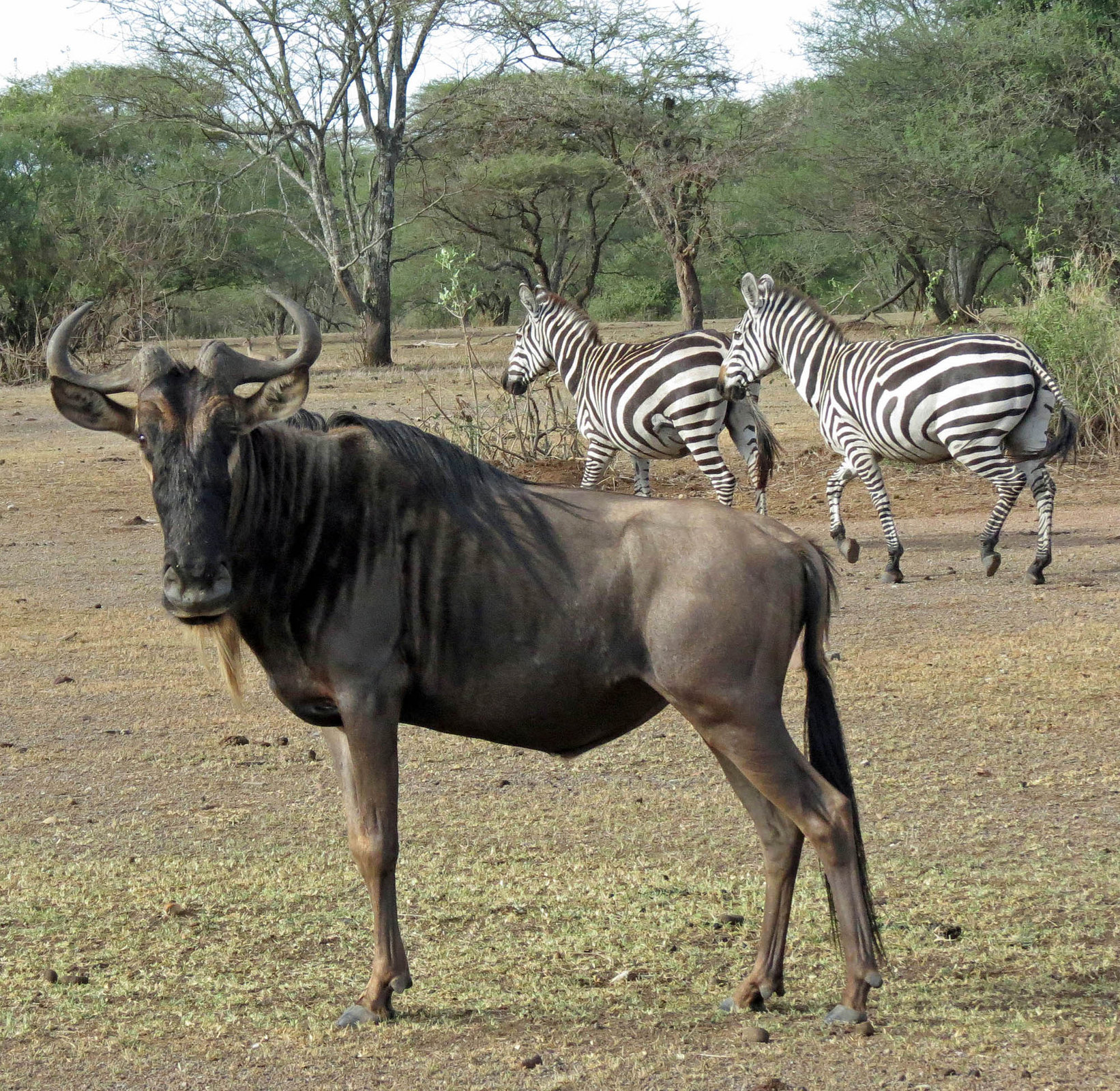
Tanzania vs Kenya Great Migration.
| Feature | Tanzania | Kenya |
|---|---|---|
| Migration season | Most of the year | Primarily northern seasonal phase |
| Calving season | Excellent | No |
| Ndutu access | Yes | No |
| Serengeti | Yes | No |
| Grumeti River | Yes | No |
| Mara River | Yes, Northern Serengeti | Yes, Maasai Mara |
| Short safari | Good | Excellent |
| Migration variety | Excellent | Seasonal |
| Classic river crossing safari | Excellent | Excellent |
| Best for year-round planning | Tanzania | Limited to seasonal migration phase |
What Is the Best Time to See the Great Migration?
The best time depends entirely on what you want to experience.
Best for Calving: January–March
Where: Southern Serengeti and Ndutu
Best for:
- Newborn wildebeest
- Predator action
- Photography
- Large herd concentrations
Best for Moving Herds: April–June
Where: Central and Western Serengeti
Best for:
- Massive columns of animals
- Rutting season
- Lower competition than peak crossing periods
Best for River Crossings: July–October
Where: Northern Serengeti and Maasai Mara
Best for:
- Mara River crossings
- Dramatic wildlife photography
- Migration-focused safaris
Best for Value: November–May
The green and shoulder seasons can offer excellent wildlife viewing and potentially better value than peak northern migration months.
Great Migration Month-by-Month Guide
January
Location: Southern Serengeti and Ndutu
Herds gather across the southern plains.
Best for: Green landscapes and pre-calving activity.
February
Location: Ndutu and Southern Serengeti
The peak calving period is often associated with this month.
Best for: Newborn wildlife and predators.
March
Location: Southern Serengeti
Herds begin preparing for movement as conditions change.
Best for: Calving aftermath and wildlife photography.
April
Location: Southern and Central Serengeti
The northward movement begins.
Best for: Green-season safaris and moving herds.
May
Location: Central Serengeti
Large columns move north and west, with rutting activity becoming an important part of the cycle.
Best for: Migration movement.
June
Location: Western Serengeti
Herds move through the Western Corridor.
Best for: Grumeti region and migration movement.
July
Location: Western and Northern Serengeti
The northern migration intensifies.
Best for: Early river-crossing opportunities.
August
Location: Northern Serengeti and Maasai Mara
One of the most popular periods for migration safaris.
Best for: Mara River and Maasai Mara wildlife.
September
Location: Maasai Mara and Northern Serengeti
Herds may be distributed across both Kenya and Tanzania.
Best for: Kenya or Tanzania migration safaris.
October
Location: Northern Serengeti and Maasai Mara
Some herds begin their southward journey.
Best for: Late migration safaris and potentially fewer crowds.
November
Location: Central and Eastern Serengeti
Short rains encourage movement south.
Best for: Green landscapes and value-focused safaris.
December
Location: Southern and Central Serengeti
The cycle begins returning toward the southern plains.
Best for: Early green-season migration.
The exact month-to-month pattern can shift with rainfall, so accommodation and routing should be based on current conditions closer to travel.
How Much Does a Great Migration Safari Cost?
The cost of a Great Migration safari depends on:
- Travel month
- Safari duration
- Accommodation category
- Private or shared vehicle
- Number of travellers
- Internal flights
- Park and conservation fees
- Camp location
- Whether you follow the migration with mobile camps
As a planning guide, migration safaris can be designed for different travel levels:
Budget Safari
Often uses simpler accommodation and shared or more cost-efficient logistics.
Mid-Range Safari
Usually combines comfortable lodges or tented camps with a private or small-group safari vehicle.
Luxury Migration Safari
May include:
- Luxury tented camps
- Premium camps near migration areas
- Fly-in safaris
- Private guides
- Mobile migration camps
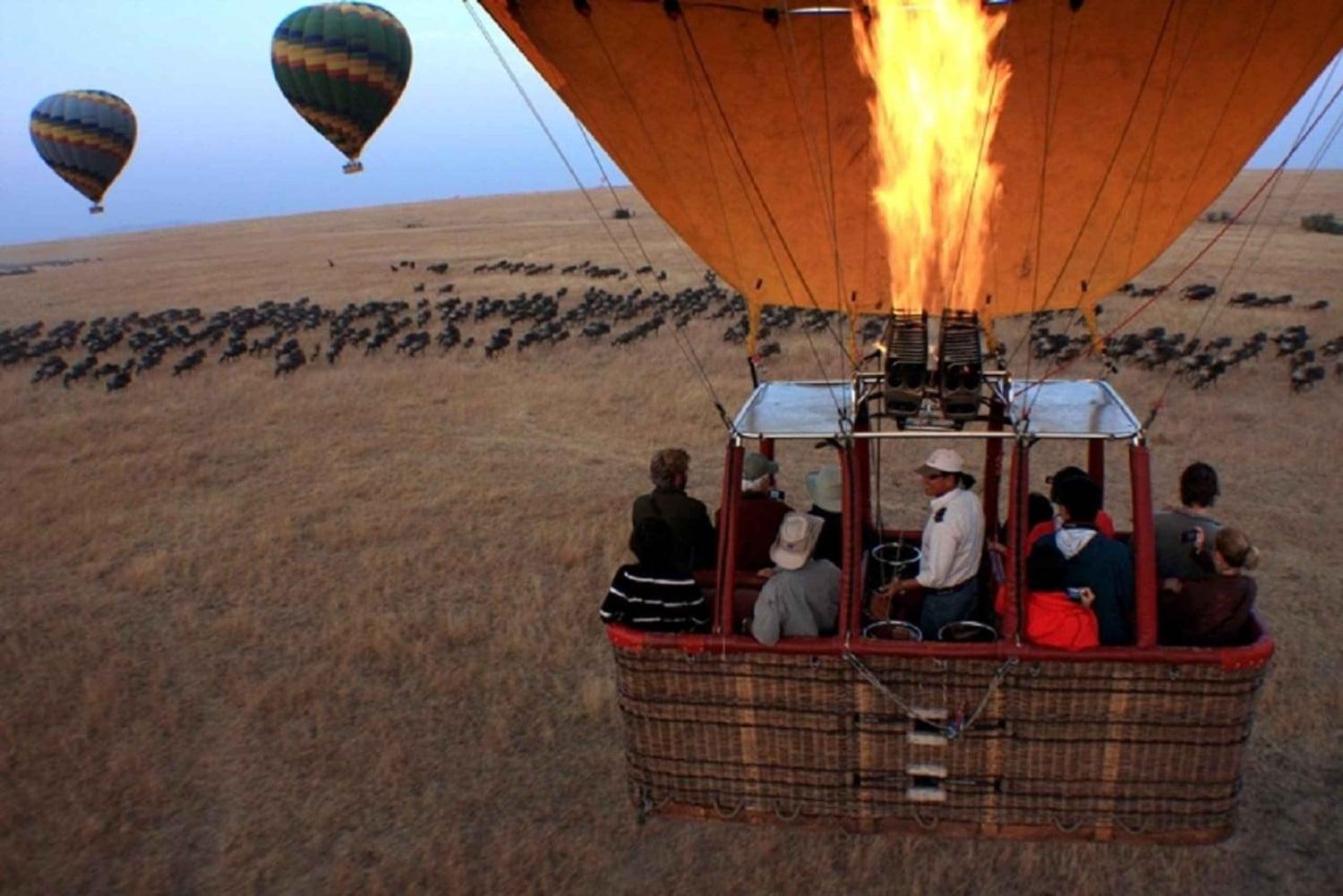
- Hot air balloon safaris
The most expensive period is often when demand for northern Serengeti and Maasai Mara migration camps is highest.
The smartest way to control costs is not simply to choose the cheapest lodge. It is to select an itinerary that places you close to the migration activity expected during your travel dates.
How Many Days Do You Need for a Great Migration Safari?
For a focused migration safari, we recommend:
Minimum: 4–5 Days
Best for:
- Maasai Mara
- Short Serengeti migration safari
- Travelers with limited time
Recommended: 7–8 Days
Allows you to combine migration viewing with:
- Ngorongoro Crater
- Central Serengeti
- Northern or Southern Serengeti
Ultimate: 10–14 Days
Ideal for travelers who want:
- Multiple Serengeti regions
- Maasai Mara
- Flexible migration tracking
- Photography
- Kenya and Tanzania combined safari
Best Great Migration Safari Itineraries
5-Day Maasai Mara Great Migration Safari
Day 1: Nairobi to Maasai Mara
Day 2: Full-day Maasai Mara game drive
Day 3: Migration-focused safari
Day 4: Morning and afternoon wildlife viewing
Day 5: Return to Nairobi
Best for: Travellers visiting Kenya between the northern migration months.
7-Day Tanzania Great Migration Safari
Day 1: Arrival in Arusha
Day 2: Transfer to Ngorongoro region
Day 3: Ngorongoro Crater safari
Day 4: Transfer to the appropriate Serengeti migration region
Day 5: Full-day migration safari
Day 6: Migration tracking and game drives
Day 7: Departure
The exact Serengeti region should be selected according to your travel dates and current migration patterns.
10-Day Kenya and Tanzania Great Migration Safari
A premium cross-border itinerary can include:
- Nairobi
- Maasai Mara
- Northern Serengeti
- Central Serengeti
- Ngorongoro Conservation Area
This is one of the strongest packages for travellers who want to experience multiple landscapes within the wider ecosystem.
Great Migration Safari Tips
1. Do Not Book Only for a Specific River Crossing
A crossing cannot be guaranteed.
Book enough time in the region to increase your chances.
2. Choose Your Camp Based on the Migration
The best lodge in Tanzania is not necessarily the best lodge for your specific month.
Location matters more than luxury if your primary objective is following the migration.
3. Use an Experienced Safari Guide
Migration movement can change quickly.
An experienced guide and operator can adjust game drives based on current wildlife information.
4. Book Peak Season Early
Northern Serengeti and Maasai Mara camps can fill up well in advance during the busiest migration months.
5. Consider Mobile Camps
For travelers with a higher budget, mobile camps can position themselves closer to seasonal wildlife movements.
Is the Great Migration Worth It?
Yes—but travelers should choose the right migration experience for their interests.
If your dream is watching thousands of animals cross a river, target the northern Serengeti or Maasai Mara during the appropriate season.
If you prefer wildlife drama, newborn animals and predator activity, the Ndutu calving season may actually provide a more rewarding experience.
If you want to see enormous herds moving through the wilderness with fewer crowds, consider Central or Western Serengeti.
The best Great Migration safari is not necessarily the most expensive or the most famous. It is the safari that puts you in the right place at the right time.
Frequently Asked Questions About the Great Migration
Is the Great Migration in Kenya or Tanzania?
The Great Migration takes place across both Tanzania and Kenya. The main annual cycle occurs largely in Tanzania’s Serengeti ecosystem, while the Maasai Mara in Kenya hosts the northern seasonal phase of the migration.
What month is the Great Migration in Kenya?
The Maasai Mara generally experiences the main migration season from around July to October, although rainfall and grazing conditions can shift the timing.
What month is the Great Migration in Tanzania?
Tanzania offers migration viewing throughout much of the year because different stages occur in different parts of the Serengeti ecosystem. Calving is typically associated with January–March, western movement with roughly May–June, and northern migration with approximately July–October.
Which is better for the Great Migration, Kenya or Tanzania?
Tanzania is generally better for a year-round migration experience and offers more stages of the migration. Kenya is excellent for travelers specifically targeting the Maasai Mara and the northern migration season.
Can you guarantee a Mara River crossing?
No. River crossings are natural events and cannot be scheduled or guaranteed.
Where is the best place to see the wildebeest calving?
The southern Serengeti and Ndutu region in Tanzania are the primary areas associated with the calving season.
Is February a good time for the Great Migration?
Yes. February is one of the strongest months for travelers interested in the calving season, newborn wildebeest and predator activity in the southern Serengeti and Ndutu region.
How far do the wildebeest migrate?
The exact distance varies by route and year. The migration is commonly described as a journey of roughly hundreds of kilometres through the wider Serengeti–Mara ecosystem, with rainfall and grazing determining the route.
Plan Your Great Migration Safari with Bunuli Safaris
A Great Migration safari should be designed around your travel dates first and accommodation second.
Bunuli Safaris can help create a tailor-made Kenya, Tanzania or combined East Africa itinerary based on:
- Your travel month
- Current migration patterns
- Preferred budget
- Number of travel days
- Accommodation style
- Private or group safari
- Interest in river crossings
- Interest in calving season
- Photography requirements
- Luxury or honeymoon travel
Do not book a generic migration itinerary and hope the herds are nearby. Build your safari around where the migration is expected to be.
Planning to witness the Great Migration? Share your preferred travel dates, number of travelers and accommodation level, and Bunuli Safaris can help design a Kenya, Tanzania or cross-border Great Migration safari around the most suitable migration region.